


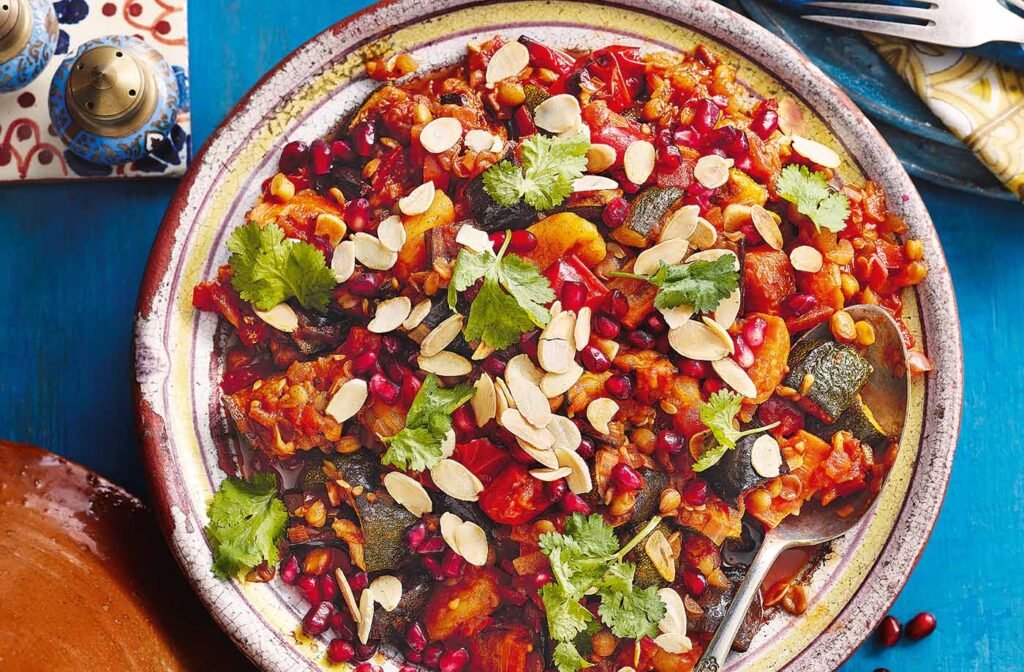
Tagine, the iconic North African dish named after the earthenware pot in which it is cooked, is a culinary marvel that encapsulates the essence of Moroccan cuisine. This slow-cooked stew, typically made with tender meat, vegetables, and an array of aromatic spices, has been a staple in Moroccan households for centuries.
History and Tradition
The tagine pot itself plays a significant role in the cooking process. Its conical shape allows for steam to rise and circulate, ensuring that the ingredients are cooked to perfection. Traditionally, tagines were cooked over charcoal or wood fires, infusing the dish with a smoky depth of flavour.
Tagines are not just a meal but a communal experience in Moroccan culture. Families and friends gather around the steaming pot, sharing stories and savouring each bite together. It embodies the warmth and hospitality that are synonymous with Moroccan hospitality.
Flavours of Morocco
The beauty of tagines lies in their versatility. From succulent lamb tagine with apricots and almonds to fragrant vegetable tagine with preserved lemons, there is a variation to suit every palate. The blend of spices such as cumin, cinnamon, paprika, and saffron creates a symphony of flavours that dance on your taste buds.
Accompanied by fluffy couscous or crusty bread to soak up the rich sauce, tagines offer a sensory experience like no other. The tender meat melts in your mouth while the vegetables retain their natural sweetness, resulting in a harmonious balance of textures and tastes.
Bringing Morocco to Your Kitchen
You don’t have to travel to Morocco to enjoy an authentic tagine experience. With simple ingredients and a bit of patience, you can recreate this traditional dish in your own kitchen. Invest in a quality tagine pot or use a heavy-bottomed skillet as an alternative.
Experiment with different combinations of meats, vegetables, and spices to create your signature tagine recipe. Let the aromas waft through your home as the dish simmers slowly on the stove or in the oven—building anticipation for the culinary delight that awaits.
Embrace the Magic of Tagines
Whether you’re an adventurous foodie seeking new flavours or someone looking to add a touch of exoticism to your meals, tagines offer an unforgettable dining experience. Let each spoonful transport you to the bustling markets of Marrakech or the tranquil riads of Fez.
So next time you crave a taste of Morocco’s culinary heritage, consider preparing a fragrant tagine—a dish that not only nourishes the body but also feeds the soul with its rich history and vibrant flavours.
Understanding Tagines: Common Questions Answered
- Is it tajine or tagine?
- What is in a traditional Moroccan tagine?
- How do you eat tagine?
- What is so special about a tagine?
- What kind of food is tagine?
Is it tajine or tagine?
The frequent question of whether it is spelled “tajine” or “tagine” often arises due to the transliteration of Arabic words into English. The correct term is “tagine,” which refers to both the traditional Moroccan stew and the distinctive earthenware pot in which it is cooked. While variations in spelling may occur, especially in different regions or languages, “tagine” remains the widely accepted term used to describe this iconic North African dish and its cooking vessel.
What is in a traditional Moroccan tagine?
In a traditional Moroccan tagine, you can expect a delightful medley of ingredients that come together to create a harmonious and flavourful dish. Typically, a Moroccan tagine features tender chunks of meat – often lamb or chicken – combined with an array of vegetables such as carrots, potatoes, and onions. The magic lies in the blend of aromatic spices like cumin, cinnamon, paprika, and saffron that infuse the stew with depth and complexity. Dried fruits like apricots or prunes add a touch of sweetness, while preserved lemons contribute a tangy zest. All these elements simmer together in the iconic conical tagine pot, resulting in a dish that is not just a meal but an experience that embodies the essence of Moroccan culinary tradition.
How do you eat tagine?
When it comes to enjoying a tagine, the traditional Moroccan dish cooked in an earthenware pot of the same name, there are a few customs to keep in mind. To eat tagine authentically, start by scooping up a portion of the stew with a piece of bread or with a fork. The communal nature of sharing a tagine means that diners often eat directly from the pot using bread as a utensil. The combination of tender meat, vegetables, and aromatic spices is best enjoyed slowly, savouring each bite and soaking up the delicious sauce with every morsel. Eating tagine is not just about nourishing the body but also about embracing the cultural experience that comes with this iconic Moroccan dish.
What is so special about a tagine?
The allure of a tagine lies in its unique blend of tradition, flavour, and communal dining experience. What makes a tagine special is not just the dish itself but the cultural significance it holds in Moroccan cuisine. The conical shape of the tagine pot allows for slow, gentle cooking that results in tender meat and perfectly infused vegetables. The combination of aromatic spices like cumin, cinnamon, and saffron creates a symphony of flavours that transport you to the bustling markets of Morocco. Beyond its culinary appeal, a tagine brings people together around the table, fostering a sense of warmth and connection through shared meals and stories. It’s this blend of taste and tradition that makes a tagine truly special and cherished in Moroccan households.
What kind of food is tagine?
Tagine is a traditional North African dish that takes its name from the earthenware pot in which it is cooked. This iconic meal consists of slow-cooked stew made with a variety of ingredients such as meat, vegetables, fruits, and a blend of aromatic spices. Tagine is known for its rich and complex flavours, which are developed through the long, slow cooking process. The dish can be made with different types of meat, including lamb, chicken, or beef, and is often accompanied by couscous or bread to soak up the delicious sauce. Tagine is not just a food but an experience that captures the essence of Moroccan cuisine and hospitality.