


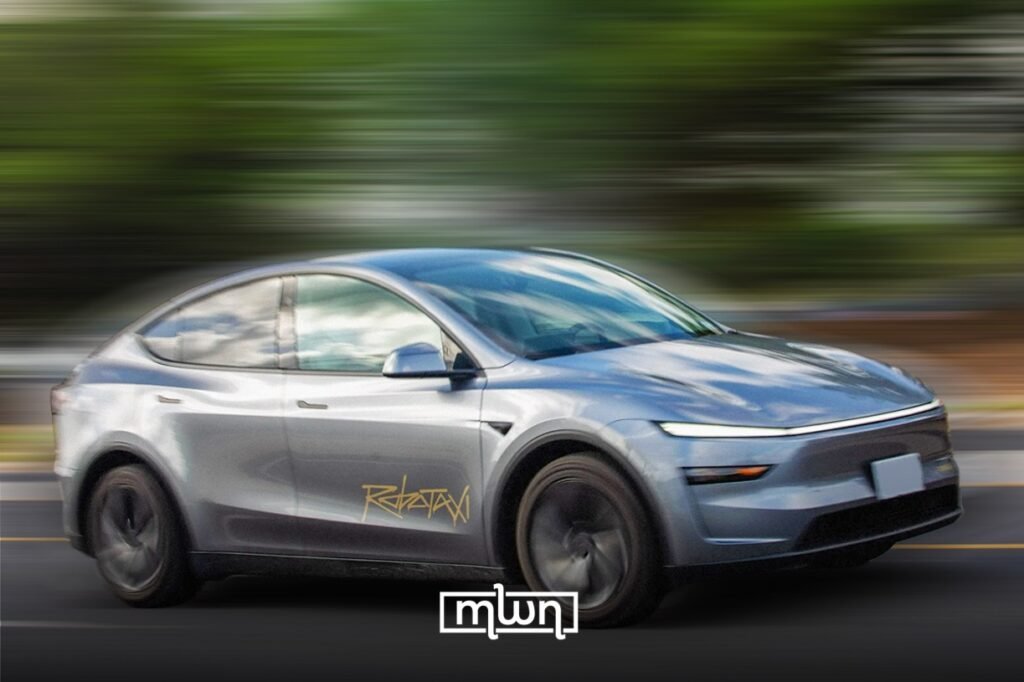
Fez – Elon Musk has announced that Tesla has begun producing a two-seat self-driving taxi, marking a clear step in the company’s shift toward autonomous mobility and robotics.
The new vehicle, described as a “robotaxi,” has been designed without a steering wheel or pedals, relying entirely on Tesla’s self-driving system.
Musk shared a short video on X showing the vehicle moving along a production line, offering an early look at the project as it enters manufacturing.
This development reflects a broader transformation inside Tesla.
The company is moving beyond traditional car production and placing greater focus on artificial intelligence, automation, and robotics.
The robotaxi project is expected to become a key part of Tesla’s future business model, shifting from one-time vehicle sales to recurring revenue through autonomous transport services.
Tesla is also advancing on the regulatory front.
The company expects its advanced self-driving system to receive approval in the European Union in the coming months.
Such approval would open access to one of the world’s largest markets and could accelerate the deployment of autonomous vehicles at scale.
The announcement comes at a challenging time for Tesla’s core business. The company has been facing pressure on global vehicle shipments, partly due to tariffs imposed by the US during the administration of Donald Trump.
These measures have affected trade flows and added pressure on pricing and demand.
Despite these headwinds, Tesla’s latest financial results show resilience.
In the first quarter, revenue rose by 16% year-on-year to reach $22.39 billion.
Net profit increased by 17% to $477 million, exceeding analyst expectations even though revenue came in below forecasts.
Operational performance also showed signs of recovery.
Global deliveries increased by 6.3%in the first quarter to 358,023 vehicles, following a 13% decline during the same period last year.
This suggests that demand is stabilizing, even as competition intensifies.
To support sales, Tesla has introduced more affordable versions of its key models, including the Tesla Model 3 and the Tesla Model Y.
These lower-priced options are aimed at reaching a wider customer base and sustaining growth in a more competitive market.
However, Musk made it clear that Tesla’s long-term growth will be driven by robotaxis and humanoid robots.
This signals a strategic shift, positioning the company as a leader in AI and automation rather than only an electric vehicle manufacturer.
The robotaxi initiative could reshape the economics of transportation.
By removing the need for human drivers, Tesla aims to lower costs and create a scalable mobility service.
If successful, this model could challenge traditional ride-hailing platforms and redefine urban transport.
At the same time, the strategy carries risks. Regulatory approval remains uncertain in several markets, and competition in autonomous driving is increasing.
Questions around safety and public trust will also play a key role as fully driverless systems move closer to widespread use.
Tesla’s decision to begin production of a fully autonomous, two-seat vehicle highlights its confidence in this direction.
The robotaxi is not just a new product, it represents a broader shift in strategy, one that could define the company’s future in the years ahead.