


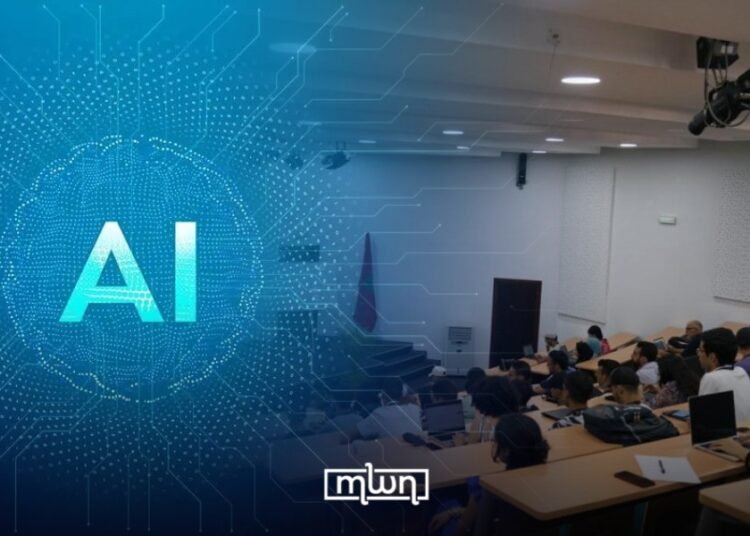
Rabat – Technology has occupied an important position in Moroccan classrooms, with teachers reporting clear gains in student engagement, according to results from the 2024 TALIS international survey.
The study, carried out by the National Evaluation Authority under the Higher Council for Education, Training and Scientific Research (CSEFRS), with oversight from the Organisation for Economic Co-operation and Development (OCDE), presents a detailed portrait of the education system through teachers’ perspectives.
At the middle school level, 94% of teachers say digital tools help capture students’ attention. Many also associate technology with improved academic outcomes.
About 89% believe it raises performance, while 81% point to stronger collaboration among students.
Between engagement and distraction
Despite this broad support, teachers express caution. Around 44% at the middle school level and 39% in primary education say digital tools can distract students.
The report also signals limited use of AI. Only about a quarter of teachers rely on AI tools, a level below international averages. This gap suggests that while digital tools gain ground, more advanced technologies remain less present in everyday teaching.
A young but uneven workforce
The survey sheds light on the composition of Morocco’s teaching workforce. Teachers remain relatively young, with an average age below 40. Women form a majority in primary education, while new recruits account for nearly a third of staff across both cycles.
This profile suggests renewal, yet it also exposes imbalance. Less experienced teachers often work in more fragile school environments. This distribution raises concerns about equal access to quality education across regions and social backgrounds.
Qualifications and training gaps
On academic qualifications, Moroccan teachers stand above international averages. Around six in ten hold a bachelor’s degree, a higher proportion than the global TALIS benchmark.
However, training pathways show some limits. Standard programs that combine subject knowledge, pedagogy, and classroom practice involve about 60% of teachers, a level below international figures. Accelerated or specialized tracks fill part of the gap, often in response to urgent staffing needs.
Inside schools, teachers report a sense of inclusion in decision-making. Roughly four out of five say they take part in shaping their institutions, a level close to international norms.
Leadership also receives strong approval. Most teachers describe school directors as supportive, open to cooperation, and respectful of professional expertise.
Relations with students remain largely positive, with teachers reporting attention to well-being and support for those who face difficulties.
A profession chosen with conviction
Teaching continues to attract many by choice. According to the report, 78% of middle school teachers and 71% of primary school teachers in Morocco selected the profession as their first career option, both above international averages.
More than 90% in both cycles report enjoying the act of teaching itself, while around 75% of middle school teachers and 72% of primary teachers value the challenges the job presents.
Overall job satisfaction remains high, with 92% of middle school teachers and 93% of primary teachers expressing confidence in their professional path.
The TALIS survey examines teachers’ views on their profession, their working conditions, and classroom practices. Its findings offer guidance for public policy, especially as Morocco navigates digital change and persistent questions of equity in education.