


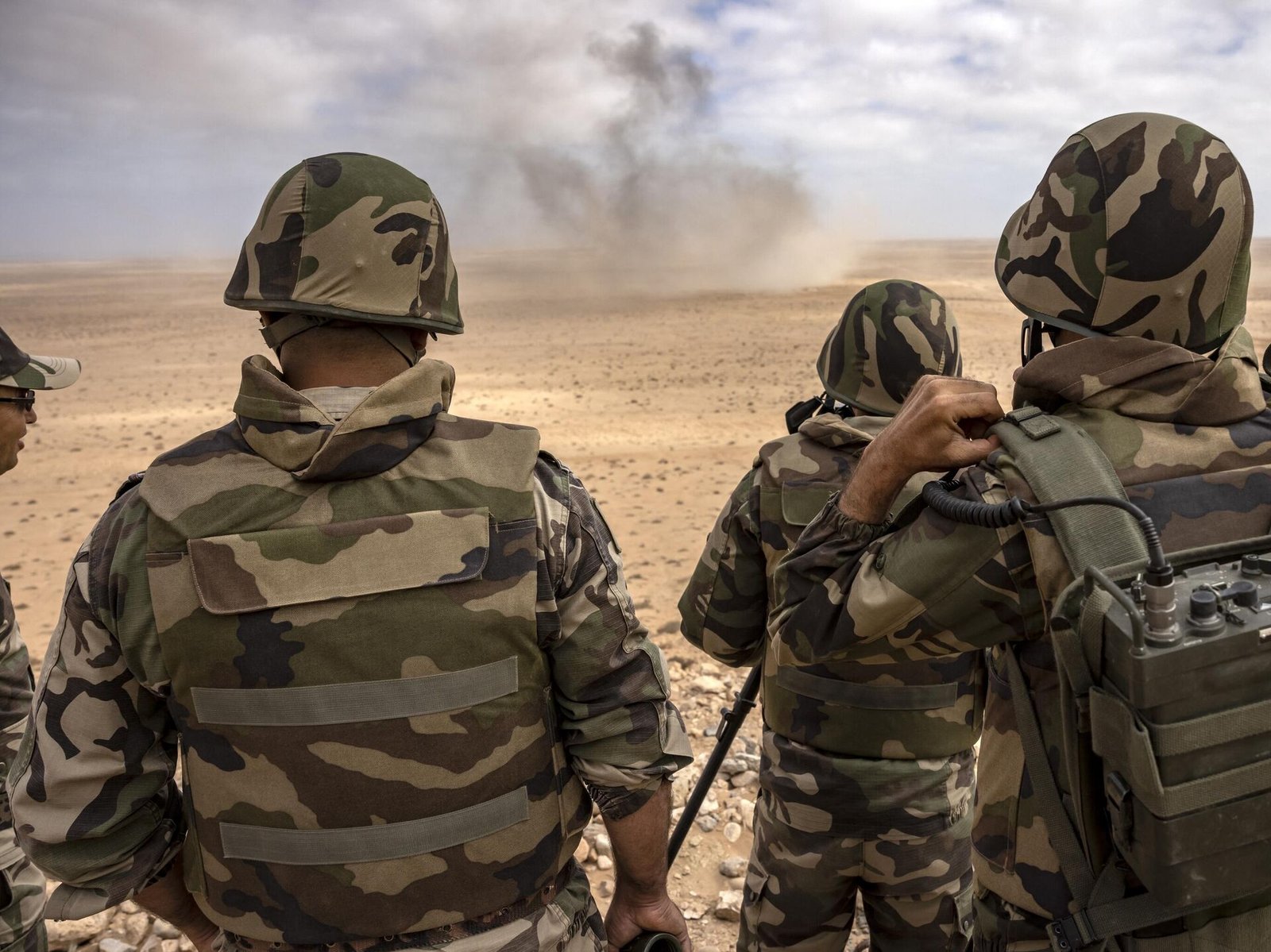
Beni Mellal – Spain increased its arms exports to Morocco by 40.4% in 2025, reaching €29.6 million compared to €21.08 million the previous year, according to data published by the Spanish Ministry of Economy and Trade.
The figures, reported by Spanish outlet OKDIARIO, show that the spike occurred while Madrid continued to enforce a blanket ban on military trade with Israel.
The largest single export category was “bombs, grenades, and torpedoes,” valued at €15 million. “War weapons accessories” followed at over €12 million, while “war weapons” themselves accounted for nearly €1.8 million. Rifles and firearms added another €100,000 to the total.
The increase came as Prime Minister Pedro Sánchez resisted NATO pressure to raise Spain’s defense spending to 5% of GDP, insisting that 2.1% was “a sufficient, realistic investment compatible with our social model and welfare state” – even after signing a NATO declaration in which member states committed to reaching the 5% threshold by 2035.
The contrast between the arms embargo on Israel and the expanded trade with Morocco drew particular attention in Iberian media, given that Morocco and Israel signed a joint military work plan for 2026 in January.
For Spanish news outlets that have long regarded Morocco-Israel military cooperation with suspicion and unease, the very invocation of such data betrays a deeper nationalist anxiety and a reflexive fear of Morocco’s accelerating strategic ascent.
In these circles, Rabat’s security ties with Tel Aviv are routinely weaponized to depict Morocco as a destabilizing force on Spain’s southern flank – with each arms agreement and every diplomatic stride recast not as sovereign statecraft, but as an encroaching strategic menace demanding scrutiny and containment.
Spain’s veto on Israeli military trade extended beyond exports, blocking Spanish purchases of Israeli defense technology as well.
The policy produced legal fallout domestically: three executives of Spanish steelmaker Sidenor faced accusations of complicity in crimes against humanity over steel sales to Israel that the company said represented less than 0.2% of its annual revenue and were made before any trade restrictions existed.
On a broader note, Spanish Foreign Minister José Manuel Albares has recently described the Spain-Morocco relationship in markedly positive terms.
In a Sunday interview with El Periódico, he said the two countries share “one of the most powerful bilateral relationships in the world, which at this moment is living its best period.” He cited €21 billion in bilateral trade, joint policing and judicial cooperation on irregular migration, and the upcoming co-hosting of the 2030 FIFA World Cup alongside Portugal.
On the functioning of border crossings at Ceuta and Melilla – a subject of press criticism – Albares was direct. “The customs are open and functioning,” he said, adding that open border crossings at those enclaves existed “for the first time in history.”
Albares also addressed Spain’s broader neighborhood policy, saying relations with both Morocco and Algeria were fully normalized. He described Algeria as “a neighboring country, partner, friend, our first gas supplier, absolutely reliable,” noting a 190% increase in bilateral trade in 2025.
The arms export data adds a concrete economic dimension to what Spanish officials frame as a strategically vital partnership – one that continued expanding in 2025 regardless of the geopolitical tensions playing out elsewhere in the region, and despite the loud objections of nationalist and far-right factions who portray Morocco’s rise as a zero-sum threat to Spain’s sovereignty, security, and economic primacy.
