


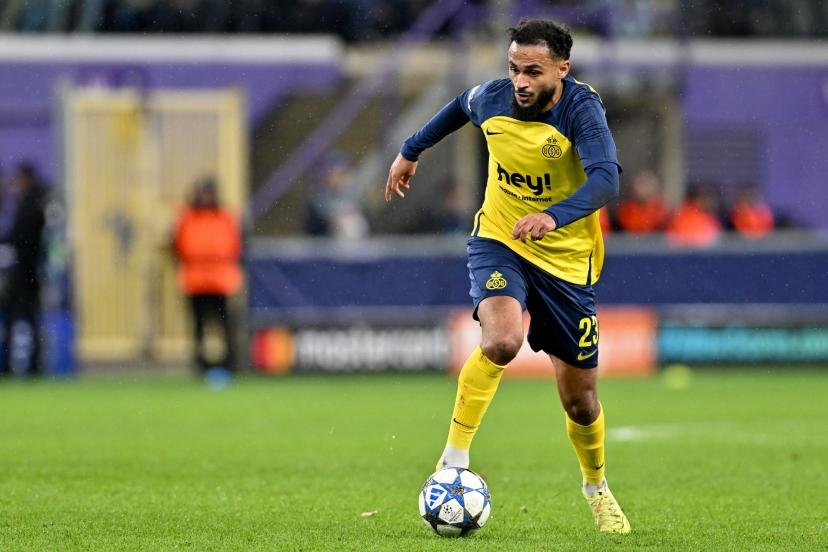
Since arriving on January 14 at Le Havre AC, Sofiane Boufal has quickly settled in. In just six Ligue 1 appearances, the 32-year-old Moroccan attacking midfielder has already delivered two assists.
In an exclusive interview with French outlet L’Équipe, Sofiane Boufal opened up about his career, his love for dribbling, and the one statistical category in which he outdid Lionel Messi.
Against Toulouse (2–1), Boufal nearly produced a goal for the ages, a nutmeg followed by an audacious attempt to lob the goalkeeper from nearly 50 meters. “It was instinct,” he explained. “I haven’t scored many goals in my career. But the few I’ve scored have been beautiful.”
His favorite one is still the one he netted with Southampton FC against West Bromwich Albion in 2017, a dazzling solo run finished calmly after two defenders collided. The move perfectly captured Boufal’s style: improvisation and composure guided by instinct.
But in his career, there is one particular comment that stood out.“There’s only one area where I managed to beat Messi,” he said.
That area? Successful dribbles in La Liga during the 2018-2019 season, when Boufal was playing for Celta Vigo. In most attacking categories that year — goals, assists, chances created, one name dominated: Lionel Messi. “Messi, Messi, Messi… Boufal… Messi,” he laughed. “I’ll be able to tell my kids about that.”
Boufal 🇲🇦 sur ce but : « 𝗖’𝗘𝗦𝗧 𝗠𝗢𝗡 𝗣𝗟𝗨𝗦 𝗕𝗘𝗔𝗨 🤩 (…) Ce qui a été beau, c’est quand les deux défenseurs se sont rentrés dedans.
Et le calme avec le geste final, le plat du pied. J’ai beaucoup d’instinct dans mon jeu. 🪄🎩. »
pic.twitter.com/YB50rET5cI
— BeFootball (@_BeFootball) February 28, 2026
Dribbling as survival
For Boufal, dribbling was never just about showmanship, it was survival.
At 16, he had the bone age of an 11-year-old. At 17 or 18, he was barely 1.55 meters tall. To compete, he had to anticipate, to think faster, to avoid physical duels. “Everything happens in a split second, but everything is calculated.”
His favorite move? The nutmeg. “It gives me a lot of emotion.” For Boufal, a dribble must go forward, break lines, and disrupt defensive structures. It’s not about tricks for their own sake, it’s about impact.
Growing up, he idolized Ronaldinho during his time at Paris Saint-Germain, as well as Robinho, Pablo Aimar and Juan Román Riquelme. He openly admits he belongs to what he calls “the old school” of football. “Today, it’s computer football. There’s less room for magic.”
Some coaches have embraced that creativity, Gérald Baticle once called him an “artist,” while Hervé Renard described him as a “genius.” Others tried to reshape his game. “People often tried to change my style, but I never did. I would have lost what makes the difference in me. I would have become just another player.”
Boufal reflects on his career with honesty. He admits he may not have fully reached the heights his talent suggested with injuries and impulsive decisions played a part. Yet he carries no bitterness. His driving force was always clear: to change his family’s life, especially his mother’s, whom he remembers seeing worried about making ends meet when he was growing up in Angers.
At Le Havre, he says he feels respected and valued, something he did not always experience elsewhere, even after becoming Southampton’s record signing at the time.
Now 32, Boufal remains unapologetically himself, a player who dribbles, who risks, who excites.
