


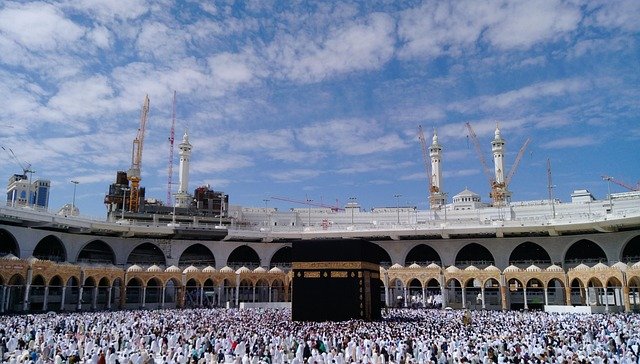
Agadir – The Saudi Ministry of Interior has released a detailed guide to ensure the safety and security of worshippers visiting the Grand Mosque in Mecca during the Ramadan Umrah season (1447 AH).
The initiative aims to provide a smooth and organized pilgrimage experience amid the large influx of visitors during the holy month.
The guide outlines comprehensive transportation and access measures, covering public buses, taxis, private vehicles, shuttle services, and the local Haramain High-Speed Train.
It also maps designated parking zones and encourages pilgrims to use public transport to reduce congestion in central areas.
To facilitate crowd movement, the guide introduces a directional signage system at mosque entrances, courtyards, and key pedestrian routes.
This system helps pilgrims navigate the complex efficiently, access prayer areas, and perform rituals like Tawaf and Sa’i with minimal disruption.
Security personnel will be stationed throughout the mosque complex to assist worshippers, provide guidance, and maintain order.
The guidelines also outline prohibited items and behaviors, including carrying weapons, smoking, begging, and leaving luggage in prayer areas. Unauthorized vehicles such as motorcycles and bicycles are banned from pedestrian zones to ensure safety.
Morocco’s pilgrimage context, Hajj cost and selection updates
While Saudi Arabia focuses on Umrah operations, Morocco, a country with a significant number of pilgrims, has also undertaken measures to support nationals preparing for the Hajj pilgrimage. Recent government statements reflect broader efforts to manage both the cost and organization of Hajj travel for Moroccan citizens.
In early 2026, Morocco’s Minister of Islamic Affairs, Ahmed Toufiq, announced that the cost of the 2025 Hajj pilgrimage declined by more than MAD 3,000 ($330 USD) compared to the previous year.
Pilgrims who participated in the 2025 season paid MAD 63,770 ($7,020 USD), down from MAD 66,865 ($7,355 USD) in the prior season, covering all services including air travel, accommodation, transportation, and visas.
The estimated preliminary cost for the 2026 Hajj was projected to be around MAD 65,000 ($7,150 USD), although the final figure would be determined later.
This reduction reflects Moroccan efforts to optimize pilgrimage expenses while maintaining comprehensive service coverage for travellers. The government coordinates closely with the Royal Commission for Pilgrimage and Saudi counterparts to monitor costs and service.
Hajj lottery and selection procedures in Morocco
In addition to cost matters, Morocco has announced the dates and procedures for the Hajj 1448 Hijri draw process.
The Ministry of Endowments and Islamic Affairs confirmed that the lottery to select pilgrims for the upcoming Hajj season will be held from March 2 to March 13, for applicants who previously registered to perform the pilgrimage.
The draw will take place at administrative district and provincial levels, with separate draws for those applying through official channels and those using licensed travel agencies.
Following the draw, authorities will immediately publish the final list of selected pilgrims and waiting lists to replace any withdrawals.