


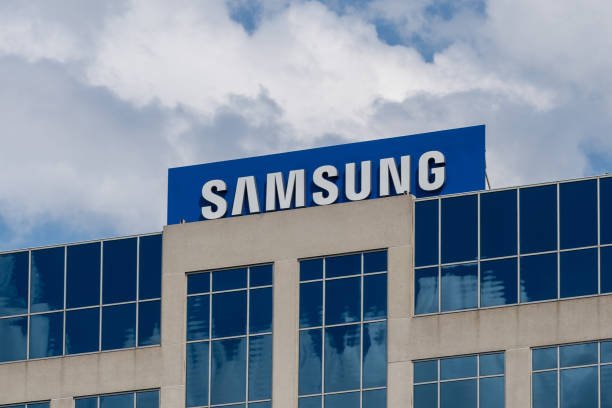
Casablanca – Samsung Electronics said it plans to spend more than 110 trillion won, about $73.2 billion, in 2026 as it tries to secure a stronger position in the fast-growing market for artificial intelligence chips, according to a company filing on Thursday.
The investment will go into both research and development and new facilities. It marks a sharp increase from 2025, when the South Korean company spent 90.4 trillion won, including 52.7 trillion won in capital expenditure and 37.7 trillion won in R&D.
Samsung, the world’s largest memory chip maker, is also looking beyond semiconductors. It said it is pursuing mergers and acquisitions in areas such as robotics, medical technology, automotive electronics and air-conditioning systems. At the same time, it plans to pay 9.8 trillion won in regular dividends for 2026.
The push comes as competition in AI chips intensifies. Demand is being driven by data centers and systems that run large language models, which require advanced processors and high-bandwidth memory. Industry executives say the sector is entering what they describe as an “AI supercycle,” with companies racing to secure long-term supply and lock in customers.
Read also: Morocco, Samsung Deepen Digital Education Partnership as AI, Coding Training Expands
Samsung has been trying to close gaps with rivals, particularly in high-bandwidth memory, a key component in AI systems where it trails SK Hynix in market share.
Other players are scaling up just as aggressively. Nvidia expects the market for AI chips to generate up to $1 trillion in revenue by 2027, as it expands into both training and inference technologies. TSMC, the main manufacturer of advanced processors, has reported strong profit growth and is expanding production capacity, including in the United States.
Tech companies are also moving upstream. Tesla is developing its own next-generation AI chips for self-driving systems and robots, with production tied to Samsung’s advanced manufacturing processes. Meanwhile, firms like ByteDance and OpenAI are working on custom chips or securing direct supply agreements to reduce reliance on existing suppliers.
Behind all of this is a supply crunch. Memory and advanced chip capacity are limited, and AI infrastructure projects are absorbing a growing share of global output.
Samsung’s planned spending shows how high the stakes have become. The race is no longer just about making chips – it is about controlling the systems that power AI.
Morocco World News is also on X — check out our latest posts now! Get MWN on iOS and Android for instant access to breaking news.