


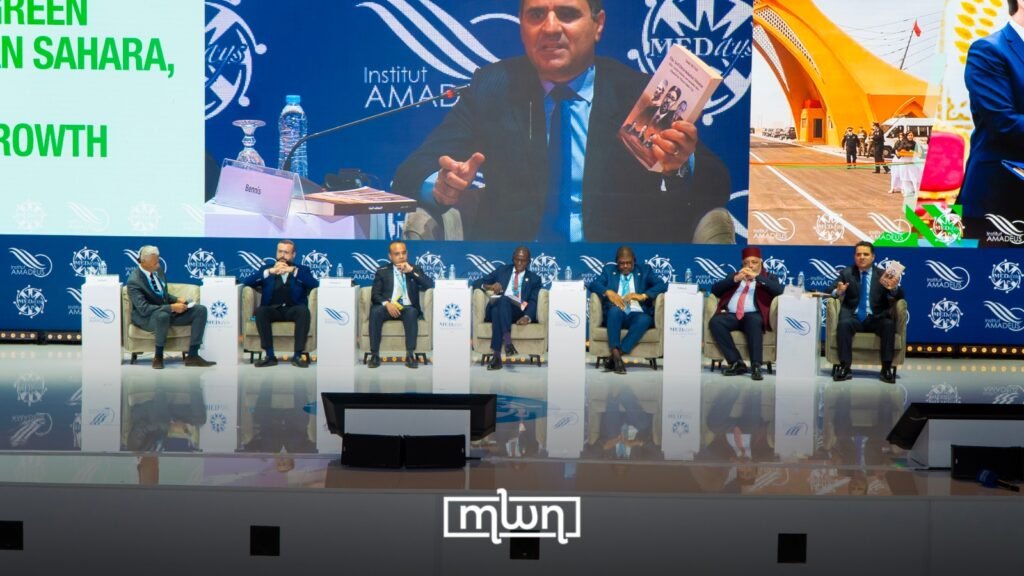
Tangier — Fifty years after the historic Green March, international experts gathered at the MEDays Forum to examine Morocco’s transformation of its southern provinces from a contested territory into a recognized sovereignty backed by the United Nations.
Speaking at a panel titled “50 Years After the Green March: The Moroccan Sahara, From Sovereignty to Development & Growth,” former UN adviser and Morocco World News co-founder Samir Bennis described the 1975 Green March as a strategic masterstroke that fundamentally altered the region’s geopolitical landscape.
Bennis explained how Morocco faced formidable challenges during the Cold War era, when decolonization rhetoric provided international sympathy to liberation movements.
Spain and Algeria, despite divergent interests, aligned to prevent Morocco from recovering sovereignty over its southern provinces. Algeria leveraged anti-colonial rhetoric to cast doubt on Morocco’s historic claims to the territory.
“The Green March was an epoch-making and major strategic masterstroke because it allowed Morocco to force Spain into withdrawing from the Sahara without confrontation,” Bennis said, noting that the peaceful demonstration of 350,000 Moroccans compelled Spain to sign the Madrid Agreement on November 14, 1975.

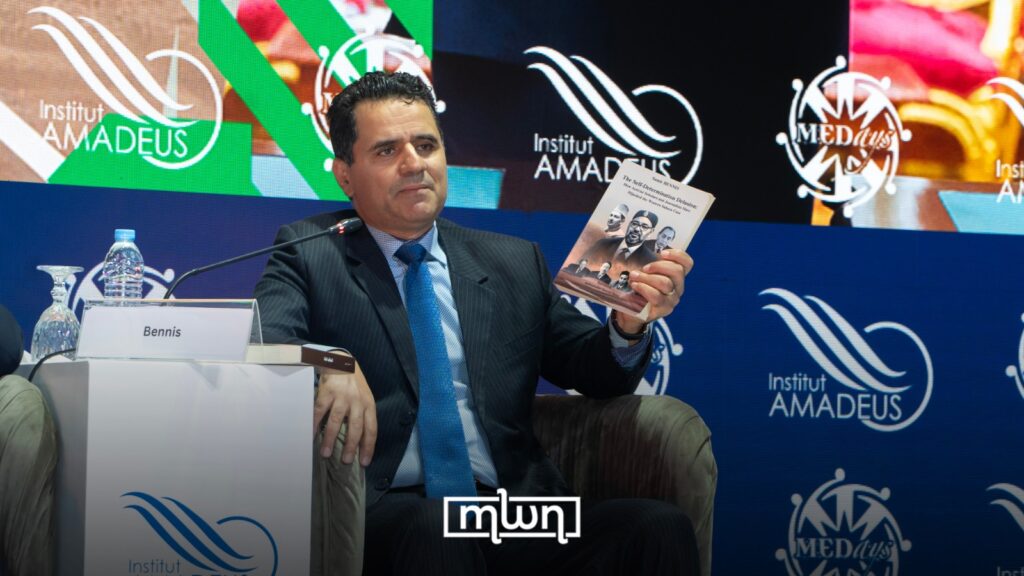
The former UN adviser noted a second pivotal moment: Morocco’s 2007 Autonomy Plan, which emerged from embracing an American suggestion in 1998.
The proposal marked a diplomatic shift within the UN Security Council, culminating in Resolution 2440 in October 2018, which identified the Moroccan autonomy plan as the only feasible outcome for the conflict, according to Bennis
The recent adoption of Resolution 2797 represents the continuation of this diplomatic trajectory, Bennis noted, adding that it reflects Morocco’s sustained strategic approach from the Green March through 2025.
For his part, Former Comoros Foreign Minister Fahmi Saïd Ibrahim El Maceli commended Morocco’s diplomacy as a lesson for Africa, describing the Autonomy Plan as the only natural basis for resolving what he termed a manufactured dispute.
He stressed Morocco’s status as an old nation with deep diplomatic traditions, noting that the country has demonstrated what can be achieved through peace and diplomatic engagement.
El Maceli focused on three non-negotiable principles upheld by King Mohammed VI: sovereignty, institutions and the monarchy, and Islam. He argued that Morocco’s historical continuity as a unified nation dating back centuries meant there was never legitimate doubt about its territorial integrity, attributing the Sahara issue to the complications of dual French and Spanish colonization.
Gbehzohngar Milton Findley, former Foreign Minister of Liberia, shifted focus to development outcomes, noting that Liberia was the second country to open a consulate in Morocco’s Sahara. He indicated that political progress must accompany economic development and improved living conditions.
“You can never have a solution without, first and foremost, that it is Morocco’s sovereignty over the Moroccan Sahara,” Findley said, noting that education programs, youth initiatives, and economic development have transformed the region over fifty years.
In an interview with Morocco World News (MWN), Findley described Resolution 2797 as a victory for both Africa and Morocco, referring to the North African country’s role in counterterrorism efforts across Saharan countries.
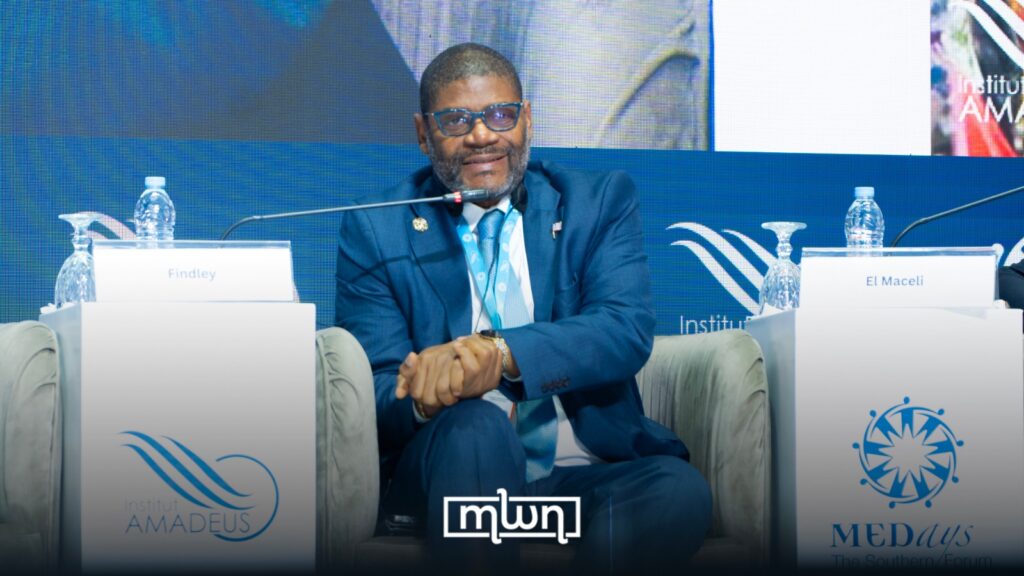
He also detailed expanding bilateral relations between Liberia and Morocco in agriculture, mining, logistics, and port development.
Francis Kasaila, former Foreign Minister of Malawi, recounted his country’s large diplomatic shift from recognizing the Sahrawi Arab Democratic Republic (SADR) to establishing relations with Morocco in 2016.
He credited Morocco’s high-level political engagement with helping Southern African countries understand the dispute’s historical context.
Kasaila argued that the UN resolution redefines independence in ways beneficial to Africa, potentially reducing conflicts stemming from ethnic groups seeking statehood.
“This resolution is not only an achievement by Morocco, but it’s good for the entire Africa,” he said.
Roudani Charkaoui, a specialist in diplomacy and international relations, placed the Green March within the complex geopolitical context of 1975, when the world faced the Middle East crisis, the 1973-74 oil shock, American defeat in Vietnam, and economic turmoil in Europe.
Under these challenging circumstances, King Hassan II demonstrated strategic vision by liberating Moroccan territory peacefully, Charkaoui explained.
Today, King Mohammed VI continues this vision through the New Development Model for the southern provinces, positioning them as a continental and international platform while promoting Atlantic connectivity for Sahel countries.
The panel displayed how Morocco has transformed a territorial dispute into a development success story now recognized by growing international consensus.