


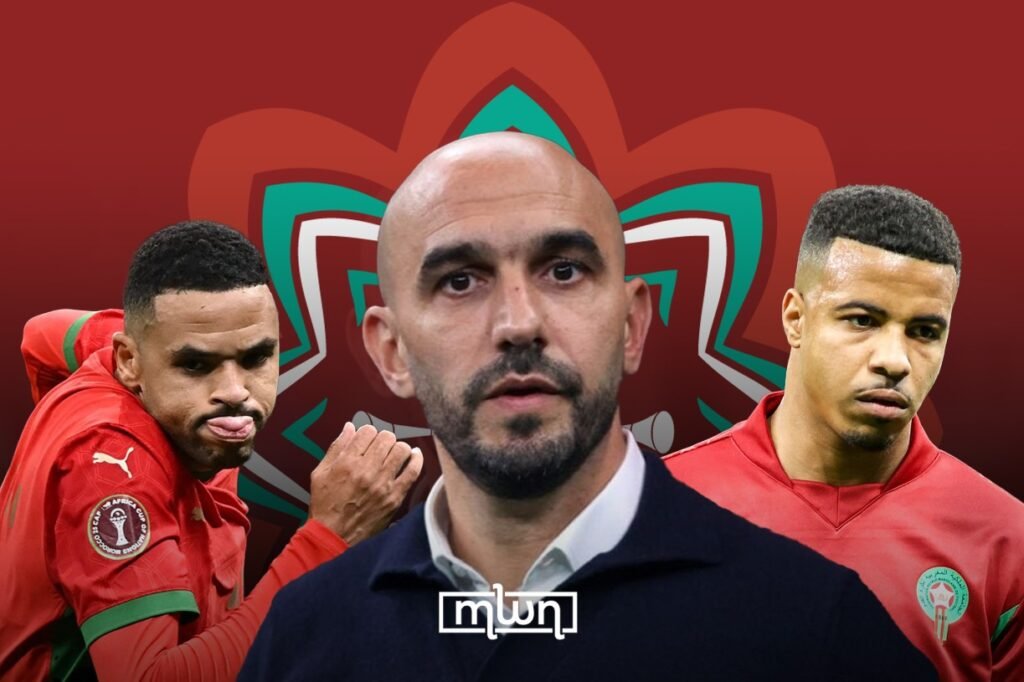
Rabat – Morocco head coach Walid Regragui used his post-match press conference following the AFCON semi-final victory over Nigeria to deliver a firm defence of Youcef En-Nesyri while publicly accepting responsibility for his decision to nominate young forward Hamza Igamane during the penalty shootout.
After 120 minutes of intense, scoreless football, Morocco sealed qualification for the final on penalties, with En-Nesyri converting the decisive spot kick.
The Sevilla striker, who began the match on the bench, has faced sustained criticism from sections of the Moroccan public in recent years, a reality Regragui addressed directly.
“He has been criticized for a long time, just like me,” Regragui said. “I don’t understand how a Moroccan supporter can turn their back on a player who has scored such important goals in the history of Moroccan football. He works for the team, he never complains, and today, he qualified us.”
Regragui stressed that En-Nesyri’s contribution goes far beyond goals, highlighting his work rate, defensive effort, and commitment to the collective.
The coach also underlined the psychological weight of taking the final penalty, noting that failure could have had lasting consequences for any player in Morocco.
Regragui said that missing a decisive penalty in Morocco can follow a player for a long time, adding that En-Nesyri’s willingness to step up reflected his strong personality.
Read also: Morocco Through to AFCON Final, Rabat Bursts Into Joy After Bounou’s Heroics
The coach also addressed his decision to assign a penalty to Hamza Igamane, acknowledging the pressure placed on the young forward, who has limited experience at this level.
Regragui made clear that the responsibility for that choice rested solely with him.
“I chose Hamza,” he said. “Maybe I shouldn’t have, because he’s still young and hadn’t played much. I put him into the fire. If we had been eliminated, it would have been my fault.”
Rather than deflecting blame, Regragui used the moment to underline a leadership philosophy built on accountability and player protection.
Throughout the tournament, he has repeatedly emphasised mentality, trust, and unity as central pillars of Morocco’s progress, often pushing back against a culture of individual scapegoating.
The coach also praised the wider group dynamic, describing a squad united by effort and sacrifice rather than individual status.
According to Regragui, this collective mindset has allowed different players to step up at decisive moments, whether as starters or substitutes.
He also highlighted the role of the Moroccan supporters, saying the team “played with twelve” on the night, and crediting the crowd for creating an atmosphere that lifted the players and made the difference in a tense, high-pressure match.
As Morocco prepares for Sunday’s final against Senegal, Regragui insisted that reaching the final is not an end in itself. “We haven’t done anything yet,” he said, stressing the need for recovery, focus, and togetherness ahead of what he described as the final step.