


- Success judged on ‘guest experiences’
- Focus on travel and digital payment
- Analysts warn of debt build-up
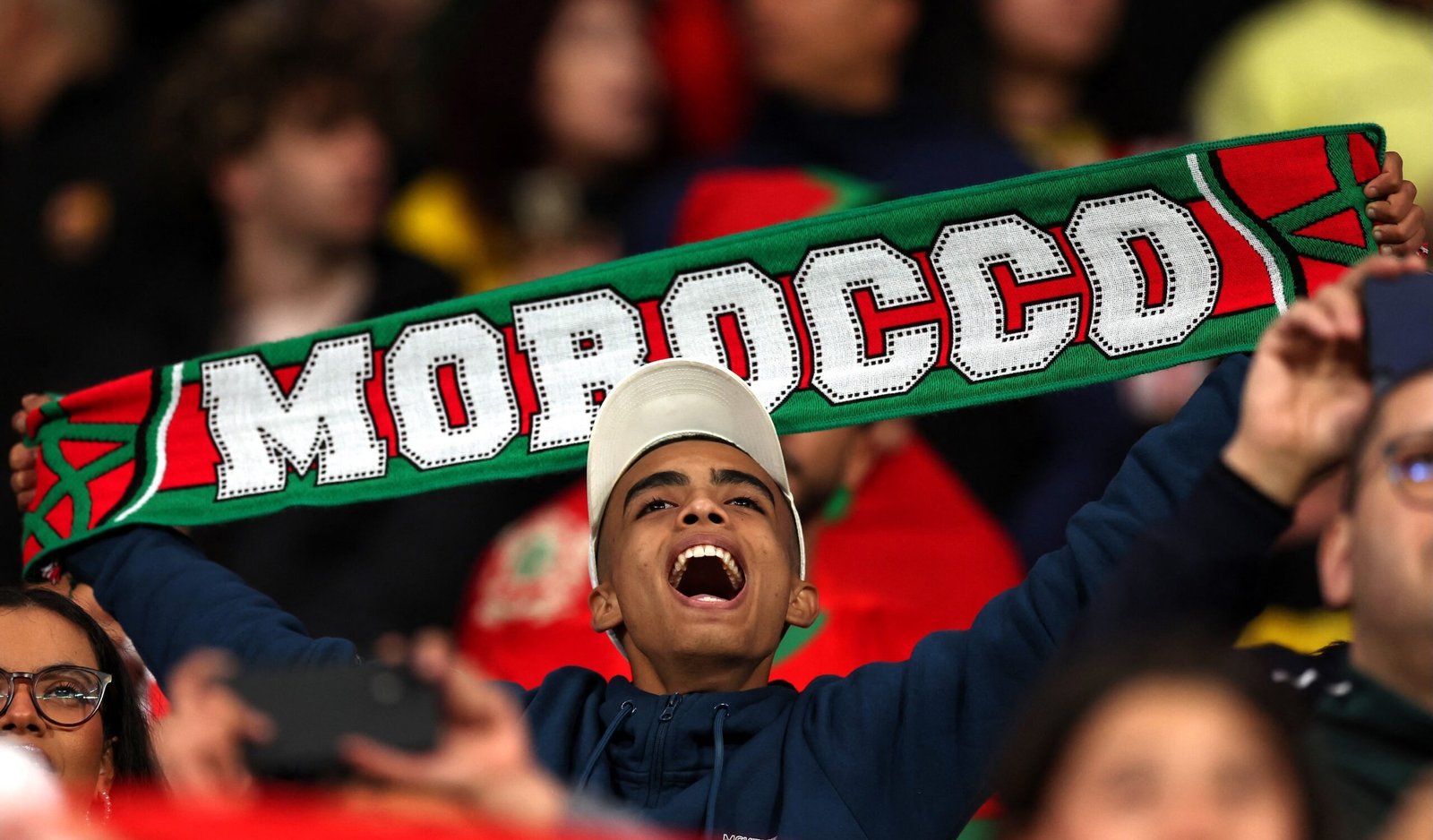
When Morocco reached the semi-finals of the 2022 Fifa World Cup in Qatar to become the first African nation to progress that far, the reverberations were heard around the globe.
Parties continued throughout the night in Casablanca. The streets of Paris and London were bathed in red flags. Doha swayed to the Cherifian Anthem.
Next week the Atlas Lions begin their quest to go one better at the tournament in the United States, Mexico and Canada. And with four years to go until Morocco co-hosts the event with Portugal and Spain, the organisers behind the North African leg will be keeping a keen eye across the Atlantic as they push on with ambitious sport, transport and tourism plans.
Success off the pitch will hinge not only on the projects’ timely completion but on how well the different components of the infrastructure development combine into a unified, upgraded system for welcoming and guiding visitors to and across the country, analysts have said.
“Morocco can build stadiums, expand airports, upgrade hotels, and modernise transport, but the World Cup will ultimately be judged through thousands of small guest experiences,” said Joel Jad Ortiz, founder of Marakkesh-based Emerald Star Consulting.
Ortiz cited as examples smooth airport flows and mobility within and between host cities, food safety mechanisms, availability of multilingual staff and digital payments, and “consistency between luxury promises and operational reality”.
In preparation for the event, and the 26 million tourist arrivals it expects that year, up from fewer than 20 million in 2025, the North African state is building what will become the world’s largest stadium, the Grand Stade Hassan II de Casablanca, in Benslimane, 60km northwest of the commercial centre of Casablanca.
It is also revamping six other stadiums around the country in a two-phase process that initially prepared them for the African Cup of Nations, the continental football tournament Morocco hosted over the winter.
A $1.2 billion terminal is under construction at King Mohammed V airport in Casablanca, and high-speed rail and highways are being drastically expanded.
The Hassan II Stadium will seat 115,000 spectators and bolster employment in the metropolitan area by thousands of direct and indirect jobs, said Aida Berrada, Morocco director at real estate advisory Colliers.

It will also link up with the enhanced airport, road and rail infrastructure to improve connections between Casablanca and the capital Rabat.
“This approach highlights the integration of the Hassan II Stadium into a broader ecosystem combining sports, transport, tourism and territorial development, directly supporting the national strategy for the 2030 World Cup and regional economic growth,” Berrada said.
High-speed trains are projected to travel from Tangier in the north of Morocco through Rabat and Casablanca to Marrakesh in less than three hours before the end of this decade, and will serve a total of 43 cities by 2040.
The ambition is that the new King Mohammed V airport becomes a “leading intercontinental hub” and strengthens Casablanca’s role as an economic, tourism and logistics crossroads for all of Africa, Berrada said.
Analysts, including AGBI columnist Geoff Porter, have warned of a build-up of debt by Morocco – rated as an investment grade credit by S&P but at one notch below by Moodys and Fitch – in the hope of a less-than-certain World Cup windfall.
The day-to-day reality for many citizens is also less than ideal. The official unemployment rate hovers at 13 percent, although the actual figure is almost certainly higher, Porter wrote last year.
Further reading:
Further reading:
Infrastructure spending caused the budget deficit to surge to nearly MAD34.5 billion ($3.7 billion) in January-February, from MAD24.8 billion in the same period last year, according to the economy and finance ministry.
Morocco is nonetheless planning to put $4 billion into adding 25,000 hotel rooms, or a fifth of current hotel capacity, ahead of the World Cup, said a senior tourism development official cited by Bloomberg in March.
The kingdom’s current pipeline of hotel development, at 75 new facilities and 10,606 rooms, is second only to Egypt in Africa, according to W Hospitality Group.
Ortiz says Morocco is moving at an “impressive” pace from announcing to executing projects.
“There is still work to be done, but Morocco has real momentum,” he said.
Occupancy rates and prices in Morocco’s hotels are rising after an increase in arrivals that began months ago and has already brought numbers above the pre-pandemic norm. The trend is accelerating because some tourists are eschewing Gulf destinations due to the Iran conflict in favour of North Africa.
As such, the country’s biggest challenge is to demonstrate it can perform at a “world-class level”, Ortiz said.
