


Marrakech – It was only a matter of time. In the wake of UN Security Council Resolution 2797 and a US-led negotiating framework anchored firmly in Morocco’s Autonomy Plan, the Polisario separatists and their Algerian patrons have begun doing what decades of diplomatic attrition made inevitable: capitulating on the very premise that justified their existence.
A throne built on lies will always need more lies to uphold it. The fiction of an independent Sahrawi state, long propped up by Cold War residue and Algerian petrodollars, is collapsing under the weight of geopolitical reality.
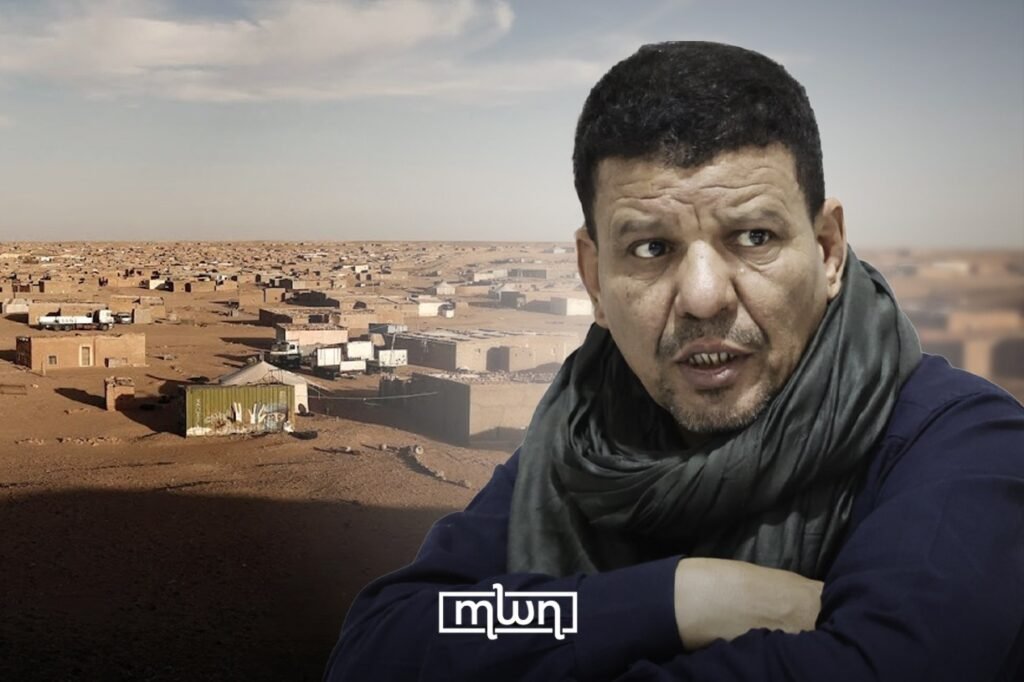
Speaking from the dusty encampments of Tindouf – that perennial theatre of contrived sovereignty – the Polisario’s pseudo-foreign minister, Mohamed Yeslem Beisat, conceded what amounts to a doctrinal surrender.
“We cannot make of independence the only option, as neither can the Moroccan Autonomy Plan be the only one,” he told Spanish media during the 50th-anniversary commemoration of the so-called “Sahrawi Arab Democratic Republic” (SADR).
While the Polisario’s rejection of autonomy as the sole basis for settlement is well-rehearsed and unsurprising, what is seismic here is the inverse: the separatist movement’s chief negotiator, representing an entity that has predicated its entire raison d’être on independence for half a century, now openly renounces it as a non-negotiable demand.
This tonal abdication signals a concession extracted not at the barrel of a gun but under the quiet, inexorable pressure of irrelevance – an irrelevance whose true cost is borne not by the apparatchiks negotiating in Washington but by the ordinary Sahrawis held hostage in Tindouf, warehoused for fifty years as human collateral in a geopolitical wager their captors are now quietly losing.
Yesterday’s imperialist aggressor is today’s honest broker
Beisat went further, acknowledging the centrality of Washington’s mediation – a mediation operating squarely within the parameters of Moroccan sovereignty. “Credit must be given to the American administration,” he admitted, before adding that “the United States is one of the few powers that can compel Morocco to negotiate.”
The irony is exquisite: the same administration that first recognized Moroccan sovereignty over the Sahara in 2020 – a decision the Polisario condemned “in the strongest terms” as an illegitimate act by a rogue outgoing president – is now the mediator they laud as credible and indispensable. Yesterday’s imperialist aggressor is today’s honest broker, it seems, when the alternative is oblivion.
Morocco, for its part, has never refused dialogue – it has merely insisted, with implacable logic, that all parties sit at the table, Algeria foremost among them. After all, in the lexicon of proxy warfare, one does not negotiate terms with the ventriloquist’s dummy when the ventriloquist is sitting in the next room. Algiers bankrolls the camps, arms the cadres, and dictates the red lines; the Polisario merely recites them.
What Beisat euphemistically calls mediation is, in practice, the supervised dismantling of the separatist fantasy. Three rounds of consultations – two in Washington, one at the US embassy in Madrid – have already taken place since Resolution 2797, which dispensed with decades of procedural equivocation and enshrined genuine autonomy under Moroccan sovereignty as the only credible framework for a lasting political settlement.
The resolution, adopted last October, did not merely advance a preference – it closed the “which solution” debate altogether and redirected the diplomatic machinery toward implementation. The Polisario was not consulted on the resolution’s language. It was notified.
Even the ageing grandees of the movement can no longer sustain the pretence. Bachir Mustafa Sayed, a veteran Polisario figure, acknowledged to visiting Spanish delegations that “the Americans insist that by April or May we must reach another speed in the search for a settlement.” The old guard knows the clock is ticking – and that the hands move in Rabat’s favor.
The numbers alone are a eulogy for the separatist cause
Meanwhile, the diplomatic haemorrhage afflicting the phantom republic accelerates. On April 10, Mali – a country that had recognized the self-styled “SADR” since 1980 – formally withdrew that recognition, declaring Morocco’s Autonomy Plan “the only serious and credible basis for resolving this dispute.”
Bamako’s decision, announced by Foreign Minister Abdoulaye Diop following talks with his Moroccan counterpart Nasser Bourita, cited the dossier’s direct implications for sub-regional peace and security. Mali thus joins a cascading procession of defections: Bolivia suspended recognition in February, following Panama, Ecuador, Peru, and a growing list of Latin American and African states that have recalibrated their positions in recent years.
More than 40 countries have now withdrawn or frozen recognition of the SADR – a haemorrhage that shows no sign of clotting. The precise count depends on who is tallying and how generously one defines “recognition.”
However, the most unforgiving arithmetic exposes a ruinous truth. By some credible estimates, as few as 29 states still cling to this Algerian-manufactured juridical phantom – a figure that has plummeted from over 80 at its Cold War zenith. This means that roughly 85% of the world’s nations have either never recognized the phantom republic or have had the strategic clarity to walk it back.
Twenty-nine countries constitute a roster that reads less like a coalition and more like a roll call of the geopolitically marginal, the ideologically fossilized, and the diplomatically inert. That is the sum total of what half a century of Algerian treasury-bleeding and Polisario mythmaking has purchased: a support base that would struggle to fill a mid-sized UN committee room.
The erosion is particularly devastating on the African continent, the one arena where the SADR clings to institutional legitimacy through its anomalous membership in the African Union. Of the 55 AU member states, roughly 22 African nations still recognize the entity – and the number shrinks with each diplomatic season. The AU Executive Council voted in 2024 to bar Polisario participation in international summits and fora, limiting attendance to UN-recognized states.
This was not a procedural footnote; it was a tacit institutional admission that the SADR’s presence had become an embarrassment. Major global powers – the United States, France, Russia, China, Japan, South Korea – have all, at various junctures, refused to seat the Polisario at joint summits with Africa, forcing cancellations and protocol contortions that undermine the AU’s collective credibility.
As early as 2016, 28 African states – a majority – signed a petition to expel the SADR from the Union. The political and legal conditions for that expulsion are now more mature than ever, and observers of continental affairs regard it as a question of when, not whether.
No amount of anniversary fanfare in Tindouf can paper over the arithmetic of abandonment
The broader strategic landscape renders the separatist cause not merely untenable but anachronistic. The United Kingdom endorsed Morocco’s Autonomy Plan as the most viable basis for resolution in June 2025. France declared it the “only basis” for a settlement in July 2024.
Spain – the former colonial power and the one state the Polisario invokes most fervently – shifted its position in 2022, a realignment that Beisat himself bitterly but impotently contests. Resolution 2797 consolidated these positions into the formal architecture of international consensus.
What remains of the Polisario’s diplomatic arsenal is, at this stage, rhetorical theatre. Beisat’s protestations that “Morocco is not a fully democratic regime capable of sustaining a reliable autonomy” ring hollow from a man representing a one-party apparatus that has governed refugee camps under Algerian military tutelage for five decades without ever holding a contested election.
As Edward Said once observed, “every empire tells itself and the world that it is unlike all other empires, that its mission is not to plunder and control but to educate and liberate” – and so it is with the Polisario, which lectures sovereign nations on democratic governance while presiding over a hermetic apparatus where dissent is unthinkable and succession is ordained.
One might also gently remind the pseudo-minister that inscribing “Democratic” and “Republic” into the name of an entity does not conjure democracy into existence any more than painting stripes on a donkey produces a zebra. “Facts do not cease to exist because they are ignored,” says Aldous Huxley.
His claim that “Western powers have realized that imposing a solution does not work” conveniently ignores that the solution being advanced – autonomy under Moroccan sovereignty – is not imposed but endorsed by a broader international consensus than the separatist cause has ever commanded.
The trajectory is unambiguous. Each withdrawn recognition, each Security Council resolution, each diplomatic realignment narrows the corridor within which the Polisario can maneuver.
Mali’s defection is not an isolated event; it is a data point in a trendline. The tectonic plates beneath the Polisario’s dwindling coalition are shifting across the continent, and the next withdrawals are less a question of political will than of diplomatic sequencing.
Nigeria, Africa’s most populous nation and a co-architect of the Nigeria-Morocco Atlantic Gas Pipeline, has already subordinated its Cold War-era sympathies to the gravitational pull of Rabat’s economic statecraft. Abuja cannot credibly invest its energy future in a corridor that traverses Moroccan sovereign territory while simultaneously recognizing an entity that contests that sovereignty.
Ethiopia, consumed by its own existential battles against internal separatism, has grown ideologically incompatible with a movement that enshrines secession as a founding principle; its deepening partnership with Morocco in the fertilizer sector merely accelerates an alignment that Addis Ababa’s own domestic logic demands.
Rwanda, whose leadership shares with Rabat a vision of a muscular, institution-driven Africa unencumbered by phantom states, has already resisted Algerian pressure at the AU and backed Morocco’s candidacy for the Peace and Security Council – the formal recognition withdrawal is, at this point, a bureaucratic formality trailing a political reality already in motion.
Angola, once a bulwark of Third-Worldist solidarity with the Polisario, is quietly disentangling itself from the ideological architecture of a bygone era as it pivots toward Atlantic pragmatism and eyes Moroccan port expertise for its own coastal modernisation. One by one, the pillars that held the separatist edifice upright are being repurposed to build something else entirely.
The question confronting Algiers – the sole sustaining force behind this geopolitical artifice – is whether to continue bankrolling a cause that its own proxies have begun to abandon, or to channel its resources toward the internal crises that its Sahara obsession has long obscured. For the Polisario, the 50th anniversary of the SADR was meant to be a celebration. It looked, instead, like a wake.