


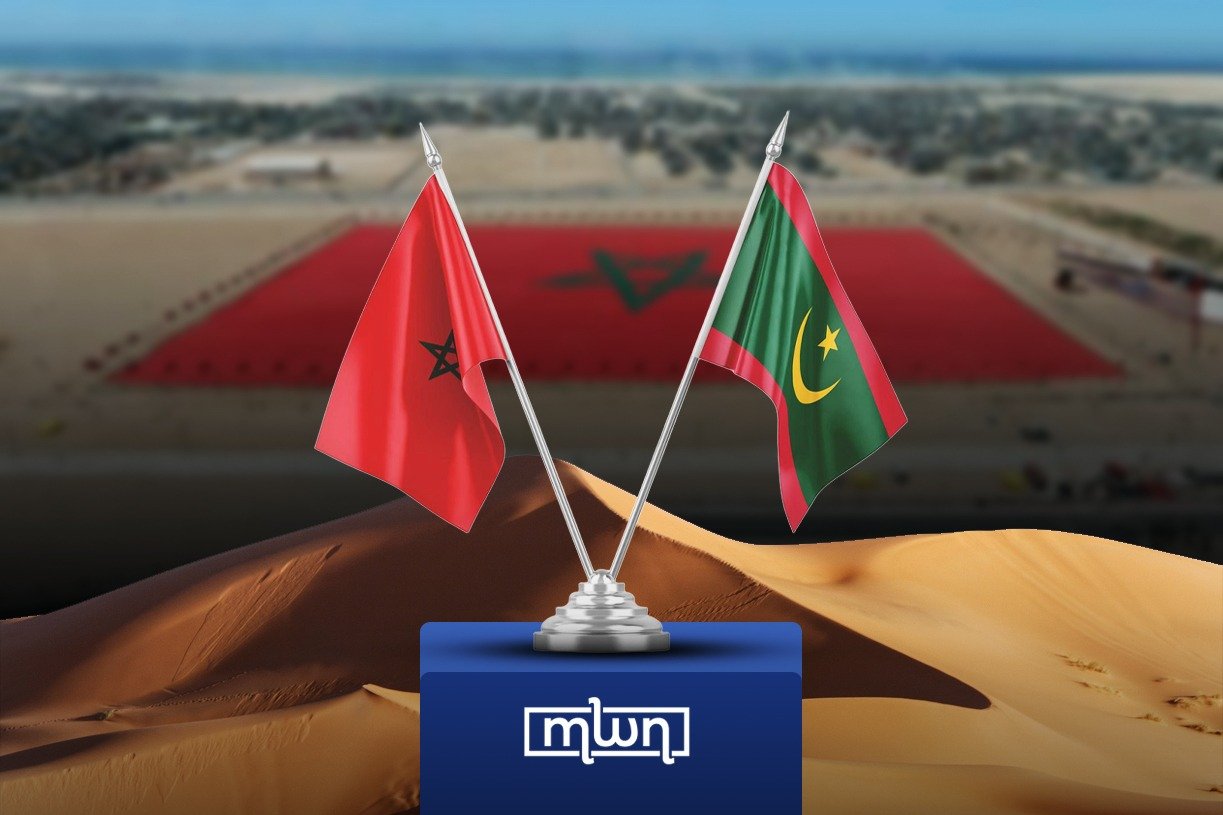
The enthusiasm with which Moroccans discuss the Sahara issue can at times turn into a breeding ground for misconceptions that stray from historical reality and, in doing so, do an enormous injustice to the Moroccan statesmen who, during a decisive period in the country’s modern history, worked tirelessly to defend its vital interests. One such misconception is the claim that Morocco “committed a historic mistake” by agreeing to partition the Sahara with Mauritania.
Proclamations made with such certainty about such a delicate historical matter betray a profound misunderstanding of both the political context in which that decision was taken and the structural constraints that shaped Morocco’s options at the time. This discourse not only obscures the strategical calculations that led to the decision, but also diminishes its strategic significance and the enduring impact it ultimately had on the fate of the territory under Moroccan sovereignty.
King Hassan II’s diplomatic strategy at the United Nations
King Hassan II’s political acumen and strategic intuition played a decisive role in thwarting Spain and Algeria’s plan to establish a satellite state in southern Morocco. In 1966, the United Nations General Assembly laid the foundation for a self-determination framework with the adoption of Resolution 2229. Following the passing of that resolution, the General Assembly repeatedly urged Spain to take all necessary measures to enable the inhabitants of the Sahara to exercise their right to self-determination freely, transparently, and democratically, in line with established international standards. Yet for eight years, Spain refrained from implementing any of the provisions contained in those resolutions.
From 1966 to the end of 1974, Morocco operated under conditions of pronounced regional diplomatic isolation, in great part as a result of the alliance formed by Spain with both Mauritania and Algeria to obstruct the kingdom’s efforts to recover the Sahara. Whenever Morocco attempted to break this isolation through rapprochement with Mauritania and Algeria — as evidenced by its recognition of Mauritania in September 1969 or the signing of a border demarcation agreement with Algeria in June 1972 — Spain moved swiftly to undermine that momentum and neutralize the diplomatic pressure King Hassan II was seeking to build.
In the case of Mauritania in particular, Spain’s ability to thwart the King’s efforts was reinforced by the limited level of trust Morocco enjoyed among Mauritanian political leaders. Rabat’s refusal to recognize Nouakchott’s independence for nearly a decade had entrenched a perception within the Mauritanian political elite that Moroccan territorial claims represented the most serious existential threat to their newly independent state. This perception persisted even after Morocco officially recognized Mauritania. Within this context, Mauritanian elites did not view Morocco’s restoration of its sovereignty over the Sahara as aligning with their national interest. On the contrary, many considered it preferable for the territory to remain under Spanish occupation, or for a satellite to be established there, thereby avoiding the prospect of sharing a border with Morocco.
As I demonstrated in detail in the book I published on this subject in English in the summer of 2024, and more briefly in the Arabic-language book I published this month, this Mauritanian orientation was clearly reflected in the discourse it adopted within the General Assembly throughout the period from 1963 to the end of 1974. From the moment Mauritania first began to challenge Morocco’s territorial claims over the Sahara in the autumn of 1963, its objective was never to compel Spain to end its occupation of the territory or to enable its inhabitants to exercise self-determination. Rather, its primary aim was to cast doubt on the legitimacy of Morocco’s position and undermine the credibility of the historical and legal arguments Rabat was advancing to consolidate its case.
A defining feature of Mauritania’s diplomatic discourse in the debates of the General Assembly, the Fourth Committee, and the Special Committee was its consistently cordial and accommodating tone toward the Spanish delegation, in stark contrast with its aggressive and confrontational posture toward the Moroccan delegation. Facing coordinated pressure from both Morocco and Mauritania might have compelled Madrid to act in accordance with Resolution 2229 and subsequent resolutions by enabling the inhabitants of the territory to exercise their right to self-determination freely and transparently. Yet that joint pressure never materialized; instead, Spain remained in a position of sustained diplomatic comfort. This ultimately allowed Madrid to pursue policies aimed either at maintaining the Sahara under its sovereignty or, at worst, facilitating the emergence of a nominally independent state operating under Spanish influence.
Thus, after creating favorable conditions for the establishment of a fictitious entity in southern Morocco, consolidating its alliance with both Mauritania and Algeria, and promoting a narrative that portrayed the inhabitants of the Sahara as a distinct people with no historical ties to Morocco, Spain announced in August 1974 that it would allow the population of the territory to exercise their right to self-determination during the first half of 1975. Approximately one month later, on September 17, the late King Hassan II held a press conference in which he announced that Morocco would submit an official request to the International Court of Justice to examine the dispute then opposing Morocco and Spain. However, for the Court to exercise jurisdiction and issue a binding ruling, Spain had to submit a similar request. Yet Madrid refused, arguing that no legal dispute existed between the two countries over the Sahara, that the matter was already before the General Assembly, and that Morocco itself had originally called for the Sahrawis to exercise self-determination.
Faced with Spain’s refusal, King Hassan II had little to no choice but to pursue an advisory opinion from the International Court of Justice rather than a binding judgment. However, even this option posed significant diplomatic challenges. Morocco needed to secure a General Assembly resolution postponing the Spanish referendum and requesting the Court’s opinion. But reaching that goal was unattainable as long as Morocco could not secure the support of Mauritania, which was itself recognized as a party to the dispute. Rabat thus launched an intensive diplomatic campaign in the days following the King’s press conference, dispatching delegations to key international capitals in an effort to build support ahead of the General Assembly session scheduled to open at the end of September.
Mauritania’s support boosted Morocco’s position in regional diplomacy
Yet upon arriving in New York, a high-level Moroccan delegation led by Foreign Minister Dr. Ahmed Laraki, quickly realized that the diplomatic environment was far less favorable than anticipated. Delegations addressing the General Assembly refrained from endorsing Morocco’s initiative. Even traditionally supportive states, such as Saudi Arabia, withheld their backing, largely as a result of Algeria’s counter-diplomatic mobilization. Confronted with this unfavorable landscape, the Moroccan foreign minister held a pivotal meeting with his Mauritanian counterpart, Hamdi Ould Mouknass, shortly before both were due to address the Assembly.
The meeting marked a decisive turning point in the management of the conflict, fundamentally altering its diplomatic trajectory and creating the conditions under which Morocco would ultimately be able to safeguard its historical claims. At the behest of the Mauritanian foreign minister, the two parties reached a preliminary political understanding that entailed the partition of the Sahara between Morocco and Mauritania. Critically, they agreed that the deal’s precise modalities would be negotiated at a later stage. The Moroccan foreign minister endorsed this proposal, seeing it as a strategic accommodation shaped by prevailing diplomatic constraints. Although Morocco had failed to secure broad support within the General Assembly, the bilateral understanding with Mauritania — itself formally recognized as a party to the dispute — proved sufficient to shift the diplomatic balance. The Assembly subsequently adopted Resolution 3292 in December 1974, requesting an advisory opinion from the International Court of Justice and suspending Spain’s plan to organize a self-determination referendum.
Given this historical context, it goes without saying that critics who mischaracterize Morocco’s decision to agree to a partition arrangement with Mauritania as a strategic mistake overlook the prevailing balance of power within the General Assembly at the time of the agreement. The diplomatic climate heavily favored Morocco’s adversaries back then, leaving Rabat with limited maneuvering room. When Rabat announced its intention to seek an advisory opinion from the International Court of Justice, it did so from a position of relative weakness, particularly given that Mauritania continued to challenge Morocco’s sovereignty claims and remained primarily motivated by the objective of avoiding a shared border with Morocco.
Moreover, General Assembly resolutions adopted between December 1966 and December 1973 had increasingly entrenched the notion of a distinct “Sahrawi people” entitled to self-determination. As a result, most influential states within the Assembly were hostile to Morocco’s position advocating territorial unity with the Sahar, instead favoring a self-determination process that could culminate in the creation of an independent Sahrawi state. Without a bilateral understanding with Mauritania, the prevailing alignment within the General Assembly would likely have persisted, enabling Spain to secure a resolution endorsing its plan to organize a self-determination referendum during the first half of 1975.
The Moroccan-Mauritanian understanding also proved decisive at the regional level, enabling the Arab League to adopt a unified position in support of Morocco’s diplomatic strategy. Prior to the agreement, the Arab League had deliberately avoided taking a clear stance on the dispute to avoid divisions among its member states. King Hassan II was acutely aware of these sensitivities. Indeed, when he announced his intention to refer the dispute to the International Court of Justice during his press conference of September 17, 1974, the King explicitly stated that he would not raise the issue at the Arab League summit Morocco was preparing to host from October 26 to 29. In this context, the Moroccan-Mauritanian partition agreement fundamentally altered the regional diplomatic landscape. For one thing, it cleared the path for the Arab League to adopt a resolution in which all member states, including Algeria, unanimously endorsed Morocco’s diplomatic campaign to restore sovereignty over the Sahara.
The partition agreement fueled resentment, frustration in Algiers and Madrid
One of the most consequential outcomes of the agreement between Ahmed Laraki and Hamdi Ould Mouknass was Mauritania’s abrupt realignment with the Moroccan position. After nearly a decade of adopting a discourse hostile to Morocco and closely aligned with Spanish and Algerian positions, Mauritania openly supported Morocco’s initiative and called on the General Assembly to endorse Morocco’s request for an advisory opinion from the International Court of Justice. Yet Spain remained unmoved.
Despite Mauritanian Foreign Minister Ould Mouknass’s declaration of support for the Moroccan initiative on October 1, 1974, Madrid intensified its opposing diplomatic campaign. During the General Assembly’s general debate in early October, as well as throughout the deliberations of the Fourth Committee later that month and the subsequent debates in November and December 1974, Spain actively sought to persuade member states to preserve the option of conducting a self-determination referendum in the first half of 1975.
The clearest illustration of this dynamic was the lengthy speech that Spanish Foreign Minister Pedro Cortina gave before the General Assembly on October 2, 1974. In that address, the Spanish diplomat sought to persuade member states that there existed no bilateral dispute between Morocco and Spain over the territory and that the issue under consideration was solely a decolonization matter concerning the inhabitants of the Sahara. When Spain realized that it was losing the diplomatic initiative and that Morocco was close to securing majority support within the Assembly, it resorted to a final maneuver: announcing its willingness to allow a United Nations mission to visit the territory to prepare the conditions for organizing a self-determination referendum during the first half of 1975.
The dispatch of such a mission had been a central requirement of Resolution 2229 (1966) and the subsequent resolutions adopted through 1974 to enable the inhabitants of the Sahara to exercise their right self-determination. Yet, as we have seen, Spain had deliberately ignored that requirement for eight years. Madrid’s announcement was therefore intended to revive the prospects of a referendum and to undermine Morocco’s campaign to obtain General Assembly approval for referring the dispute to the International Court of Justice. Yet this Spanish maneuver came too late, as Morocco had already secured the backing of an overwhelming majority of member states.
From partition to the enduring Moroccan momentum
Given that this well-documented historical background is readily available to anyone with a modicum of interest in genuine research, it beggars belief that many continue to underestimate the central significance of the agreement between Morocco and Mauritania, failing to recognize that it played a decisive and historic role in tipping the diplomatic balance in Morocco’s favor. To be sure, this agreement provided the late King Hassan II with the diplomatic space and time necessary to make the arrangements that would ultimately compel Spain to end its occupation of the territory through the organization of the Green March. Without that Moroccan-Mauritanian understanding, Morocco would not have been able to secure the adoption of Resolution 3292 by the General Assembly, and the dispute might have evolved in a direction incompatible with Morocco’s established historical and legal rights over the Sahara.
Indeed, the agreement came as a profound shock to both Spain and Algeria, which had grown accustomed to relying on Mauritania in their conspiracy to prevent Morocco from restoring its sovereignty over the Sahara. The resentment and anger provoked by Mauritania’s new position reportedly led Algerian President Houari Boumédiène, during one of his meetings with Mauritanian President Moktar Ould Daddah, to threaten the deployment of Algerian volunteers to strike the Mauritanian economy and, potentially, to even attack the capital, Nouakchott.
Boumédiène’s intense hostility toward Morocco stemmed from the fact that the Moroccan-Mauritania agreement essentially disrupted a secret plan devised by influential sectors of the Spanish military in coordination with Algeria. Under this clandestine arrangement, Spain would withdraw from the Sahara following a managed referendum, only to be immediately replaced by Algerian forces operating under the guise of Polisario fighters.
Read also: The Bourita Effect: Kenya’s Western Sahara U-turn Is a Testament to Morocco’s Visionary Diplomacy
Similarly, the resentment that persisted among segments of Spanish public opinion in the years and decades following the Green March can be traced to Morocco’s successful dismantling of carefully orchestrated Algerian-Spanish schemes to establish a satellite state in the Sahara serving Spanish and Algerian interests at the expense of Morocco’s sovereignty.
Thus, for any Moroccan still questioning why Morocco agreed to a partition arrangement with Mauritania, a brief plunge into the historical record is sufficient to attest to the fact that this decision was a strategic necessity dictated by the regional and multilateral dynamics of the time. Most importantly, perhaps, rather than a historical mistake, the decision has, with the benefit of hindsight, proven to be a strategic masterstroke. It laid the groundwork for Morocco’s eventual dismantling of the obstructionist Algiers-Madrid axis, thus providing the diplomatic leverage Rabat needed to decisively secure Spain’s exit from the region and build up the momentum that led to all the subsequent gains that have since made it possible for Morocco to practically reclaim its southern provinces.
Samir Bennis is the co-founder and publisher of Morocco World News. You can follow him on Twitter @SamirBennis.
