


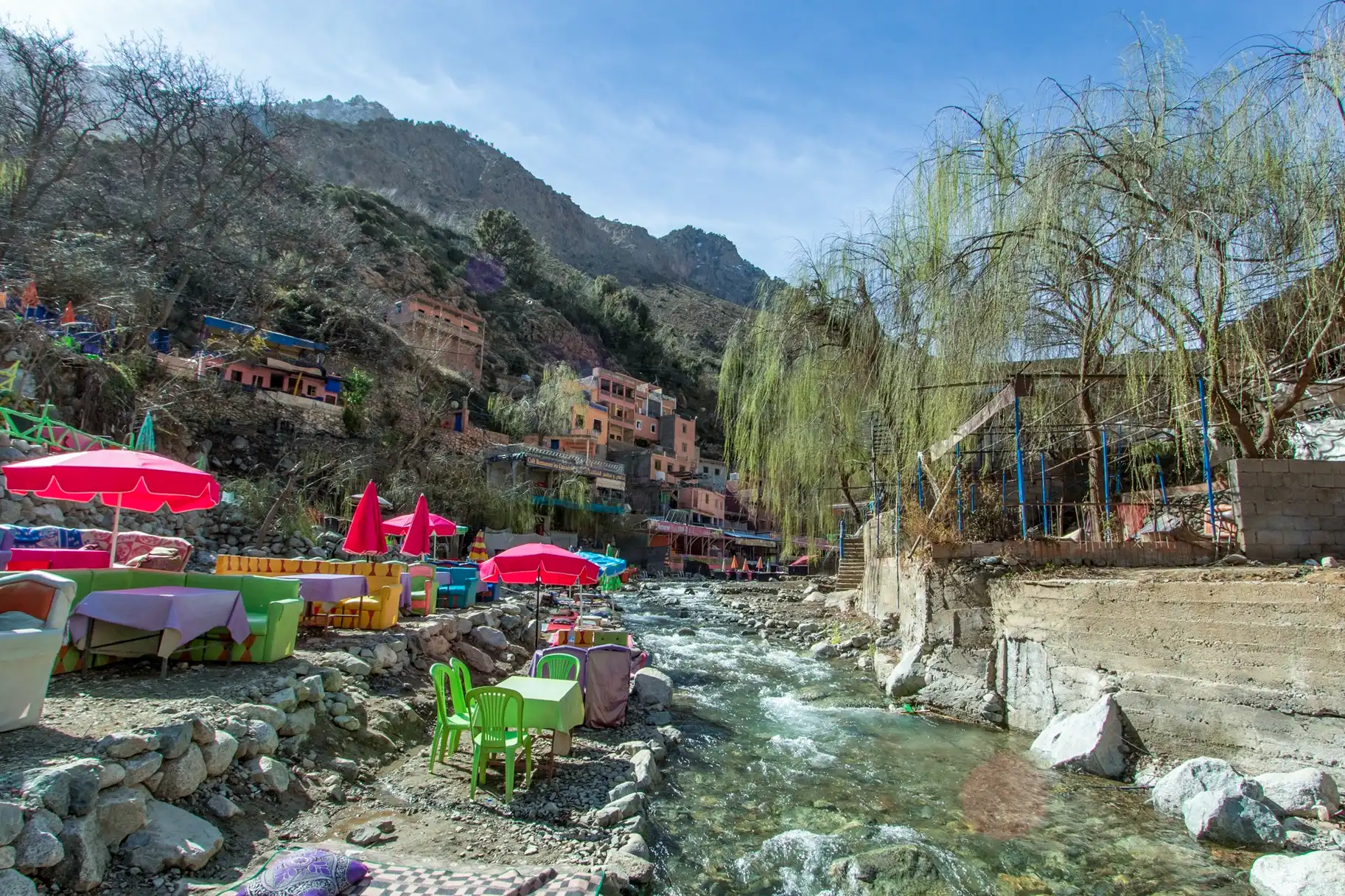
Rustic mountain roads, a salt mine tucked inside a national park, crystals sparkling by a riverbed, and a tajine bubbling over firewood—that is what a full day in the Ourika Valley looks like. If you are searching for an experience that goes beyond the usual Marrakech day trip checklist, a visit to the Ourika Valley salt mine and a hands-on tajine cooking session should be at the top of your list.
This corner of the Atlas Mountains feels like a different world. Families here have been mining salt for generations, the same salt that seasons the food, preserves the olives, and even supplies the tanneries of Marrakech. And when a local chef invites you to watch him build a tajine from scratch—using that very salt—you start to understand how deeply connected Moroccan life is to the land around it.
The Hidden Salt Mine of Ourika Valley
Getting to the salt mine means kicking off your shoes and stepping into the river. The entrance is not signposted or surrounded by tour buses—it sits quietly inside the national park, where the Atlas foothills meet the water. Once you wade in and find a flat rock to sit on, the landscape opens up around you.
The mining operation is entirely natural. Workers extract large blocks of rock salt, and if you look closely at the riverbanks, you can see crystals of salt pushing through the earth—buckets and buckets of the stuff, forming right before your eyes. There are also blue rocks scattered along the water, which locals use as a natural soap. It is the kind of place where kids scramble over boulders hunting for crystals while their parents try to take it all in.
Why Salt Matters So Much in Morocco
Salt is woven into nearly every part of Moroccan daily life. Beyond cooking, it is essential for the country’s famous tanneries, where it plays a key role in turning raw hides into finished leather goods. It is also the backbone of olive preservation—those jars of salty, tangy olives you find in every Moroccan market owe their flavour to this mountain salt.
The family who runs this particular mine also supplies salt to tanneries from a small shop out back. Across the Atlas range, from Tagadette to Marida, other families have historically done the same, though many have since moved on from the trade. This mine in the Ourika Valley is one of the places where the tradition carries on.
From Salt Mine to Kitchen: A Chef’s 18-Year Partnership
One of the most fascinating parts of this visit is meeting the chef who has been working with the mining family for nearly 18 years. As a professional cook, he is passionate about artisanal ingredients and community collaboration. He takes the refined salt from the mine, works it a little more at home, and then sells it to restaurants across Marrakech—and they love it.
But he does not stop at plain salt. He creates flavoured blends: salt with roasted cumin, harissa salt, fennel and lemon salt. Each one is made by hand, keeping an exceptional artisanal craft alive. When he talks about his work, you can feel the pride—this is someone who genuinely believes in supporting the communities and traditions that make Moroccan food so special.
Traditional Tajine Cooking with Ourika Valley Salt
After exploring the mine, the afternoon turns to food—and this is where the day really comes together. The chef walks you through every step of building a traditional Moroccan tajine, and it all starts with the salt you just saw being pulled from the earth.
Choosing and Preparing the Meat
The chef is particular about his ingredients. He tells his butcher never to chop the meat—he wants whole pieces of lamb alongside chunks of potato. The seasoning starts simply: the mine’s own salt, a drizzle of oil, and a special saffron and roasted pepper honey called Russell honey. A thin layer of olive oil helps the marinade cling to the meat. His advice? Let it sit for half a day, or even overnight, for the deepest flavour.
Building the Tajine Layer by Layer
Two sliced onions go in next. The onions are important—they create the muta, the thick, rich sauce that gives a good tajine its soul. They thicken the liquid, release juice, and bring everything together. No extra water is added. All the moisture comes from the onions, the meat, and the steam trapped under the cone-shaped lid.
On top go potatoes, fresh broad beans, and peas. Because the beans and peas need a touch of acid to balance their sweetness, old-fashioned preserved lemons are tucked in—the sticky, deeply flavoured kind that pair perfectly with red meat. For a dish like tangia marakchia, this same salt and combination of spices would also be used.
Slow Cooking Over Firewood
The tajine goes onto the fire and cooks slowly. With red meat, patience is everything. You check on it now and then, and if you need to add water at all, it should be just a tiny splash—the bottom of a shot glass, no more. By the time the lid comes off, the vegetables are soft, the meat is tender underneath, and the kitchen smells incredible. The result is a tajine that is neither too salty nor too spiced—just rich, balanced, and deeply satisfying.
Practical Tips for Visiting the Ourika Valley Salt Mine
How to Get There
The Ourika Valley is about an hour’s drive south of Marrakech, following the road into the Atlas foothills. You can take a shared taxi from Marrakech—they are affordable and leave once full—or arrange a private transfer. The roads are rustic and winding, which is part of the charm.
What to Bring
Wear shoes you do not mind getting wet—you will need to walk through the river to reach the mine. Bring sunscreen and a hat, especially in summer. A small bag is handy if you want to carry home any salt or crystal souvenirs.
Best Time to Visit
Spring and autumn are ideal—the weather is comfortable and the valley is green. Summer works too, but it gets warm in the afternoons. If you time your visit around the local souk day, you will see the valley at its liveliest, with livestock and farmers filling the market.
A Family-Friendly Day Out
This is a brilliant day trip for families. Kids love hunting for crystals by the river, climbing over the rocks, and watching the firewood being gathered for the tajine. It is the kind of hands-on, outdoor adventure that keeps everyone—adults and little ones—completely absorbed.
A Day That Connects You to Morocco
A day in the Ourika Valley is more than a sightseeing trip. It is a chance to step inside a living tradition—to see where salt comes from, to understand how it reaches your plate, and to taste a tajine made with ingredients that came straight from the land around you. That kind of connection is what makes travelling in Morocco so rewarding.
Have you visited the Ourika Valley or tried cooking a traditional tajine? I would love to hear about your experience. Drop a comment below and share your favourite Moroccan food memory—or ask me anything about planning a visit. Let’s keep the conversation going!
