


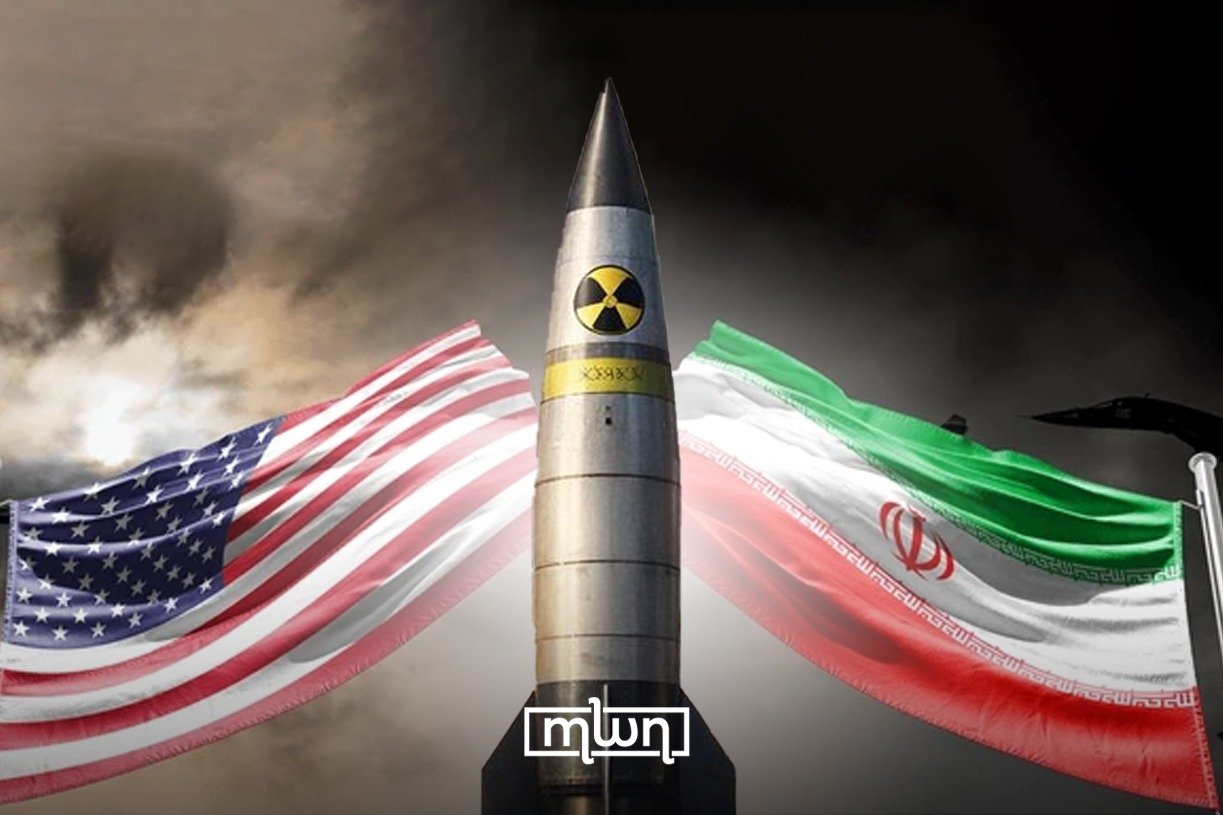
Rabat – Approaching the talks, the US and Iran expressed the desire for a diplomatic solution to avoid a full scale conflict, despite consistent military threats from US President Trump.
US Secretary of State Marco Rubio remained skeptical ahead of the meeting, stating at a press conference: “Iran possesses a very large number of ballistic missiles, particularly short range missiles that threaten the United States and our bases in the region and our partners in the region. I want everyone to understand that.”
Iran’s foreign minister Araghchi responded to Trump’s claims during Tuesday’s State of the Union address that Tehran is developing missiles capable of reaching the US. Araghchi said his country’s missiles are only “defensive” with “deliberately limited” range and that Trump has “become a victim of fake news.”
Concerns of US military attacks loom as the USS Gerald Ford, the world’s largest aircraft carrier, is currently on its way from Crete to the Middle East. The USS Abraham Lincoln is already stationed near the Gulf of Oman, not to mention the more than 300 US military aircraft that have been flown in over the past weeks.
On Wednesday, Trump put more pressure on achieving a deal by further tightening sanctions for Iran’s oil sector and weapons program.
Negotiation points
Concerns over Iran’s nuclear capacity remain a key concern for the US, with Trump saying that he “will never allow the world’s number one sponsor of terror, which they are by far, to have a nuclear weapon. Can’t let that happen.” He made the remarks during his State of the Union address earlier this week.
Before the talks began, President Masoud Pezeshkian said Iran’s Supreme Leader Ayatollah Ali Khamenei has banned weapons of mass destruction, which “clearly means Tehran won’t develop nuclear weapons.”
Iran’s foreign minister Seyed Abbas Araghchi elaborated in a social media post that “Iran will under no circumstances ever develop a nuclear weapon; neither will we Iranians ever forgo our right to harness the dividends of peaceful nuclear technology for our people.”
The Iranian government’s IRNA news agency said the most recent proposal was intended to gauge how serious the US was in pursuing diplomacy as it contained “win-win” offers.
Iran’s supreme leader, Ayatollah Ali Khamenei, had previously banned American companies from entering the country in the first set of negotiations. Iranian officials now say their proposal includes a commitment to buying American goods and inviting American companies to invest in Iranian energy, oil, and gas with newly granted access to mined minerals like lithium.
Iran was also expected to offer a suspension of nuclear activity and uranium enrichment for three to five years, maintaining only a low level at 1.5% for medical research. After the initial suspension, Iran would join a nuclear consortium. The country would also allow UN inspectors to oversee the dilution of its remaining 400 kilograms of highly enriched uranium.
Still, Iran’s refusal to discuss its ballistic missiles remains a “big problem” for the US.
Negotiations began again Thursday morning in Geneva. Araghchi met with Oman’s foreign minister Badr al-Busaidi, who mediated the talks in this third round of negotiations. Al-Busaidi shared “views and perspectives” from Iranian officials with the American negotiating team.
US special envoy Steve Witkoff assessed Iran’s latest proposal, and al-Busaidi said that US “negotiators demonstrated unprecedented openness to new and creative ideas and solutions” after he met Witkoff and Jared Kushner.
After an initial three-hours of talks, al-Busaidi said the two sides were “exchanging creative and positive ideas,” and would resume again after the break. “We hope to make more progress,” he wrote in a post on social media.
The talks ended after a total of six hours with no deal, but Iran’s foreign minister said there was progress with the two countries reaching an understanding on some issues. He added that differences still stand on other issues, without elaborating.
“More than ever there is seriousness on both sides to reach a deal,” said Araghchi. “It was one of our best negotiating sessions.”
The White House made no immediate comment.
Fragile economy and social state in Iran
Iran continues to face extreme inflation and social unrest. The Statistical Center of Iran and the Central Bank of Iran shared separate reports on Thursday showing that inflation on basic necessities has increased by over 60% in the past 12 months.
Food prices in Iran also doubled this year and the average family food basket is 30 times more than it was in 2016.
Since Trump pulled the US out of a nuclear deal with Iran and reinstated heavy sanctions in 2018, the Iranian currency has seen a 95% decrease in its value against the US dollar. Iran’s national currency, the rial, has hit an all-time low, standing at 1.66 million rials to 1 US dollar.
US sanctions on Iran’s nuclear program created a domino effect of high inflation, low employment, and a general hit to living standards.
Iran also faces extreme electrical, natural gas, and water shortages as a result of years of underinvestment in infrastructure, coupled with mismanagement of resources.
While not all Iranians have the means to do so, those who can are stockpiling under fear of an impending war.
During the Israel and US attacks after failed negotiations in June, Iranian authorities cut internet access for several days. A 20-day total blackout was implemented in January amidst widespread anti-government protests in which thousands of civilians were killed.
Read also: US, Iran Talks End ‘For Now’
