


Marrakech – Niger and Burkina Faso expressed strong support for UN Security Council Resolution 2797 on Western Sahara during bilateral meetings in Rabat today. The statements came on the sidelines of the first Conference on African Victims of Terrorism that kicked off today and is set to close on Wednesday.
Niger’s Foreign Minister Bakary Yaou Sangaré welcomed the adoption of the historic resolution 2797, which enshrines, within the framework of Moroccan sovereignty, the Autonomy Plan proposed by the kingdom “as a serious, credible and sustainable basis” for reaching a solution to the question of the Sahara.
Sangaré made these remarks following talks with his Moroccan counterpart, Nasser Bourita.
Burkina Faso’s Foreign Minister Karamoko Jean Marie Traore went further in his support. He reiterated his country’s “firm and constant support for the territorial integrity of the Kingdom of Morocco” while praising the same UN resolution.
Traore reaffirmed Burkina Faso’s support for the Autonomy Initiative presented by Rabat, which “constitutes the only credible and realistic solution for the resolution of this dispute.”
The Burkinabe minister also congratulated the opening by Ouagadougou of a Consulate General in Dakhla on October 23, 2020. Bourita expressed Morocco’s gratitude to Burkina Faso for “this constant and unwavering position.”

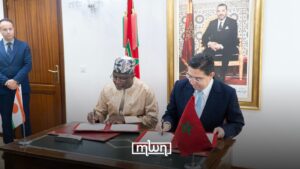
The diplomatic exchanges produced concrete cooperation agreements. Morocco and Niger signed a diplomatic training cooperation accord between the Moroccan Institute for Diplomatic Training, Research and Studies (IMFRED) and Niger’s National Institute for Diplomatic and Strategic Studies (INEDS).
The agreement aims to support Niger’s INEDS, which “will soon open its doors,” according to Sangaré.
The Niger foreign minister described bilateral relations as “very fruitful cooperation, based on equitable partnership and mutual respect.” The training accord represents a framework offering Niamey the opportunity to benefit from Moroccan experience in diplomatic formation.
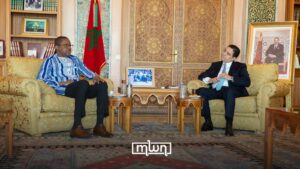
Burkina Faso’s Traore, on the other hand, stressed Morocco’s regional initiatives during his Rabat visit. He specifically used the occasion to underline Morocco’s initiatives supporting Africa’s development and doubled down on his country’s commitment to implementing the Royal Initiative that seeks to give Sahel countries access to the Atlantic Ocean.
The minister noted “the dynamics of cooperation” between Burkina Faso and Morocco and voiced both countries’ determination “to strengthen and diversify bilateral cooperation and to work toward consolidating their strategic partnership.”
Rabat Declaration
The terrorism conference itself achieved a significant outcome with the adoption of the Rabat Declaration.
The document reaffirms the central place of victims in national and regional responses to terrorism and calls for strengthening legal, institutional, and operational frameworks dedicated to their protection.
The Declaration calls for a comprehensive and solidarity-based approach based on the rights, dignity, and participation of victims in the development and implementation of counter-terrorism policies.
It encourages African states to consolidate their national mechanisms, harmonize their legal frameworks in accordance with international best practices, and guarantee victims access to justice and memory.
The text recognizes the central role of victims and survivors in preventing radicalization and in the fight against extremist ideologies.
It promotes their meaningful participation in public policies while emphasizing cooperation between African states and UN entities through expertise exchange, training, and international partner mobilization.