


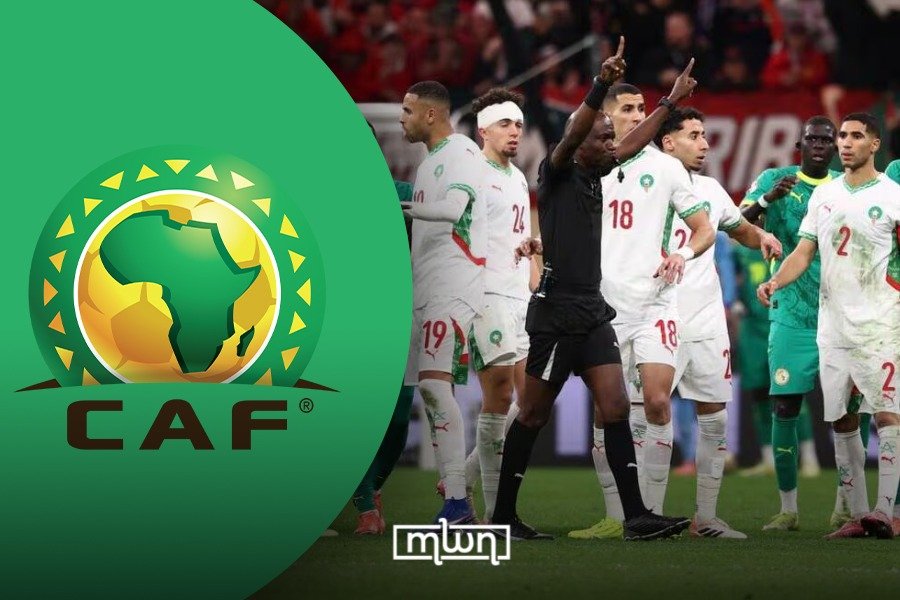
Rabat – The Confederation of African Football (CAF) did not base its decision on speculation or pressure. It relied on a set of detailed, converging official reports from the AFCON 2025 final between Morocco and Senegal.
Those documents now form the backbone of the ruling that awarded Morocco a 3-0 win.
The reports reviewed by Médias24 describe how the situation escalated late in the game. According to the referee’s report, there was a stoppage in the 97th minute following protests over a penalty awarded to Morocco.
The referee’s decision to award Morocco a last-minute penalty triggered strong reactions from Senegal’s players and staff, the outlet notes.
The report further recalls that, on instructions from head coach Pape Thiaw, the players left the pitch and returned to the dressing room.
That walk-off is considered decisive in the interpretation of the incident, with the referee noting that play was interrupted and only resumed after several minutes.
A sequence that shaped the ruling
The referee’s report describes the turning point clearly. In the 97th minute, after a penalty was awarded to Morocco, Senegal’s players strongly protested the decision. The situation escalated quickly.
The report states that, on instructions from head coach Pape Thiaw, the players left the pitch and returned to the dressing room. Play completely stopped the match only resumed after several minutes.
That sequence carries legal weight. Under CAF regulations, leaving the field without permission triggers automatic sanctions. The return to the pitch does not cancel the violation.
This interpretation does not rely on a single account. It rests on multiple reports that align on the same facts.
Converging reports leave little ambiguity
The match commissioner confirmed that most Senegalese players left the field, forcing a temporary suspension of the game. The general coordinator described strong protests from players, staff, and substitutes, especially after the VAR decision.
Security reports added further detail. They noted attempts by some supporters to enter the pitch, along with objects thrown from the stands. The situation grew tense, and security teams had to manage an increasingly volatile environment.
These reports do not contradict each other. They reinforce the same sequence of events: a walk-off, a disruption, and a match that moved beyond normal sporting conditions.
Analyst and co-founder of Morocco World News, Samir Bennis, reached a similar conclusion in his latest analysis. He argues that the case does not revolve around a controversial refereeing decision, but around a clear regulatory breach.
Morocco has the law on its side
Some people have urged me to temper my expectations about CAS, pointing out that Senegal has put together good pool of lawyer that are likely to tilt the proceedings to its favor.
To those who might be daunted by the presence of so-called world… pic.twitter.com/RddxKvlLdf
— Samir Bennis (@SamirBennis) March 27, 2026
“The Senegalese team’s conduct amounted to a withdrawal from the field of play,” he wrote, pointing to both video evidence and official reports.
Bennis added that CAF’s regulatory framework is clear on this point. Article 82 states that any team that refuses to play or leaves the field before the end of a match without authorization “shall be considered to have lost.”
No clause allows the act to be reversed if the team later returns. There is no minimum duration required for the violation to apply.
In this case, Senegal’s actions fall under both refusal to play and withdrawal. That combination makes the actions challenging to defend from a legal standpoint.
Bennis argues that the clarity of the rule “leaves no room for interpretation or discretionary leniency.”
Beyond protest, into regulation
CAF’s ruling does not treat the incident as a simple protest. Football allows disagreement with referees. It does not allow a team to abandon the field.
The distinction matters.
The case now before the Court of Arbitration for Sport (CAS) will focus on that distinction. It will examine whether CAF applied its rules correctly, based on the evidence provided.
The debate around the final has grown beyond football. Claims, interpretations, and narratives continue to circulate. But the decision itself rests on documented facts.
CAF’s ruling did not emerge from a single moment. It came from a structured review of reports, video evidence, and regulatory provisions.
Bennis summed it up succinctly: “The facts remain stubbornly on Morocco’s side.”
As the case moves to CAS, this foundation will matter more than anything else.
Read also: Senegal’s Outrage-Driven CAS Appeal Rests on Legally Shaky Grounds