


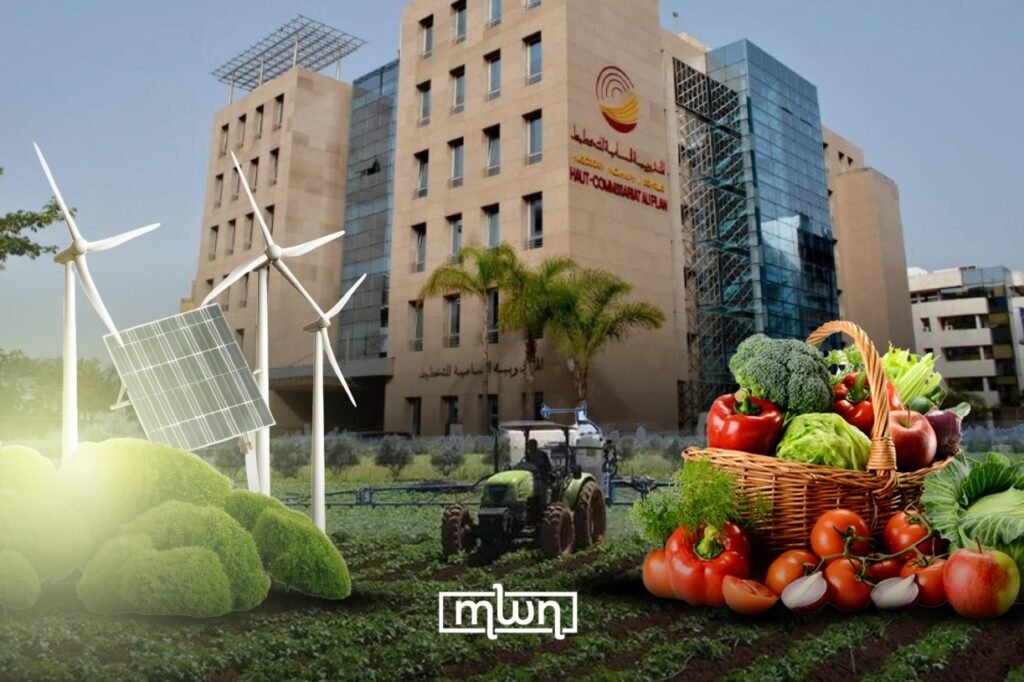
Casablanca – Morocco’s High Commission for Planning has launched a national prospective study on the Water–Energy–Food Nexus, setting its horizon at 2040 in a move aimed at strengthening public decision-making and securing vital resources for the country’s future.
HCP launched the initiative during a steering committee meeting hosted by its headquarters in Rabat on February 11, bringing together a broad institutional coalition.
The study seeks to analyze the interdependencies between water, energy, and food, three sectors described as central to both daily life and national resilience. Officials emphasized that decisions in one area directly affect the others.
Energy production influences water usage, agricultural policy impacts food security and water resources, and shifts in any of the three sectors can shape overall demand and supply dynamics. The approach moves beyond sector-based policymaking to examine how these systems interact over the long term.
Designed as a strategic decision-support tool, the study will combine qualitative and quantitative methods. It will draw on collective expertise from multiple stakeholders while incorporating economic and environmental modeling.
The objective is to develop contrasting scenarios through 2040, assess their socio-economic and territorial impacts, and identify possible development pathways alongside the trade-offs they entail.
According to the HCP, the initiative aligns with the guidelines of King Mohammed VI, calling for stronger coherence in development policies. It also reflects the principles of Morocco’s New Development Model, which advocates for systemic thinking and more effective public action focused on tangible results for citizens.
Beyond technical modeling, the study is framed as a citizen-centered effort. Authorities say it aims to help ensure equitable access to water and energy, reinforce food security at sustainable prices, and strengthen resilience to climate and economic shocks.
It will also examine implications for growth, employment, purchasing power, household well-being, and macroeconomic balances, as well as social and territorial equity.
By placing integrated management of water, energy and food at the core of national foresight, the High Commission for Planning intends to contribute to more coherent, data-driven public policies in the years ahead.
Executives from several departments participated in the meeting, including the Ministry of the Interior, the Ministry of Economy and Finance, the Ministry of Equipment and Water, the Ministry of Agriculture, Maritime Fisheries, Rural Development and Water and Forests, the Ministry of Energy Transition and Sustainable Development, and Bank Al-Maghrib.
Read also: Nizar Baraka: Dam Reserves Stand at 70%, Guarantee Up to Three Years of Water