


In early January, I experienced a hair-raising ride through Morocco’s snow-covered High Atlas Mountains. At any given moment, Abdullah, our driver, would abruptly swing into the oncoming lane to avoid another landslide.
Enormous boulders were tumbling down the mountain, loosened by weeks of torrential rain.
Abdullah’s logic was that speed would see us safely through, while those of us in the back were convinced his erratic driving would end our days.
Beautiful though the landscape was, it remains a journey I would rather forget, particularly in light of the crumpled vehicles we passed on the route back.
For Moroccans, the downpours were to be welcomed and celebrated. They will never forget the seven years of drought that wreaked havoc on the crucial agricultural sector, depleting reservoirs and constraining economic growth in the North African nation.
Agriculture employs about 30 percent of Morocco’s labour force, according to the IMF. Consecutive droughts – said to be the worst in 40 years – have almost halved cereal production, forcing the country to rely increasingly on wheat imports from the US and Europe. Since 2019, 720,000 net jobs have been lost in the sector, exacerbating urban migration.
It is a familiar pattern of cycling between extremes that has been seen in other countries affected by climate change
Rising temperatures and decreasing rain are increasing aridification, according to the Moroccan Institute for Policy Analysis. Annual surface water supply halved from an average of 21.7 billion cubic metres between 1945 and 1980 to 10.4 billion cubic metres between 2015 and 2021.
The government’s response has been to announce massive investments in desalination. Thirteen new plants are planned or under construction to strengthen national water security.
The largest will be located near Casablanca on the Atlantic coast. With a capacity of 300 million cubic metres a year, it will be the biggest desalination plant in Africa.
In May 2025, Spain’s Acciona, the lead developer, completed financing arrangements for the $613 million project. Once completed in 2028, it will be the world’s largest desalination plant completely powered by renewable energy. (The energy will be provided through a supply contract with a separate wind power project.)
A similar-sized desalination plant is also planned for the capital, Rabat. However, progress in getting the scheme off the drawing board has been slow since France’s Veolia signed a memorandum of understanding (MoU) in October 2024 to develop and operate the facility.
The government aims to have desalination technology supply more than half of the country’s drinking water by 2030, in addition to providing irrigation water for agriculture.
Other plans to help drought-prone areas include extending water transfer infrastructure between major river basins. In May 2025, Taqa Morocco, the local subsidiary of Abu Dhabi National Energy Company (Taqa), signed $14 billion in MoUs to develop water transmission infrastructure, desalination plants and energy projects in the kingdom.
After months of heavy rains, Morocco’s water minister announced on January 12 that the seven-year drought had officially ended. Winter rainfall was up 95 percent year on year and 17 percent above the seasonal average. Waterfalls that had been dry for years had sprung back into life. But the problems are not over for Morocco.
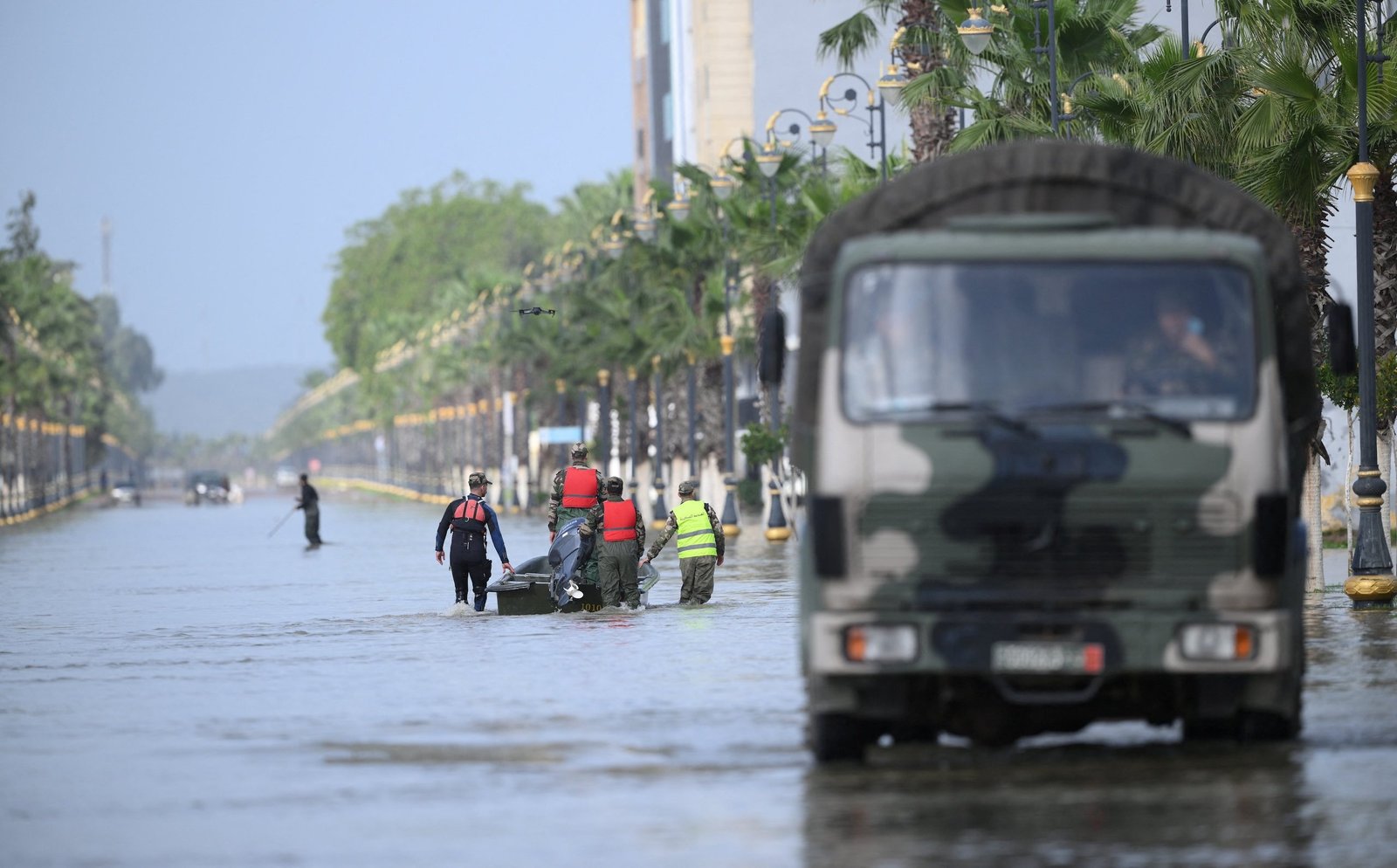
The torrential rains have brought new challenges, including floods and the aforementioned landslides. Buildings and roads have collapsed, lives have been lost and some dams are now close to bursting.
It is a familiar pattern of cycling between extremes that has been seen in other countries affected by climate change. Floodwaters can be just as devastating for farmers as droughts.
Further reading:
Further reading:
Moving forward, the Moroccan government will need to build long-term resilience against both floods and drought. This will require working with climatologists and consultants to come up with the right policies to mitigate risk and ensure food and water security.
As well as investing in desalination, storage dams in flood-prone areas will need to be expanded. Farmers will need to be educated about the benefits of climate-smart agricultural practices and work with research centres to identify the most sustainable crop combinations for their land. The Moroccan Institute for Policy Analysis has already questioned the country’s rising exports of water-intensive produce, such as watermelons and berries, to Europe.
The experiences of the past seven years should serve as a warning for Morocco of what may lie ahead.
Liz Bains is a projects-focused business journalist covering Africa and the Middle East. She is also a stand-up comedian
