


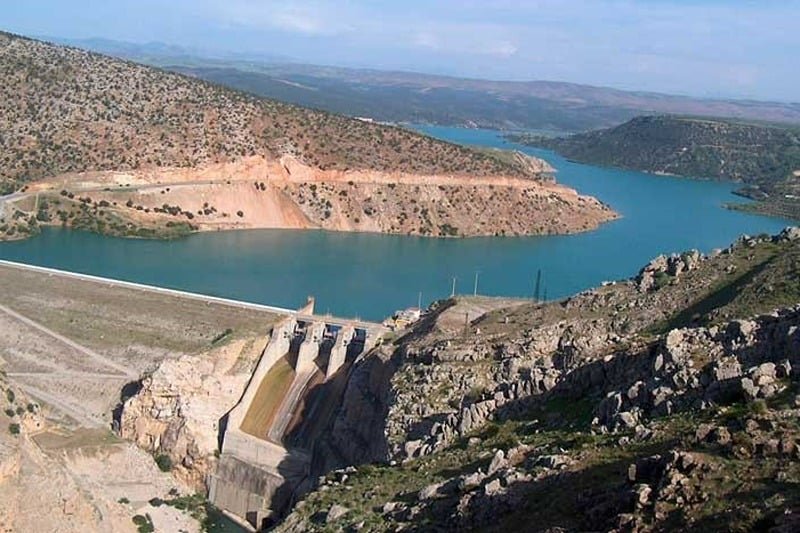
Rabat – Morocco has experienced unusually heavy rainfall this season, which significantly improved water supplies in many parts of the country.
According to the Ministry of Equipment and Water, the Bouregreg and Chaouia water basin recorded an 82 % increase in rainfall compared with what is normal for a typical year, up to February 19. The average rainfall in the basin reached 452.9 mm, more than three times what was recorded in the same period last year.
As a result, water flowing into the basin’s dams reached about 1.08 billion cubic meters, and groundwater levels rose by one to three meters in recent months. This is a major improvement after the dry 2024‑2025 period, when rainfall and dam inflows were well below average.
The heavy rains across Morocco have also helped push national dam reserves above 70 % capacity, according to official data. Total stored water now stands at nearly 11.9 billion cubic meters, a dramatic rise from last year when reservoirs were below 30% full.
Storage levels in northern basins such as Loukkos and Sebou have climbed to over 90 %. This boosts water availability for cities, farms, and communities.
However, the rain has also come with its challenges. Some areas saw intense storms, which caused flooding and landslides. It affected thousands of people and damaged farmland and infrastructure. Ksar El Kebir was the hardest hit, as the majority of the city was flooded.
The Minister of Equipment and Water, Nizar Baraka, said at a recent meeting of the Agency of the Bouregreg and Chaouia Basin that the government is continuing long‑term projects to secure water supplies. These include expanding desalination plants in Casablanca and Rabat, improving dam infrastructure, and developing systems to reuse treated wastewater.
Baraka also spoke about the importance of flood prevention, investing in early warning systems, and plans to protect vulnerable towns and rural areas from future extremes.
