


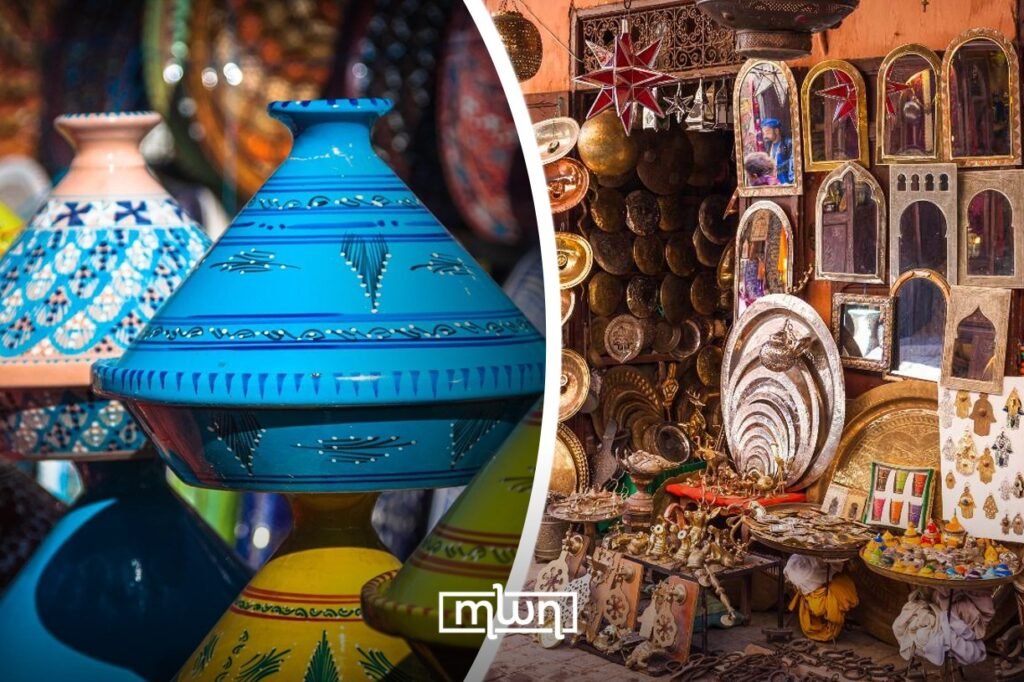
Agadir – Morocco made progress in further developing the local handicrafts sector during the 9th edition of the International Handicrafts Forum held in Rabat from February 9 to 15.
During the event, the government signed three partnership agreements and a memorandum of understanding aimed at strengthening financing, exports, and digital transformation across the handicrafts sector.
The event is part of a broader national strategy to modernize and structure the handicrafts ecosystem, which remains a major pillar of Morocco’s economy and cultural identity.
The sector employs more than 2 million people and generates significant export revenues, reflecting its strategic role in economic and social development.
Improving access to financing for artisans
One of the key announcements was the signing of a memorandum of understanding between the State Secretariat for Crafts and the Social and Solidarity Economy, the Maison de l’Artisan, and Tamwil.com.
The agreement aims to help craft professionals access tailored financing and provide state-backed financial guarantees, particularly to help them invest in production and expand into export markets.
By expanding access to funding, the initiative seeks to scale up artisanal production, improve product quality, and position themselves in higher value-added market segments, both locally and internationally. More broadly, it reflects Morocco’s strategy to reinforce value chains and improve competitiveness within the sector.
This aligns with national efforts to structure the handicrafts ecosystem and strengthen export dynamics through partnerships and investment support mechanisms.
Strengthening export capacity and international market access
A second agreement, signed between the Moroccan Agency for Investment and Export Development (AMDIE) and the Maison de l’Artisan, focuses on supporting artisans’ international expansion.
The partnership aims to improve knowledge of foreign markets, enhance networking among sector stakeholders, and boost the operational performance of craft businesses.
Such initiatives are important as Moroccan handicrafts gain global visibility, including participation in major international fairs and design exhibitions. These platforms help position Moroccan products in global lifestyle and design markets while reinforcing the country’s “Made in Morocco” brand.
Digital transformation through “Morocco Handmade”
In the realm of digitalization, the State Secretariat, Maison de l’Artisan, and Marjane Mall partnered to develop the “Morocco Handmade” online marketplace.
The platform is designed to expand sales channels, improve product visibility, and create new income streams for artisans, particularly small producers who may lack access to traditional export networks.
Through this agreement Morocco is expanding its broader support strategy for artisans, with focusing on modernizing services and integrating digital tools into the sector.
Securing international trade through export insurance
A fourth agreement, signed with the Moroccan Export Credit Insurance Company (SMAEX), aims to strengthen the export insurance ecosystem for handicrafts. The partnership focuses on securing international commercial transactions, promoting risk management practices, and developing insurance products tailored to the specific needs of artisans.
The measure is expected to help artisans integrate into global distribution networks by reducing the financial risks associated with international trade.
The International Handicrafts Forum is reflecting Morocco’s broader ambition to transform its handicrafts sector into a driver of investment, export growth, and job creation while preserving cultural heritage.