


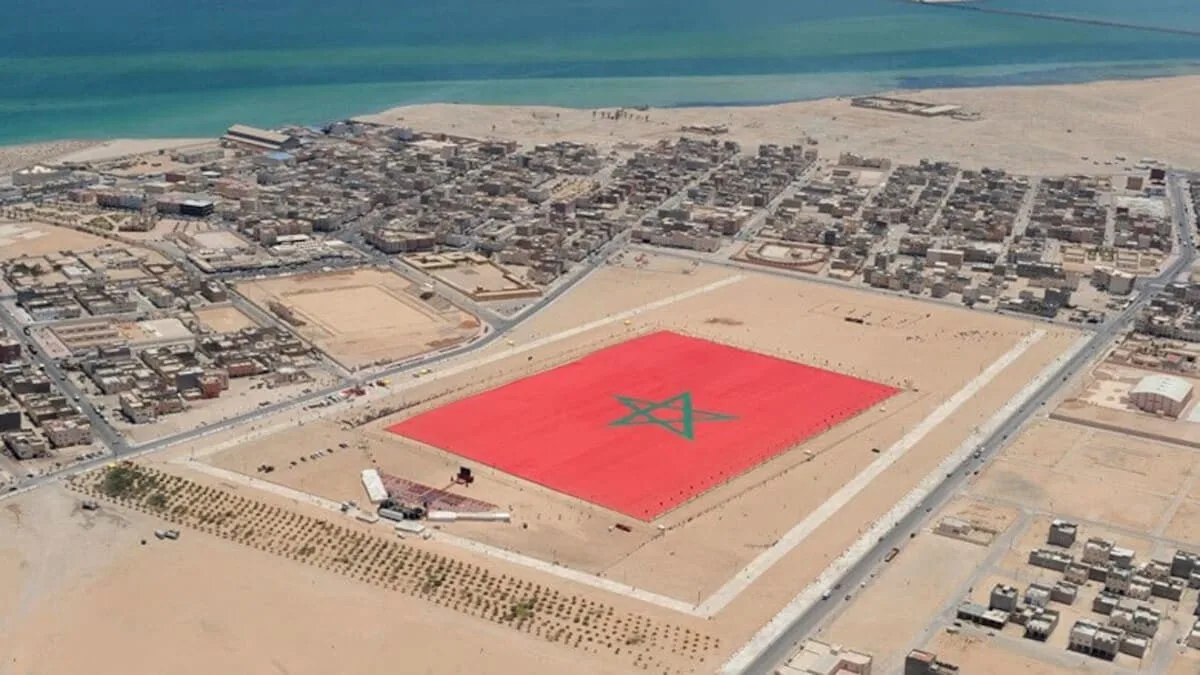
Rabat – Morocco signed three major agreements on Saturday in Dakhla to strengthen logistics and trade infrastructure in the Dakhla-Oued Eddahab region. The signing ceremony took place in the presence of Minister of Transport and Logistics, Abdessamad Kayouh, and Minister of Industry and Trade, Ryad Mezzour.
These agreements form part of Morocco’s national strategy to improve logistics competitiveness and implement the National Logistics Zones Program, which aims to develop 750 hectares of logistics areas by 2028.
The first agreement concerns the creation of an economic and logistics activity zone in Aargoub, covering 20 hectares and requiring nearly MAD 134 million. This project will establish a modern, integrated logistics platform, reduce transport and storage costs, support local economic activity, and create jobs.
The second agreement focuses on developing the first phase of the Kerkrate Road Center, located on a two-hectare site in Bir Gandouz, Aousserd province. This phase aims to improve road safety, better organize traffic, and provide proper facilities for drivers and transport professionals, reinforcing the region’s role as Morocco’s key commercial link with Africa.
The third agreement concerns the building of a trade and distribution zone in Guerguerat as part of the contract program for integrated development in Dakhla-Oued Eddahab. This project will support foreign trade through modern infrastructure, dedicated spaces for commercial exchange, and new opportunities to attract investment and create jobs. It will also benefit from the expertise of the Moroccan Agency for Logistics Development (AMDL) in implementing public-private partnerships.
Speaking at the ceremony, Minister Kayouh said the agreements reflect the royal vision that has transformed Dakhla into an emerging African economic hub. He noted that the projects are aligned with King Mohammed VI’s efforts to develop the Atlantic coast and consolidate Morocco’s role as a bridge between Europe and Africa.
Read also: Morocco Signs Agreement to Build New Advanced Technology School in Dakhla
Kayouh added that the new projects in Dakhla, Aargoub, and Guerguerat form part of an integrated logistics system connected to major regional projects, most notably the Dakhla Atlantic Port, which is reshaping development and reinforcing the region as a key gateway to Africa.
Meanwhile, Minister Mezzour discussed the strong economic momentum in the southern provinces, driven by the King’s vision and the structural projects launched under the 2015 Southern Provinces Development Model. He said the results of this vision are becoming visible through major projects that have given the region a strategic position and strong economic prospects.
He stated that the three agreements represent an integrated tool to strengthen logistics and trade capacities, streamline transport flows, improve supply chains, and establish the region as a commercial hub linking Africa with global markets.
The signing ceremony was attended by the Wali of Dakhla-Oued Eddahab, the governors of Oued Eddahab and Aousserd, the President of the Regional Council, and the directors of the National Road Safety Agency and the Moroccan Agency for Logistics Development.
Over the past decade, Morocco has invested heavily in the development of its southern provinces, including Dakhla and Laayoune. This effort is guided by the 2015 Development Model for the Southern Provinces, which mobilized more than MAD 77 billion for infrastructure, social services, renewable energy, fisheries, agriculture, and tourism.
Key examples of recent investments include the ongoing Dakhla Atlantic Port, considered one of the largest port projects in Africa, aimed at boosting trade between Morocco, West Africa, and the Americas.
In addition, the Tiznit-Dakhla Expressway is a 1,055 km modern highway connecting the region to the rest of Morocco and improving mobility, logistics, and investment attractiveness.
Other projects include the large wind and solar energy projects, as well as modern logistics platforms and border infrastructures in Guerguerat and Bir Gandouz, now essential for Morocco-Africa trade.
In addition, urban development and social programs have improved housing, health services, education, and job creation in the region.
Many countries and organizations have welcomed the development efforts in the southern provinces. Over the past three years, more than 25 countries have opened consulates in Dakhla and Laayoune, describing the region as a rising economic hub.
Countries such as the United States, the UAE, Bahrain, Jordan, Senegal, Côte d’Ivoire, and many others have hailed Morocco’s investments for bringing stability, infrastructure, and economic opportunity to the area. The United States, in particular, has reaffirmed support for Morocco’s autonomy plan and has encouraged private American companies to invest in the southern provinces.
This growing international presence is widely seen as recognition of the region’s rapid development and Morocco’s long-term commitment to turning the southern provinces into a gateway between the Kingdom, Africa, and the wider world.
