


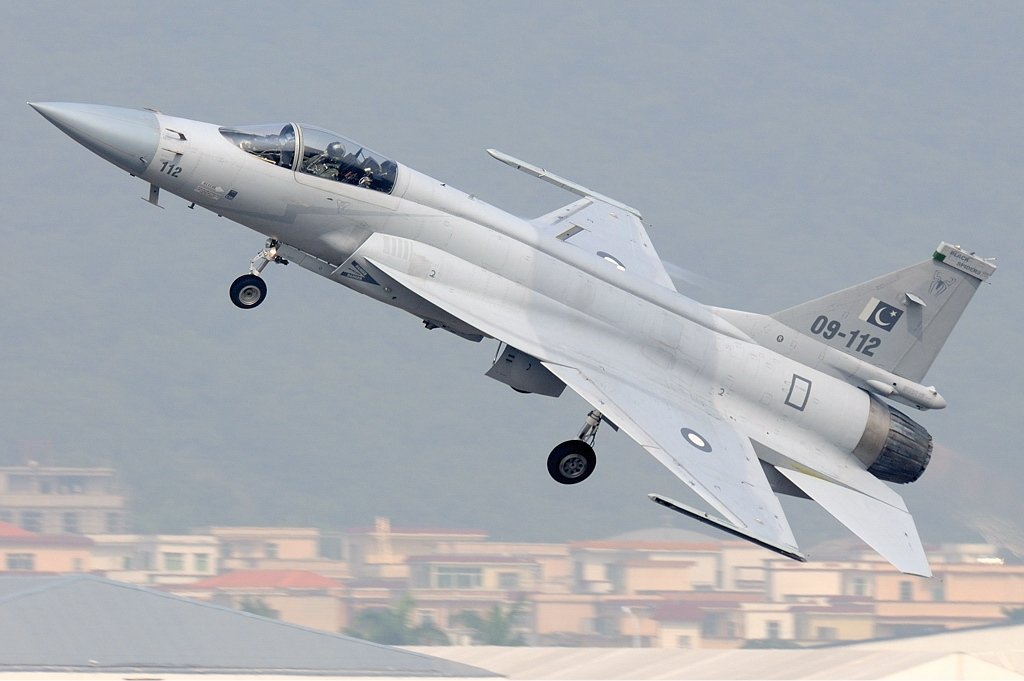
Marrakech – Morocco has appeared among the countries engaged in discussions with Pakistan over the acquisition of JF-17 fighter jets, with six to eight nations reportedly reaching advanced negotiation stages out of 13 countries that have formally expressed interest.
Islamabad is actively capitalizing on the growing appeal of its “combat-tested” tag weapons platforms, leveraging recent conflict environments to market the JF-17 as a cost-effective, operationally proven alternative within an increasingly competitive global defense market.
According to news agency Reuters, Pakistan has held talks with 13 countries, with six to eight in advanced stages, for deals involving JF-17 jets made jointly with China, training aircraft, drones, and weapons systems.
Three Pakistani sources with knowledge of defense sales confirmed Morocco is listed among potential buyers alongside Sudan, Saudi Arabia, Indonesia, Ethiopia, Nigeria, and the government in eastern Libya led by Khalifa Haftar.
Pakistan’s defense manufacturing industry has gained momentum since its jets, drones, and missiles earned credibility in a massive air battle with India in May. The conflict saw Pakistan’s air force squadrons fly JF-17s alongside advanced Chinese-made J-10s.
Defense Production Minister Raza Hayat Harraj confirmed several countries expressed interest in jets and military equipment, terming negotiations “guarded secrets.”
He stressed the significant price advantage of Pakistani weapons, noting that while Western alternatives may be more technologically advanced, they cost more than three times as much as the $30-40 million JF-17.
The JF-17 Block III multi-role fighter jets represent the latest variant of the Pakistan-China joint production program. Countries are searching for new supply chains following disruptions caused by the war in Ukraine and conflict in the Middle East, making Pakistan’s weapons a viable alternative for nations seeking cost-effective military solutions.
Layered defenses hedge threats across multiple domains
Morocco’s diversification of military equipment represents a diplomatic and risk strategy to keep core interoperability with Western partners while reducing single-supplier exposure and widening options across domains, including air, air defense, missiles, armored vehicles, and electronic warfare.
The Stockholm International Peace Research Institute (SIPRI)’s 2020-24 data shows the US remains Morocco’s largest supplier at 64%, but France at 15% and Israel at 11% now represent meaningful pillars too.
For 2026, Morocco has allocated MAD 157.17 billion ($15.7 billion) to defense, prioritizing force modernization, equipment acquisition, maintenance, and accelerated development of a domestic defense industry.
This intentional spread cushions political turbulence, delivery delays, and shifting export rules, while signaling that Rabat can rebalance partnerships without fully pivoting away from any camp.
Morocco’s capability priorities show up in layered air power and air defense, precision munitions, and modern ground systems that raise deterrence and readiness without requiring a single doctrine or vendor ecosystem.
Recent publicly documented additions include AH-64E Apache attack helicopters and US-approved 600 FIM-92K Stinger Block I missiles and 612 Javelin FGM-148F missiles, alongside reports that Morocco has begun operating Israel’s Barak MX air and missile defense system.
The pattern covers multiple threat types, including aircraft, missiles, and drones with overlapping systems sourced from different partners.
The diversification strategy extends beyond imports to defense-industrial cooperation. Turkey has established ties in electronic warfare procurement and industry cooperation, while India’s Tata has set up an armored-vehicle factory near Casablanca.
Morocco’s approach represents a hedging doctrine that maintains Western compatibility for training and high-end aviation, adds Israeli and other partners for niche technology, and cultivates production pathways where feasible so national security modernization becomes leverage in foreign policy and industry.
The kingdom also cultivates production and assembly pathways to generate know-how spillover, jobs, and regional export potential. This approach was reinforced in November by Israel’s BlueBird announcement training Moroccan engineers for local SPY-X drone manufacturing lines domestically.
Pakistan faces the challenge of scaling JF-17 production, which has become the cornerstone of its weapons program. Current annual production stands at approximately 20 aircraft, with plans to significantly increase capacity by 2027.
The negotiations remain preliminary, with most analysts cautioning that talks may not necessarily lead to signed deals due to potential international pressures and geopolitical considerations.
