


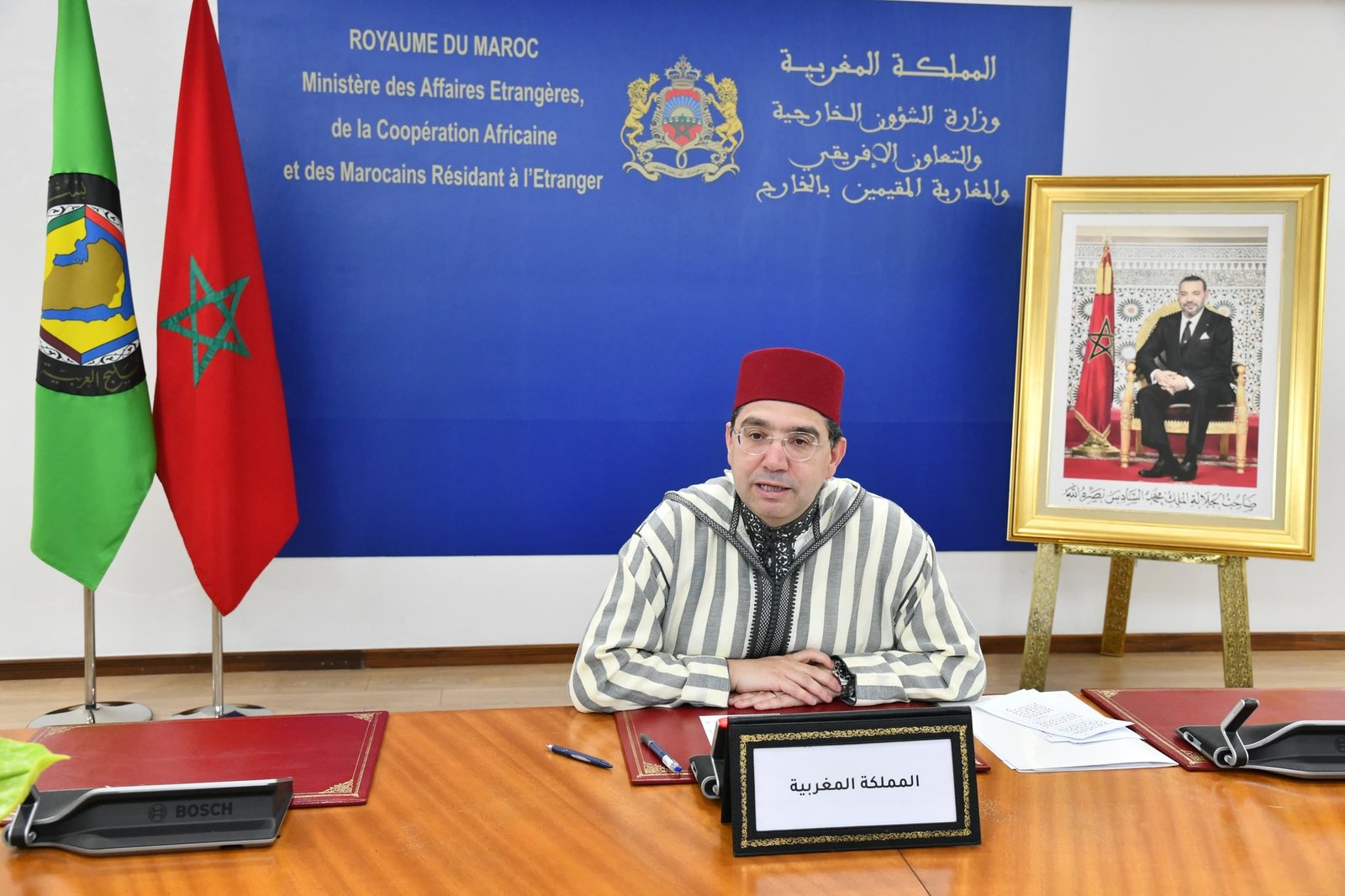
Rabat – The Gulf Cooperation Council has selected Morocco to host the 9th Joint Ministerial Meeting, strengthening Morocco’s position as a long-standing ally with GCC countries.
GCC announced the news during the 8th Joint Ministerial Meeting on Thursday via videoconference.
Morocco’s Minister of Foreign Affairs Nasser Bourita participated in the event, alongside Secretary General of the Gulf Cooperation Council Jassem Mohammed Al Budaiwi as well as the ministers and representatives of the Council’s member states.
Upon the announcement, the foreign ministers of the GCC states commended the depth of relations between Morocco and the GCC countries as well as Rabat’s sustained efforts under King Mohammed VI to strengthen Arab solidarity.
GCC also recognized Morocco’s efforts in elevating the strategic partnership between the two countries to the highest levels.
Thursday’s ministerial meeting also served as a platform in which Morocco renewed its position in support of Gulf states affected by Iranian attacks amid the war between US, Israel and Iran.
In the meeting, Bourita recalled the phone calls King Mohammed VI held with several leaders of the GCC countries following the Iranian attacks.
He said the calls reflect Morocco’s firm and unwavering fraternal solidarity with the countries.
Bourita also reaffirmed Morocco’s full support and resolute backing for the brotherly GCC states in the face of the Iranian aggression in order to preserve their security and ensure the safety of their citizens.
The Moroccan FM also recalls Morocco’s support for all measures they take to defend their sovereignty.
The Moroccan foreign minister said “the challenges facing our region today require us to elevate our strategic partnership to a higher level of complementarity.”
He said national security is not limited to the military dimension alone.
“It now includes economic and social resilience in times of crisis, as well as guaranteeing the needs of our people even in the most difficult circumstances,” Bourita concluded.
Several reports have highlighted challenges triggered by the ongoing war, including surge of oil prices and a scarcity of key material needed for fertilizer manufacturing.
