


Marrakech – The Moroccan government on Thursday confirmed the upcoming round of social dialogue will proceed on schedule and unveiled new campaign financing rules designed to diversify political representation ahead of the September 2026 legislative elections.
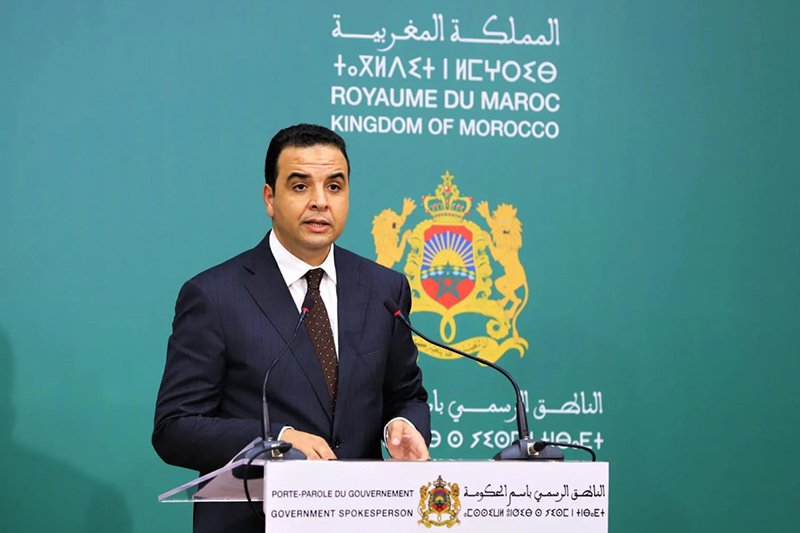
Government spokesperson Mustapha Baitas made both announcements during his weekly press briefing following the cabinet meeting.
Social dialogue on track
Baitas confirmed that the April round of central social dialogue will be held “on the scheduled date.” The session will bring together the executive, the most representative trade unions, and the General Confederation of Moroccan Enterprises (CGEM).
“Social dialogue is a strategic choice the government has embraced since its inauguration,” Baitas said.
The upcoming round is expected to be the last face-to-face between the government and social partners under the current legislature. Several thorny issues remain unresolved, including pension reform and the revision of the Labor Code.
The session comes at a sensitive time. The war in the Middle East has pushed fuel prices to levels unseen in over three years. In response, the government has increased subsidies on gas, electricity, and road transport.
New campaign financing framework
The cabinet examined and adopted two draft decrees presented by the Interior Ministry. The texts amend the existing regulatory framework governing state contributions to party campaign financing.
The first decree, No. 2.26.300, modifies Decree No. 2.16.666 of August 10, 2016. “First, it sets the flat-rate share of public support that all parties benefit from. Then, it specifies the distribution modalities of the second tranche of this contribution, as well as the value and disbursement method of the advance payment for political parties,” Baitas explained.
A central feature of the new framework is the enhanced financial incentive for parties that field candidates from underrepresented groups. These include women, young people of both genders under the age of 35, Moroccans residing abroad, and persons with disabilities. Women running in local constituencies who do not fall under these categories also benefit from elevated support.
The new decrees build on reforms approved by King Mohammed VI at a ministerial council last October, which introduced financial incentives covering up to 75% of campaign expenses for youth under 35 and reserved regional electoral districts exclusively for women, amid youth-led GenZ212 protests demanding greater inclusion.
“This support is higher than what is generally allocated per seat in local constituencies,” Baitas said. The goal, he added, is to encourage parties to place these candidates in advanced positions on their lists to strengthen their presence in parliament.
Regarding the advance payments tied to public campaign support, Baitas noted they are capped at specific limits. The system applies a proportionality principle linked to the annual support parties receive for their management. It also takes into account parties that have not previously benefited from public funding.
Updating spending rules
The second decree, No. 2.26.301, amends Decree No. 2.16.667 of the same date. It updates the regulatory framework governing how state campaign contributions are used.
Baitas said the text modifies Article 1 to define more precisely the purposes for which campaign funds must be spent. It also improves the clarity of certain existing regulatory provisions and introduces new provisions related to the use of digital tools in campaigns.
The amendments aim to clarify procedural and practical aspects to ensure the consistency of the regulatory text, Baitas added.
With legislative elections just months away, these measures respond in part to longstanding calls from civil society organizations demanding concrete application of the gender parity principle enshrined in the 2011 Constitution but never fully implemented at the level of elected institutions.
