


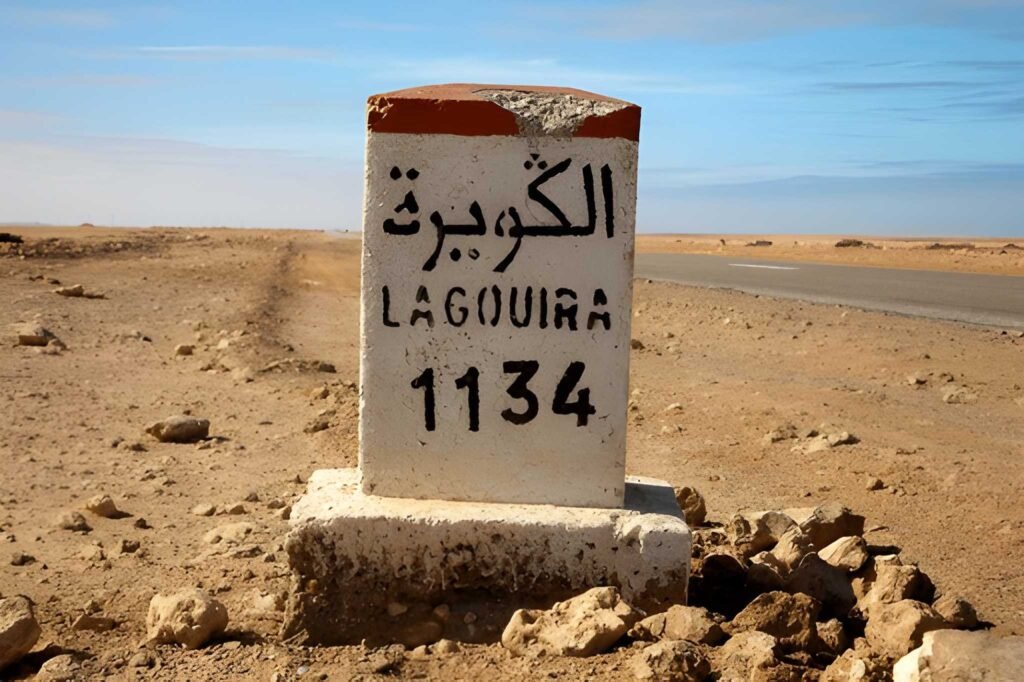
Marrakech – Morocco is set to transform its southernmost coastal town of Lagouira (La Güera) into a large-scale tourism village, backed by Emirati investment, as the kingdom accelerates infrastructure development ahead of co-hosting the 2030 FIFA World Cup with Spain and Portugal.
The proposed project, located in a sparsely populated Atlantic coastal strip near the Mauritanian border, would convert what is widely described as a “ghost town” into a fully equipped mixed-use leisure destination. The UAE presented the initiative to the Moroccan government.
According to reports, the development would include hotels, chalets, villas, guesthouses, and luxury desert tents. Recreational facilities would cover swimming pools, water parks, spa and fitness centers, sports fields, landscaped green spaces, and children’s playgrounds.
The complex would also feature restaurants, cafés, retail outlets, quick-service kiosks, and event and conference halls. A marina is central to the masterplan.
Infrastructure components include electricity networks, sewage systems, internet connectivity, parking facilities for cars and buses, and reception and security services.
The proposal comes as the UAE deepens its economic footprint in Morocco, particularly in the southern provinces. The Gulf state opened a consulate in Laayoune in 2020.
The UAE ranked as Morocco’s top foreign investor in 2024, contributing MAD 3.1 billion ($310 million) – 18.9% of Morocco’s total net FDI and a 57.8% jump from 2023, according to Morocco’s Office des Changes.
Emirati investments in Morocco reached approximately $188 million by the end of the first half of 2025, according to Morocco’s Ministry of Economy and Finance. This placed the UAE second only to France among the kingdom’s largest foreign investors.
The momentum follows King Mohammed VI’s official visit to Abu Dhabi in December 2023 and subsequent private visits, with the latest reported between November and December 2025.
Read also: Moroccan Court Rejects $3.5 Billion UAE Offer to Acquire Samir Refinery
The Lagouira project builds on a broader bilateral investment framework. In May 2025, a consortium of Emirati and Moroccan companies signed what stands as the largest private investment deal in Morocco’s history with the Moroccan government and state utility ONEE – a $14 billion agreement targeting water security and energy infrastructure.
The group comprises Abu Dhabi National Energy Company TAQA through its subsidiary TAQA Morocco, Moroccan energy firm Nareva, and the Mohammed VI Investment Fund.
Key components include a 1,400-kilometre high-voltage transmission line connecting Western Sahara to Casablanca and four seawater desalination plants with a combined annual capacity of 900 million cubic metres.
The tourism village initiative also fits within Morocco’s broader drive to expand its appeal ahead of the 2030 World Cup. The country recorded 19.8 million tourist arrivals in 2025, a 14% increase compared to the previous year. Host cities for the tournament include Rabat, Casablanca, Marrakech, Tangier, Fez, and Agadir.
Developing the Sahara coastline is part of a strategy to diversify Morocco’s tourism offering beyond its established city hubs and ease pressure on traditional destinations. Lagouira site, adjacent to the Sahara Desert and the Atlantic Ocean, has been largely uninhabited and untouched by mainstream tourism infrastructure.
Regional air connectivity is also expanding in parallel. The Moroccan National Tourism Office (ONMT) has already been running a targeted summer campaign in partnership with travel platform Wego to attract GCC visitors.
Lagouira’s proximity to Dakhla – already celebrated worldwide as a premier kitesurfing and wind sports destination – anchors the new village within one of the Atlantic coast’s fastest-rising corridors.
Underpinning this investor rush is UN Security Council Resolution 2797, which for the first time formally enshrined Morocco’s autonomy plan as the sole and exclusive basis for negotiations.
This landmark diplomatic verdict has electrified international confidence, unlocked capital flows – particularly from the UAE, France, and the US – and cemented the region’s standing as a stable, sovereignly-anchored frontier for transformative investment.