


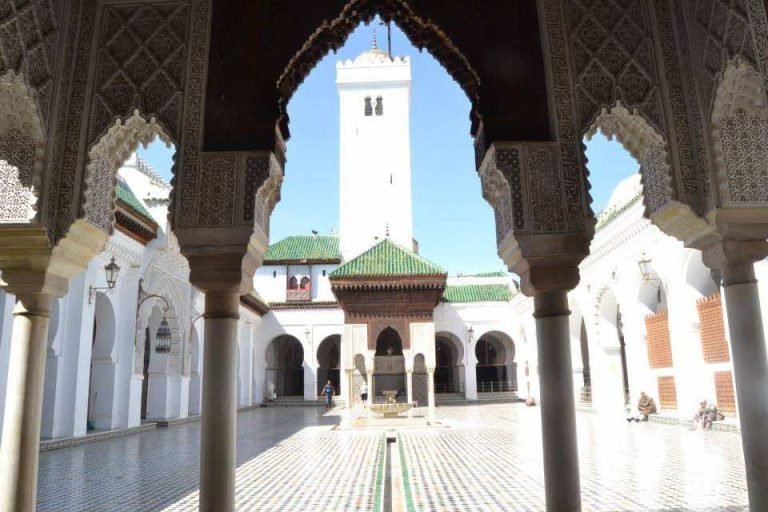
Rabat – The Mohammed VI Foundation of African Oulema will oversee the inauguration of the Mohammed VI Mosque in N’Djamena on Friday.
The ceremony will take place in coordination with authorities in Chad and the foundation’s local branch.
Officials, religious figures, and scholars from both Morocco and Chad are expected to attend the event. A representative of the Supreme Council of Ulema will deliver the mosque’s first Friday sermon.
The opening shows Morocco’s continued religious cooperation across Africa and its effort to strengthen shared Islamic traditions with partner countries.
The initiative also seeks to reinforce historical spiritual ties between Morocco and Chad while promoting values of moderation, coexistence, and dialogue.
The mosque can accommodate more than 3,000 worshippers and covers an area of about 33,000 square meters.
The site also includes a cultural complex with a conference hall, a scientific library, meeting rooms, and administrative offices.
Authorities say the complex will serve as a center for religious learning and exchange while supporting the transmission of values related to peace and tolerance.
The inauguration follows royal instructions issued earlier this year by Mohammed VI, who in February approved the opening of the Mohammed VI Mosque and its annex facilities in N’Djamena.
The decision forms part of Morocco’s broader effort to support religious cooperation across Africa and to strengthen ties with partner countries on the continent.
King Mohammed VI also ordered the opening of 157 mosques across Morocco, according to the Ministry of Habous and Islamic Affairs.
The projects include 95 newly built mosques, 42 reconstructed structures, eight historic mosques rebuilt after deterioration, and 11 restored sites.
Together, these places of worship can accommodate about 160,000 faithful.
Authorities estimate the total cost of the projects at MAD 647.3 million (around $64.7 million), with funding from public resources as well as donations from benefactors, a long-standing practice that supports religious institutions in Morocco.