


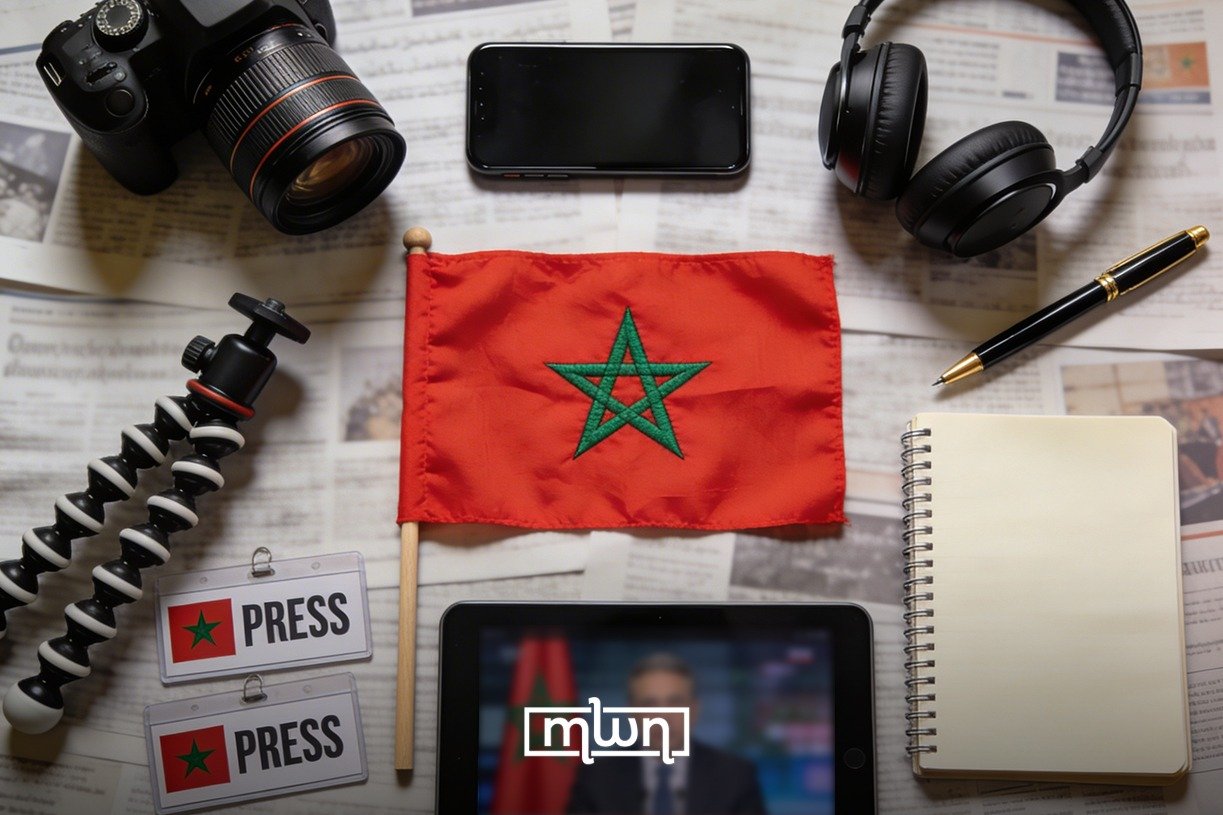
Marrakech – As we come to the conclusion of this three-series reflection on the image or reputational challenges facing Morocco in this age of narrative warfare, one must admit that the country’s broadcasting efforts have thus far been lackluster and below par. The national TV stations are widely seen as staid and unimaginative, often chasing after viewers who long ago migrated to more exciting channels.
Many Moroccans joke that their state TV lives in a different era, disconnected from the dynamic reality of Moroccan society and the wider world. This credibility gap at home extends abroad: if Moroccans themselves aren’t avid fans of their channels, foreigners will hardly be impressed. This problem is not new; it is chronic. Our parents used to tell us how happy they were in the 1980s when, before satellite dishes, they somehow managed to catch a Spanish or French radio or TV signal – simply because their programming quality was better.
Moreover, Morocco’s media sector hasn’t cultivated the investigative rigor or the rapid responsiveness needed to counter international disinformation. When a false story about Morocco gains traction on foreign media or online, there is seldom a swift, authoritative Moroccan media response that reaches the same audiences. Instead, that task often falls to individual patriotic citizens or expatriates on social media, who take it upon themselves to correct the record or defend Morocco’s honor.
We need to be our own voice
We’ve seen a handful of volunteer influencers – enthusiastic Moroccans on YouTube, Facebook, or Twitter – who engage with foreign debates, debunk lies, and wave the Moroccan flag in the information war. Some do a commendable job and have gathered followers. But these efforts are disjointed, underfunded, and constantly under digital assault. Troll armies and mass-reporting campaigns, often traced to the same hostile sources, try to silence these independent defenders of Morocco. Without institutional backing, their resilience is limited. They cannot substitute for a coordinated media strategy.
We need to be our own voice instead of sitting around waiting months for that one Reuters or AP article that finally says something good about Morocco – and then, because of our obsession with foreign praise, we start celebrating like it’s some huge victory: “Look! Reuters mentioned us!” Meanwhile, for the rest of the year, we get hit with negative pieces we can’t even respond to properly. Did we see any serious official response to the smear series Le Monde published about King Mohammed VI last August? Silence.
It’s embarrassing that we also don’t have our own strong news agency like Turkey has Anadolu or France has AFP. When someone googles Morocco, it should be us at the top of the results – not AFP. It’s actually sad that Moroccan journalists often find out about news in their own country from French or Spanish media before they hear it from local sources. Imagine being a journalist in Rabat reporting on Morocco using AFP as your source, when you should be the source.
And even worse – government officials still give statements and exclusives to foreign media, maybe because they believe Western outlets will tell it better. Part of it is the “foreigner complex,” but part of it is also a brutal truth: our media is still too weak. This, let alone the fact that many officials lack basic media culture altogether, have no well-established social media presence, or only activate their accounts during electoral campaigns, often remaining visibly uncomfortable and afraid when speaking to the media.
Morocco needs a proper news agency and a proactive media strategy
In most European countries, a crisis triggers a press conference within minutes, setting the official narrative that media immediately quote. In Morocco, it often takes at least 24 hours. By then, multiple versions are already circulating everywhere, and only afterward do authorities complain about fake news and misinformation – problems that would not have existed in the first place if an urgent press conference had been held.
And when I say we need a proper news agency, I don’t mean the dusty old Maghreb Arab Press (MAP) – and even the name itself now needs to be rethought for multiple reasons. MAP operates in a rigid state-media style that excessively glorifies government and official institutions, presenting Morocco as an unreal, problem-free paradise. Its language style is dry, overly formal, and filled with generic state-speak.
It now feels outdated – boring in tone, slow in coverage, and disconnected from global media standards. It echoes bureaucracy, not urgency or journalistic excellence. It lacks narrative force, emotional grip, or the journalistic spark that today’s global audiences connect with and trust. This kind of direct, self-congratulatory journalism no longer works. Modern countries still promote themselves, but they do so subtly – through credible reporting, selective framing, and professional storytelling that feels informative, not propagandistic. We need something modern, multilingual, sharp, fast, respected – something that makes the world listen.
During AFCON 2025, many expected Morocco’s dedicated sports channel Arryadia to lead the nation’s broadcast, but instead viewers increasingly turned to international outlets like beIN Sports for sharper analysis, better studio presentation, and more professional coverage than what the home country delivered. This humbling, unsettling reality was obvious as cafés and even fan zones themselves relied on beIN Sports streams during AFCON matches, with Moroccan fans preferring its modern studios and commentary over the national feed.
Some analysts even argue that Morocco implicitly admitted this gap by inviting social media influencers to promote the event online, signaling an underlying belief that national media alone was not equipped to shape the narrative effectively during the tournament.
Meanwhile, substantial media budgets inside Morocco are being, frankly, misallocated. There are millions of dirhams pouring into outlets that do little for Morocco’s image or interests. Take the example of “Chouf TV,” a private web-based channel that has gained notoriety (and huge viewership) within Morocco by peddling sensationalist content and gossip. It’s an example of a popular media success with questionable value to the nation’s strategic communications.
While it feeds the domestic public’s appetite for scandals and trivial drama, it does nothing to project Morocco’s best face externally – if anything, its often unprofessional style and content can undermine perceptions of Moroccan media overall. It is perplexing and frustrating to see significant investment and audience attention absorbed by such outlets, while serious state-backed media initiatives languish or remain timid. The consequence is a kind of media vacuum where it truly matters, a vacuum that foreign voices eagerly fill.
It’s time for a candid recognition at the highest levels: Morocco needs to vastly improve and internationalize its media presence. This means investing in a world-class, outward-looking media network – be it a new global channel or a major enhancement of existing ones – that broadcast in multiple languages and on multiple platforms. Such a project requires drawing on Morocco’s talented polyglot professionals and giving them the resources to create quality content: hard-hitting news reporting, compelling documentaries, talk shows that intelligently discuss issues, and cultural programs that highlight Morocco’s rich heritage and modern achievements.
Editorially, it must be sharp and relevant; it should address regional African concerns, Arab-world debates, and global issues from a Moroccan lens. Crucially, it must build credibility by reporting truthfully and insightfully – propaganda or half-truths would be self-defeating. Over time, a well-run Moroccan international broadcaster can earn the kind of trust BBC Arabic once had or Al Jazeera later acquired, becoming a go-to source especially in areas where Morocco has strategic stakes.
Additionally, Morocco should coordinate better the unofficial voices that amplify its perspective. Those volunteer influencers and citizen journalists who have taken up the cause deserve support and recognition. Why not create a training and support network for Moroccan digital communicators, equipping them with facts, data, and perhaps legal protection, so they can be more effective and less vulnerable to harassment? They could become a formidable second line of Morocco’s media defense – agile on social platforms where state media presence is limited.
Visibility determines legitimacy
History offers encouraging anecdotes that Morocco can emulate. Recall how Sawt al-Arab (“Voice of the Arabs”) radio, launched by Egypt’s president Gamal Abdel Nasser in the 1950s, captivated audiences from the Gulf to the Maghreb. It was essentially one powerful transmitter in Cairo energizing anti-colonial sentiment and pan-Arab unity across borders. Remarkably, that era’s rhetoric still shapes political imagination and emotional reflexes across the Arab world to this day.
If one passionate voice on radio could have that effect in the mid-20th century, imagine what a savvy Moroccan multimedia platform could achieve today with satellite technology and the internet at its disposal. Or think of how during World War II, the Allies dropped pamphlets and broadcast radio messages to undermine Nazi propaganda – they knew even in the heat of battle that the narrative could win wars. In the 21st century, wars of ideas and influence are won on 24-hour news channels and Twitter feeds.
Morocco finds itself at a juncture where its economic and diplomatic successes are multiplying, but without a parallel success in communicating these, much of the world either remains uninformed or only hears about Morocco through biased sources. This must change. A nation that aspires to regional leadership and global respect must sing its own praises and defend itself articulately on the global stage. We cannot expect others to do it for us – certainly not the global media giants who often have their own agenda, and certainly not our geopolitical rivals who are busy spinning tales to our detriment.
Enhancing Morocco’s media soft power is not a mere vanity project; it is as strategic as building a dam or a highway. It’s about constructing a bridge of words and images from Morocco to the world, so that the next time a critical issue arises – be it a diplomatic standoff, an economic initiative, or a cultural moment of pride – there is a Moroccan voice ready to frame that story powerfully and authentically. Morocco has the expertise, the people, and the means to do this. What’s needed now is the vision and will at the highest levels to pivot from a reactive, inward-focused media posture to a proactive, globally engaged one.
The day we launch a high-caliber Moroccan international channel and radio service, broadcasting in Arabic, French, English, Spanish, and African languages, we will wonder why we didn’t start it sooner. It’s often said that nature abhors a vacuum – and in the information space, any vacuum will be filled, often by those hostile to us. Let’s fill it ourselves, with our own compelling narrative.
Morocco’s story is a good story – one of progress, peace, and promise – and it deserves to be heard far and wide. The world will listen if we speak with clarity and confidence. After all, if decades ago millions tuned their radios to hear “This is London” from afar, there is no reason why tomorrow the world shouldn’t tune in, in multiple languages, to “This is Rabat,” loud and clear.
This is the third chapter of a three-part op-ed series on Moroccan media. To read Chapter I, click here; to explore Chapter II, click here.
