


Marrakech – Once a niche location market, Morocco has become a heavyweight in global film production. Foreign shoots generated MAD 1.5 billion ($150 million) in 2025, up from under MAD 500 million ($50 million) before 2021.
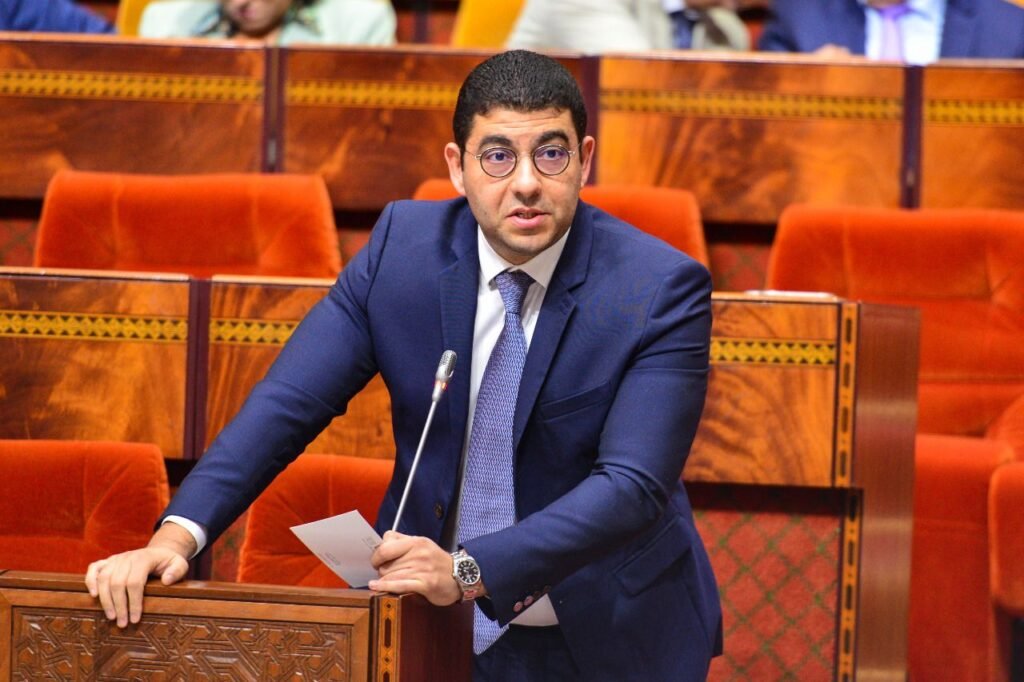
Minister of Youth, Culture and Communication Mohamed Mehdi Bensaid announced the figures during Monday’s parliamentary question session at the House of Representatives. What was once a supplementary creative sector has become a strategic economic engine.
“Before 2021, we did not exceed MAD 500 million. In 2025, we reached MAD 1.5 billion,” Bensaid stated. The revenue represents a threefold increase over four years. The growth reflects Morocco’s expanding appeal as an international filming destination.
The revenue surge coincided with major international productions choosing Morocco as their filming location. Christopher Nolan’s epic “The Odyssey,” starring Matt Damon and Zendaya, filmed extensively across Aït Benhaddou, Essaouira, Marrakech, and Dakhla’s White Dune. It is among the year’s most ambitious and high-profile global film productions.
Other notable productions included Spanish-Moroccan drama “Sirāt,” which premiered at Cannes Film Festival 2025, and “Calle Málaga,” a Spanish-Moroccan co-production that debuted at Venice International Film Festival.
Equally important, television productions also made a substantial contribution. Amazon Prime’s “The Terminal List” season 2 filmed scenes across Marrakech, Casablanca, and Tangier, while British action drama “Atomic” completed filming for its Sky Atlantic premiere.
In 2025 alone, around 2.2 million watched films on the big screen, encouraging new cinema investments. The recently opened Pathé Dar Essalam multiplex in Rabat exemplifies this growing trend. The Moroccan Cinema Center (CCM) continues supporting theater development through dedicated commissions.
Bensaid indicated the current state-subsidized model requires transformation. “We will continue to support investors, but the economic model must evolve,” he said. The minister added that penetrating global markets continues to be the sector’s primary challenge. “We must understand international markets,” he noted as essential for Moroccan films to achieve global distribution.
Youth empowerment, globally recognized research and festivals
Beyond cinema, Bensaid outlined the ministry’s extensive youth and cultural infrastructure. The ministry operates 849 youth centers and socio-sports facilities nationwide. Rural areas house 284 youth centers and 88 socio-sports facilities, while urban zones contain 391 youth centers and 106 socio-sports facilities.
The cultural infrastructure includes 368 cultural institutions, with 241 located in rural areas and 122 in urban centers. The ministry completed renovations and repairs on 374 youth institutions, constructed 48 new facilities, and equipped 286 centers with internet connectivity.
A large share of the increased investment was directed toward archaeological research. Funded research projects grew from six studies in 2021 to over 30 scientific research programs recognized nationally and internationally.
The National Institute of Archaeological Sciences and Heritage (INSAP) received specialized human resources and advanced scientific laboratories, described as the first of their kind in Africa.
Festival investments generate powerful multiplier effects. Studies indicate that every dirham invested in Essaouira’s Gnaoua Music Festival yields MAD 16-17 in local economic returns, Bensaid told parliament.
Driven by record attendance and expanding international stature, in this regard, the Marrakech International Film Festival has consolidated its position as the leading cinema event in the MENA region.
Its 22nd edition, held from November 28 to December 6, 2025, screened 81-82 films from 30-31 countries and attracted over 47,000 spectators, including 7,000 young viewers, combining global jury prestige, strong public engagement, and industry-shaping platforms that now rival Europe’s major festivals in influence and reach.
The ministry organizes festivals directly or through partnerships with local communities and regional councils. Festival organization falls within territorial communities’ responsibilities due to specific heritage characteristics in each province.
Youth employment programs operate through partnerships with other government sectors and international institutions. These programs encourage youth entrepreneurship and market integration across multiple fields, alongside traditional cultural and sports programming.
In this realm, the ministry launched the “Pass Jeunes” digital initiative to showcase all youth-focused activities across Morocco’s various sectors, extending beyond the youth ministry’s direct programming.
Taken together, these trends suggest permanence rather than momentum alone. As global studios seek scale, certainty, and diversity within a single production environment, Morocco has positioned itself as one of the rare markets able to deliver all three – consistently and competitively.
Read also: Minister Bensaid Invites Global Filmmakers to Morocco at Venice Film Festival