


- Both bourses up 25% or more
- Better than Dubai, Abu Dhabi and Saudi
- Foreign investors are lacking
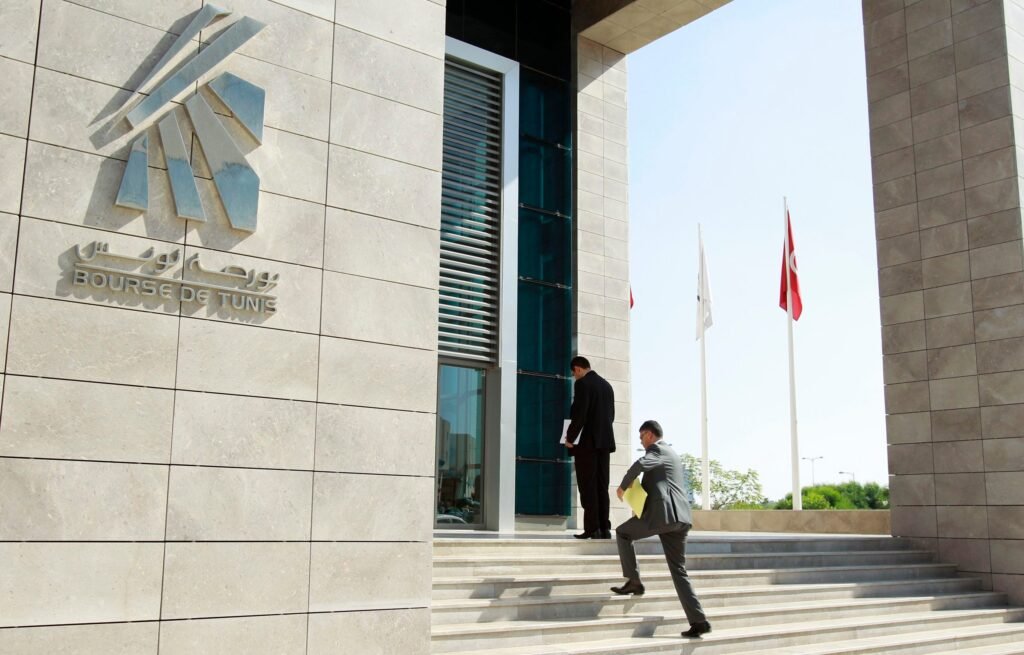
Morocco and Tunisia’s stock markets have outperformed their Gulf counterparts this year, following renewed enthusiasm among retail investors, currency gains and a lack of local alternatives to equities.
Further advances are possible in 2026, but the limited presence – or absence – of foreign investor activity may restrict any gains. Nevertheless, 2025 has proved an excellent year, with Morocco’s benchmark up 25 percent as of December 4. Tunisia’s index had gained 32 percent by November 30.
In comparison, Dubai’s measure is up about 15 percent this year, Abu Dhabi has gained 5 percent and Saudi Arabia is nursing a double-digit decline.
Morocco’s index has slid somewhat from September’s all-time peak but is again moving higher.
In December 2024, Fifa granted Morocco co-hosting rights for the 2030 football World Cup. The decision boosted investor sentiment and helped spark the stock rally, said Simon Kitchen, a founding partner and macro strategist at London’s Emerging & Frontier Capital.
“Co-hosting is especially beneficial because Morocco will get the prestige and the exposure but without all the cost,” Kitchen said.
“The country will build some stadiums and supporting infrastructure, which will boost investment in the local economy. That’s helped bring local retail investors back to the stock market. Until recently they had near-zero interest. Not only is the index up, but turnover has increased significantly too.”
This greater activity may eventually lead index compiler MSCI to reinstate Morocco to emerging-market status. MSCI downgraded Morocco to a frontier market in 2013 because of low trading volumes.
“Retail investors have returned because the macroeconomic story looks better and some blue chips have reported strong earnings,” Kitchen said.
A spike in inflation from mid-2022 spurred many Moroccans to reinvest savings into stocks to try to make an inflation-beating return, he added.
Attijariwafa Bank, the country’s biggest listed company, had gained 26 percent this year to December 2 while Maroc Telecom, majority owned by the UAE’s e&, is up about 33 percent.
“I’ve met with quite a few Moroccan companies this year. Usually, they’re more excited about their activities abroad such as in Asia, Tunisia and Francophone Africa, but now their focus is on domestic opportunities,” Kitchen said.
Due to capital controls, Moroccan pension funds invest almost entirely domestically, which has kept listed-company valuations elevated, Kitchen said.
“Morocco has always been expensive relative to similar markets,” he said. “That’s why foreign equity investors remain sceptical about Morocco. They see there’s something happening, but stock prices are too high for them.”
On whether the market can extend its rally into 2026, Kitchen said the outlook was uncertain. The absence of foreign investors means retail players will have to remain excited about local stocks.
“I’m not totally convinced they will be,” he added.
Tunisia’s markets
Tunisia’s rally has lifted the bourse’s market capitalisation to $11.3 billion. Banking is the heavyweight sector, representing 45 percent of market value, followed by food and beverages (24 percent).
Retail, insurance and non-bank financial services are the next-largest sectors but each account for 6 percent or less.
Share trading in the third quarter totalled $157 million, up 48 percent year on year according to AGBI calculations based on bourse data.
Yet foreign ownership has declined slightly to 18.7 percent of shares as of November 30, from 19.6 percent at the start of 2025.
“There hasn’t been a catalyst for the market rally, but the Tunisian stock market is a Tunisian matter – there are no active foreign investors, and local investors have no alternative but to invest in equities,” said Kais Kriaa, director at Tunisia’s AlphaMena.
Tunisia’s central bank will probably cut the benchmark interest rate this month, he said.
“With declining interest rates, more money will flow into the stock market and that will increase company valuations,” Kriaa said. “Retail investors dominate trading.”
Among those expanding exposure to Tunisian stocks will be the country’s banks as lower interest rates reduce returns on fixed income, added Kriaa: “Loan growth is near-zero in terms of the number of new loans so banks need to boost their market operations, which will be through equities.”
Listed companies’ combined revenue was $6.3 billion in the first nine months of 2025, up nearly 6 percent versus a year earlier, bourse data shows.
Further reading:
Further reading:
Tunisian exporters’ costs are mostly in dollars, especially energy and electricity expenses and raw materials, while they sell their goods abroad in euros. So, dollar weakness – the Tunisian dinar is up about 7 percent versus the greenback this year – has boosted exporters’ profitability.
In terms of the 2025 price-to-earnings ratio, Tunisian stocks are inexpensive. The market trades at a PE of 11.7, which compares with an average of about 12.5 for Middle East and North African stock markets, AlphaMena estimates.
“We expect the market rally to extend into 2026,” Kriaa said. “Momentum is strong. We’re bullish on Tunisian stocks, less so on the wider economy, but without alternatives investors have little choice other than to invest in equities.”