


Marrakech – As US-Israeli strikes continue to pound Iran for a fourth consecutive day, killing at least 787 people according to the Iranian Red Crescent Society, a Moroccan lawmaker has demanded urgent answers from the foreign minister about the fate of Moroccan nationals trapped inside the country.
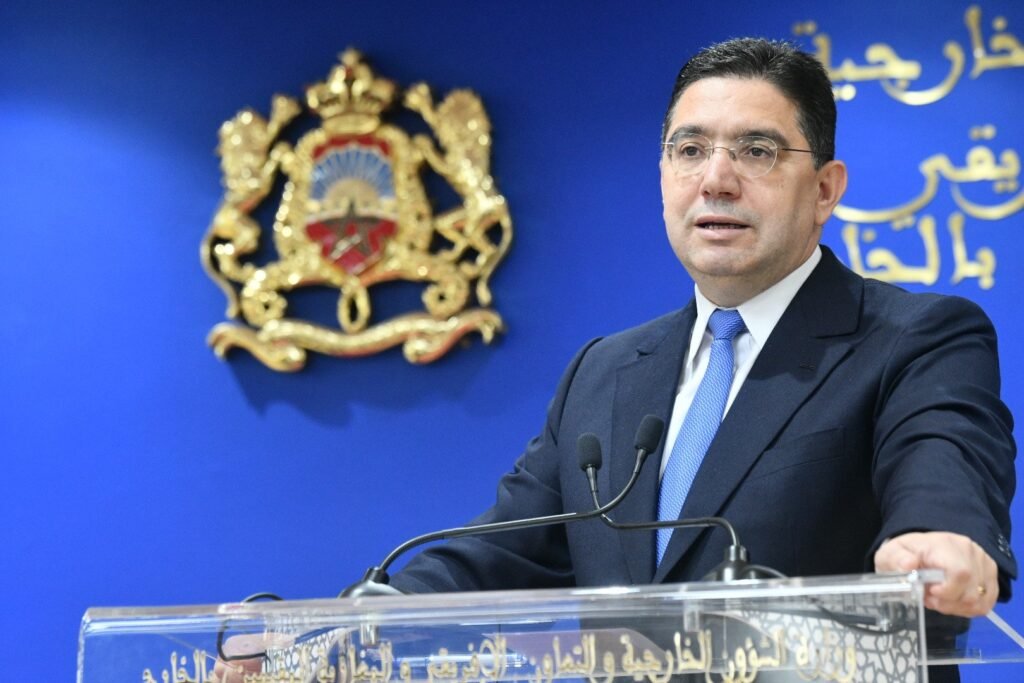
Moulay Mehdi El Fathemy, a member of the Socialist Group – Ittihadi Opposition at the House of Representatives, submitted a formal written question to Foreign Affairs Minister Nasser Bourita, pressing him on what emergency steps the ministry has taken to protect Moroccan citizens currently in Iran.
El Fathemy said he received distress calls and messages from a number of Moroccan men and women present in Iran – students, workers, and others on family visits – who are unable to leave following the closure of Iranian airspace and the suspension of transport links since the onset of military operations on Saturday.
The deputy sought to know whether the ministry has conducted a census of marooned nationals, identified their locations, and assessed their social and health conditions.
He also queried what concrete measures are being planned to organize their return to Morocco in the shortest possible time, and whether any coordination has taken place with friendly embassies or international organizations to secure safe evacuation corridors.
The question carries particular weight given a structural diplomatic problem: Morocco has had no embassy in Iran since it severed ties with Tehran in May 2018, accusing Hezbollah of providing military support to the Polisario Front through Iranian-linked channels – a charge Tehran denied. This was the third rupture in Morocco-Iran relations, following previous breaks in 1980 and 2009.
Since 2018, Morocco’s Embassy in Baku, Azerbaijan has served as the official point of contact for Moroccan nationals inside Iran.
In June 2025, amid earlier Israeli-Iranian tensions, the Baku embassy had already called on Moroccans in Iran to make immediate contact and follow instructions from Iranian local authorities. At the time, it also noted that Azerbaijan had opened the Astara border crossing on an exceptional basis to allow foreigners to exit Iran, subject to prior authorization.
Moroccans in Iran await rescue
The absence of direct diplomatic representation in Tehran means there are no precise figures on how many Moroccan nationals are currently on Iranian soil, a reality El Fathemy pointed to as a key obstacle to any effective response.
Morocco’s Ministry of Foreign Affairs issued a firm condemnation Saturday of what it called an “abject” Iranian missile attack targeting five Arab Gulf states, describing the strikes as a “flagrant violation of national sovereignty” of the UAE, Bahrain, Qatar, Kuwait, and Jordan.
Rabat declared “full solidarity” with the targeted Arab states, backing all legitimate measures they take to defend their security and protect the safety of their citizens and residents. It also condemned the attacks as an “unacceptable assault” on regional stability.
That same night, King Mohammed VI personally held telephone calls with the leaders of Saudi Arabia, the UAE, Bahrain, and Qatar, reaffirming Morocco’s solidarity and condemning the attacks as “abhorrent aggressions” targeting Arab sovereignty.
On Sunday, the Ministry of Foreign Affairs announced the creation of a crisis cell to monitor the situation of Moroccan communities across the Middle East, especially in Gulf countries.
The ministry assigned hotline numbers for Moroccans in Saudi Arabia, the UAE, Bahrain, Qatar, Kuwait, and Jordan, along with a national green line at the ministry level. Iran, however, was conspicuously absent from that list – a telling sign of how far Morocco’s diplomatic arm falls short precisely where it is needed most.
The US-Israeli operation, launched on Saturday with the killing of Supreme Leader Ali Khamenei, has torn through 131 Iranian cities and unleashed a wave of retaliatory strikes across the Gulf – turning a region where thousands of Moroccans live and work into an active war zone.
For those stuck in Iran specifically, the question of who protects them – and how – remains, for now, unanswered.