


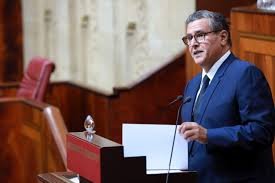
Rabat – A recent statement from Morocco’s Prime Minister outlines the government’s expectations for accelerated economic growth over the next three years, despite a national and global context marked by rapid fluctuations.
The message emphasizes the need to control public spending, particularly expenditures related to government employees.
The Prime Minister’s directive, which provides guidance for preparing budget proposals for the 2027–2029 period, anticipates positive growth driven by ongoing reforms and strategic investments. At the same time, the government calls for rationalizing public spending by linking new job creation to actual needs and improving administrative efficiency.
The statement also stresses careful management of the budget deficit and public debt, ensuring that major social and economic initiatives can be financed without compromising fiscal balance.
Growth outlook
These latest government projections reflect optimism about Morocco’s economic performance over the next three years, with an average annual growth rate of around 4.2 percent expected, supported by the expansion of the productive base and continued implementation of major strategic projects. The communiqué also revises the 2026 growth forecast upward to approximately 5.2 percent, in line with leading indicators and sectoral expectations.
The government anticipates improvements in several key areas, including the revival of non-agricultural activities thanks to an 8.2 percent increase in cement sales in 2025. Other key aspects of this positive trend include rising tourism revenues, stronger remittances from Moroccans living abroad, and dynamic foreign investment, which contributed to foreign currency reserves reaching 442 billion MAD in 2025.
The expected performance is also linked to favorable agricultural conditions, with adequate rainfall enhancing water resources and reservoir levels, benefiting crop production.
At the same time, the government remains cautious of global economic volatility caused by geopolitical tensions, disruptions in energy markets, and instability in international trade, which could affect growth trajectories.
To sustain growth and job creation, the communiqué calls for the continuation of structural reforms, particularly in social protection, health, education, digital transformation, and investment promotion.
Fiscal discipline and public spending control
The Prime Minister’s message highlights the need to maintain public finance stability through a cautious fiscal policy, aiming to keep the budget deficit at around 3 percent of GDP for the 2027-2029 period, alongside a sustainable downward trajectory for public debt, which the government projects to stand at approximately 63 percent of GDP by 2029.
The directive explicitly calls for controlling employee-related expenses, linking new hires to actual institutional needs, supporting ongoing reforms, and ensuring continuity of public services. Improving human resource productivity through training and redeployment is also emphasized to meet needs without increasing wage bills.
Spending rationalization extends beyond salaries to include operational costs such as water and electricity consumption, vehicle and office rentals, and travel expenses. The communiqué further stresses the importance of directing public investment toward priority projects, accelerating their implementation, and ensuring their economic and social effectiveness.
Through these measures, the Moroccan government aims to achieve balanced, sustainable growth while maintaining fiscal discipline and supporting strategic social and economic development initiatives.