


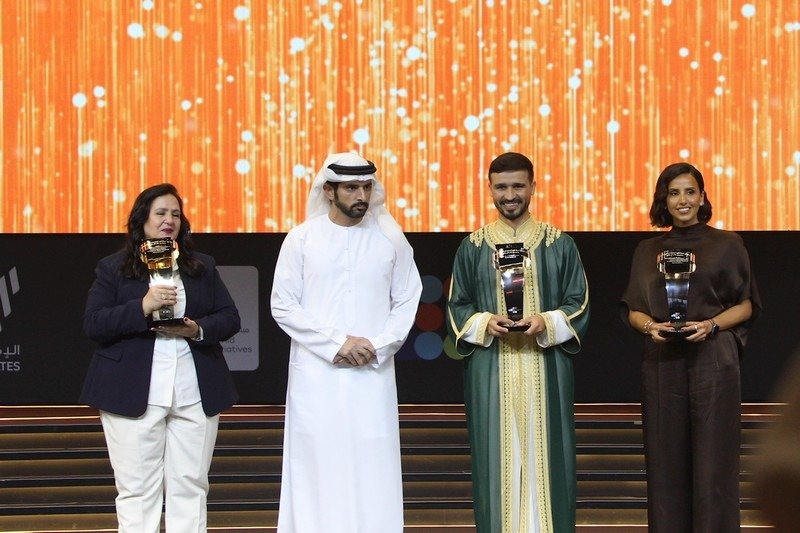
Rabat – Dubai celebrated the sixth edition of Arab Hope Makers, the largest humanitarian initiative in the Arab world recognizing individuals whose efforts transform lives.
Moroccan activist Fouzia Mahmoudi earned the title of Arab Hope Maker 2026 for her extraordinary work improving healthcare access in Morocco.
During the ceremony, Sheikh Hamdan bin Mohammed bin Rashid Al Maktoum commended all participants, stating that every contributor is a winner. The top three recipients received 1 million AED ($272,294) each as acknowledgment of their exceptional contributions.
Since its launch in 2017 by Sheikh Mohammed bin Rashid Al Maktoum, the initiative has welcomed over 300,000 humanitarian proposals across the Arab world.
The sixth edition alone received 15,800 submissions, reflecting the region’s growing commitment to social impact.
With support exceeding millions of dirhams, thousands of people in need have received medical care, food, and other essential aid. The top award aims to encourage sustained humanitarian work.
In an interview with Emarat Al Youm, Mahmoudi described her recognition as a tribute to the collective effort of her team and praised the initiative for its role in creating meaningful change.
She noted the large participation this year, stressing the 15,300 applications illustrate the strength of humanitarian action across the Arab world.
Mahmoudi recounted her professional journey, saying that she initially worked in the banking sector before dedicating herself to humanitarian work.
She acknowledged the challenges she faced early on, particularly in understanding medical needs in Morocco. Encountering families who required surgical care and essential medical equipment strengthened her commitment to this mission.
As this year’s Arab Hope Maker, Mahmoudi emphasized the need for social awareness, particularly among parents, about the effects of bullying.
She pointed out that children with congenital conditions or those recovering from surgery often face ridicule, which deepens their psychological struggle.
“If children do not feel compassion at home, how can they expect it from others?” she asked, stressing the family’s role in shaping a society that values empathy and acceptance.
Mahmoudi concluded by stating that humanitarian work is a shared responsibility. She affirmed that planting hope in a child’s heart grows into a future society built on care and humanity.
