


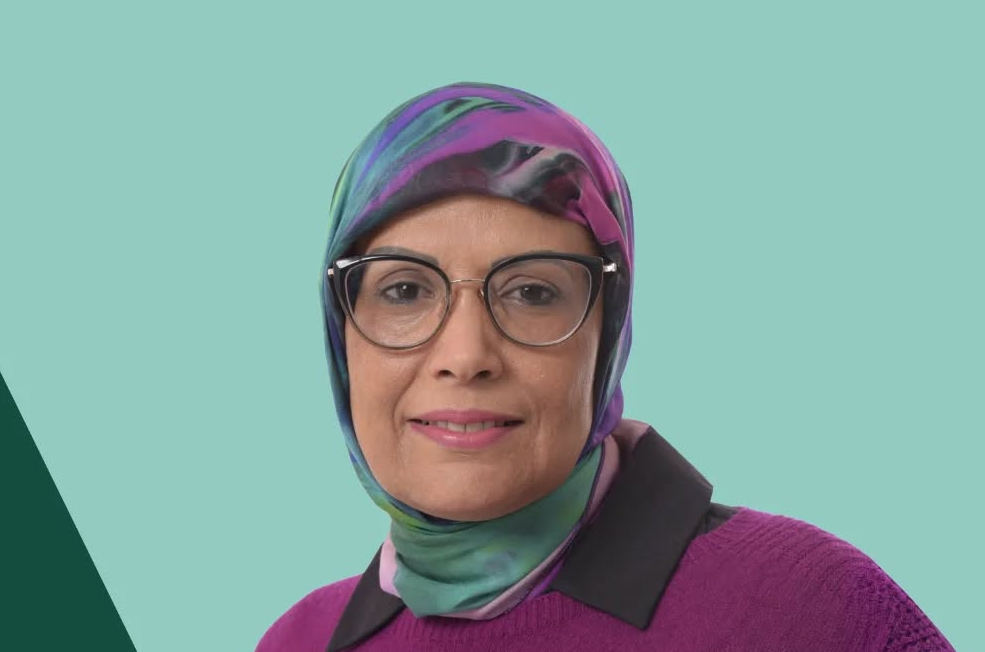
Marrakech – Aicha Achchab, a Moroccan-born woman who has lived and worked in the Italian city of Chieti for years, has been the target of racist insults on social media after announcing her candidacy for the municipal council.
According to local media, Achchab was born in Casablanca and built her family and professional career in Chieti as a cultural mediator. She heads the Al Nur charitable association, through which she has supported numerous women in the community. She is running on the Democratic Party (PD) list in support of Giovanni Legnini.
Her candidacy announcement on social media quickly drew a wave of anonymous attacks. Users who had no knowledge of Achchab or her deep ties to Chieti seized the opportunity to launch what the PD described as a politically motivated and racially charged assault.
The Abruzzo branch of the Democratic Party responded firmly. The party declared that Achchab’s candidacy “represents a choice of value, founded on experience, commitment, and a concrete ability to bring people together.” It added that the anonymous insults do not constitute political dissent but rather represent “a degradation of public debate.”
“Attacking Aicha means fearing change and taking refuge in anger,” the party noted. “It is the mark of those who have no arguments and try to replace them with aggression.” The PD further stressed that “hatred builds nothing” and “reveals only fragility and a lack of vision.”
Gianmarco Pescara, the PD secretary in Chieti, expressed solidarity with Achchab over what he called “vile, shameful attacks devoid of any human sense.”
He confirmed that all comments inciting racial hatred or containing defamatory content have been collected and reported. Pescara warned that the use of fake identities to defame individuals “is not exempt from the law” and that the party is evaluating all appropriate legal action.
Contacted by phone, Achchab chose not to comment on the incident, stating only that she remains calm. She has received widespread solidarity in recent hours.
The attack against Achchab is not an isolated episode. It fits squarely within the broader pathology of exclusionary populism and structural Islamophobia now entrenched across large segments of European political culture.
Italy’s right-wing populist politics have systematically portrayed Muslim immigrants as a threat to social cohesion, deploying securitization discourse rooted in Christian nationalism.
Far-right movements in Italy have exploited public discontent and refugee crises to push extreme nationalist rhetoric, with parties adopting slogans reminiscent of the Mussolini era while calling to “defend Christian identity from the process of Islamization.”
This represents textbook nativism, a fusion of nationalism and xenophobia that treats non-native populations as existential dangers to an imagined ethnic homogeneity.
The case carries particular weight given the size of the Moroccan community in Italy. As of 2025, approximately 412,000 Moroccan nationals reside in the country, making them the third-largest immigrant group after Romanians and Albanians and the largest non-European community.
Moroccans also rank among the top nationalities acquiring Italian citizenship each year, with around 23,000 naturalizations recorded in 2025 alone. Their presence spans decades. It is concentrated heavily in the northern regions. And it is deeply embedded in key sectors of the Italian economy, from industry and construction to transport and trade.
According to a 2024 European Union Agency for Fundamental Rights report, 35% of Italian Muslims experienced racial discrimination based on their name, appearance, or visible religious identity, with employment and housing the most affected sectors.
The far-right government of Giorgia Meloni’s administrative detention and deportation of Muslim imams without criminal charges has raised alarm about the systematic targeting of Muslim individuals for their political and religious views.
The episode in Chieti is a local manifestation of a continental sickness. It is the machinery of ethno-nationalist bigotry applied to a woman whose only transgression was seeking civic participation in the city she calls home. It is cultural racism operating behind the anonymity of keyboards. And it is precisely the kind of racialized hostility that corrodes democratic life from within.