


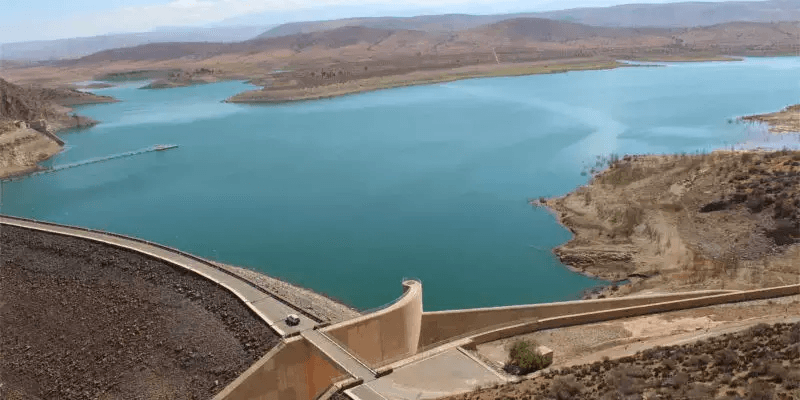
Rabat – Morocco’s water reserves reached 11,030.3 million cubic meters today, raising the overall dam fill rate to 65.8%.
According to Maadialna platform, this marks a 136% increase compared to the same period last year, signaling a significant improvement after years of water stress.
Heavy rains in recent weeks replenished most of the country’s reservoirs, with northern and central regions benefiting the most.
The Loukkos basin approaches full capacity at 89.9%, while the Sebou basin holds 85.5%, confirming its central role in the national water supply.
Bouregreg (92.2%) and Tensift (82.2%) also report solid levels, a sharp contrast to conditions a year ago.
Other basins show steady but moderate recovery. Oum Er-Rbia stands at 39%, while Souss-Massa (54%) and Moulouya (53.5%) gain consistent volume despite differences between individual dams.
Southern regions, such as Drâa-Oued Noun (32.8%), remain below the national average but show relative improvement thanks to recent rainfall.
This can be attributed to the shift to a series of concentrated rain events that allowed reservoirs to refill rapidly.
The recovery offers relief for drinking water supplies, agriculture, and hydropower production.
Authorities caution that careful management remains crucial, especially in areas at risk of floods or overflow.
The Moroccan government continues to prioritize strategic planning for water storage and distribution, balancing the need for supply security with climate-related risks. The current rise in reserves offers optimism but also underscores the importance of continued vigilance.
Last week, Minister of Equipment and Water Nizar Baraka said dam conditions across Morocco remain stable and under control despite heavy rainfall in several regions.
Speaking at a Vigilance Committee meeting, which brought together senior ministry officials and river basin representatives, Baraka reviewed the country’s unusual hydrological situation. Officials discussed managing inflows to nearly full dams, planned controlled releases, and reviewed monitoring data while considering weather forecasts and safety requirements.