


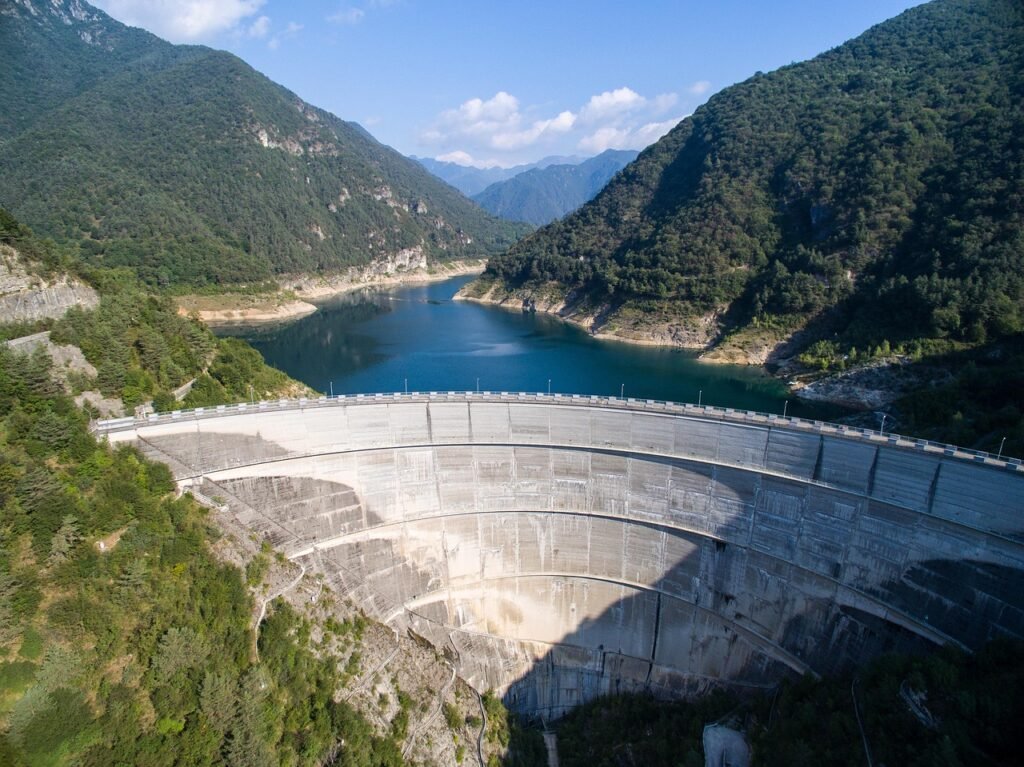
Agadir – The Mohammed V dam has reached 86% of its capacity, following recent heavy rainfall. This surge in water levels strengthened regional water security and raised the potential of a successful upcoming agricultural season as well.
Official figures show that the dam now holds 141.09 million cubic meters of water, out of a total capacity of 164.95 million cubic meters.
The dam plays a key role in the water management system of the Moulouya Basin. It stores water for both human and agricultural use, as it mitigates the risk of floods.
The Za Wadi section of the Mohammed V Dam recorded a 69% filling rate (156.75 million cubic meters), while the Machraa Hammadi Dam reached 66% (3.07 million cubic meters).
Local authorities are coordinating closely to implement proactive measures to manage any surplus, including maintaining reserve capacity to absorb flash floods and controlling water releases to protect both the dam and nearby communities.
The water levels in the Mohammed V Dam have risen dramatically and swiftly. In December water levels reached 25.4 million cubic meters (15%) to over 141 million cubic meters now.
Officials state that this water source will support canals of Berkane and Nador provinces, supporting agricultural lands and supplying drinking water to several urban centers.
Authorities are extending the dam to increase its storage capacity. Construction to raise the Mohammed V Dam is 69% complete, raising the dam by 12 meters, boosting its storage from the current 165 million cubic meters to approximately one billion cubic meters.
This expansion will enhance water security, provide sufficient irrigation for the Moulouya perimeter, support hydroelectric power generation, and strengthen flood protection.
In a broader national context, Moroccan authorities reported that the country’s overall dam fill rate has risen to 65.8%, with total water reserves reaching over 1.03 billion cubic meters as of early February.
According to the Maadialna platform, this improvement reflects widespread increase of reservoirs across Morocco following recent rainfall, with northern and central basins recording the most significant gains.
For instance, the Loukkos basin is approaching full capacity, while the Sebou, Bouregreg, and Tensift basins also report high fill levels. Southern regions such as Drâa-Oued Noun remain below the national average but have still seen progress thanks to recent storms.