


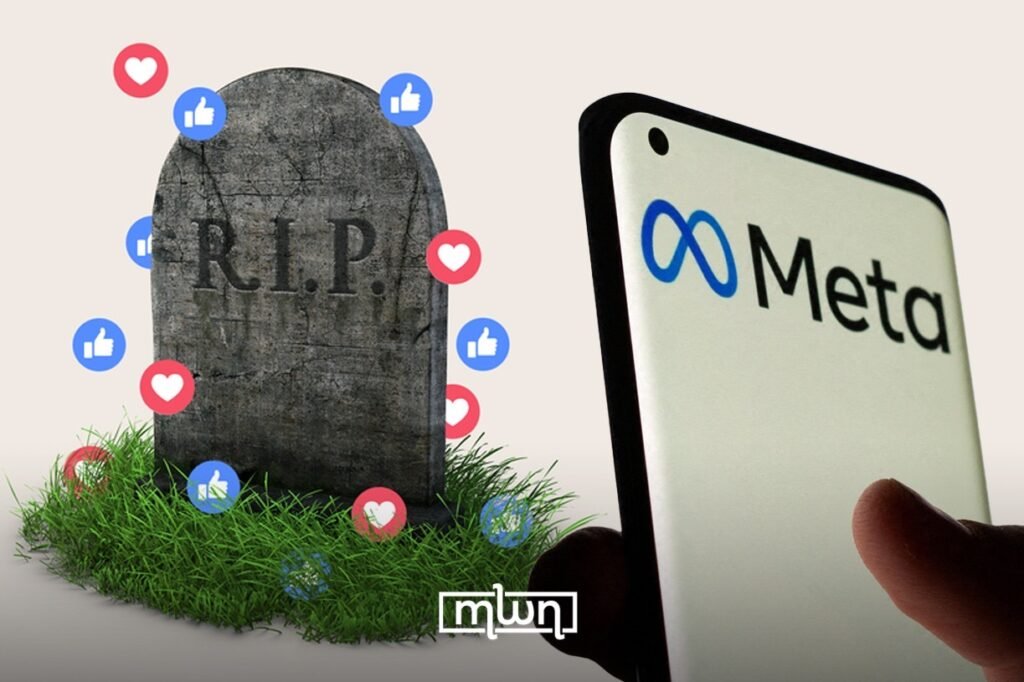
Casablanca – Meta has been granted a patent outlining technology that could allow artificial intelligence to simulate a person’s social media activity after death or during prolonged absences, raising new questions about digital identity and post-mortem privacy.
Filed in 2023 and approved in late December 2025, the patent describes how a large language model could be trained on a user’s historical data, including posts, comments, likes and messages, to replicate their behavior on social platforms.
While Meta has stated it does not plan to develop the patented concept, the approval highlights the growing intersection of artificial intelligence, digital identity, and the evolving ways technology companies approach life, death, and online presence.
The system would generate responses to other users’ content, engage with posts and potentially handle direct messages in a way that mirrors the individual’s established online presence.
Andrew Bosworth, Meta’s chief technology officer, is listed as the primary author of the patent. A spokesperson for the company said Meta has no plans to move forward with the example described in the filing, adding that companies often seek patents to protect ideas that are not ultimately developed or implemented.
According to the patent document, the technology could simulate a user when they are absent from a social networking system, whether due to taking a break or because they are deceased.
The filing notes that the absence of a user can affect the experience of others on the platform, particularly in cases where the user cannot return.
The document also references the potential for AI systems to simulate audio or video interactions, expanding beyond text-based engagement. The technology would rely on user-specific data to model tone, preferences, and patterns of interaction.
Digital legacies and the business of grief
Meta has previously introduced tools aimed at managing digital legacies. More than a decade ago, Facebook launched a feature allowing users to designate a legacy contact to manage certain aspects of their account after death.
In 2023, Mark Zuckerberg discussed the possibility of virtual avatars representing deceased individuals during an interview with podcaster Lex Fridman.
The broader concept of using AI to recreate or simulate deceased individuals has gained traction in recent years. Often described as grief tech, ghost bots, or death bots, the category includes startups founded around personal experiences of loss.
Replika, launched in 2015 by Eugenia Kuyda, emerged after the death of a close friend. You, Only Virtual was founded in 2020 by Justin Harrison following his mother’s cancer diagnosis.
Large technology companies have also explored similar ideas. In 2021, Microsoft patented a chatbot capable of simulating deceased individuals as well as fictional characters and public figures.
Legal scholars and ethicists say the development of such tools raises significant questions. Edina Harbinja, a professor at the University of Birmingham specializing in digital rights and post-mortem privacy, told Business Insider the implications extend beyond legal frameworks into social and philosophical territory. She also noted that continued engagement on platforms carries clear commercial incentives for companies.
Joseph Davis, a sociology professor at the University of Virginia, said tools that simulate deceased individuals may influence how people experience grief, as reported by Business Insider. He emphasized that confronting loss is an important part of the grieving process.
Read also: X Restores Service After Major Monday Morning Outage