


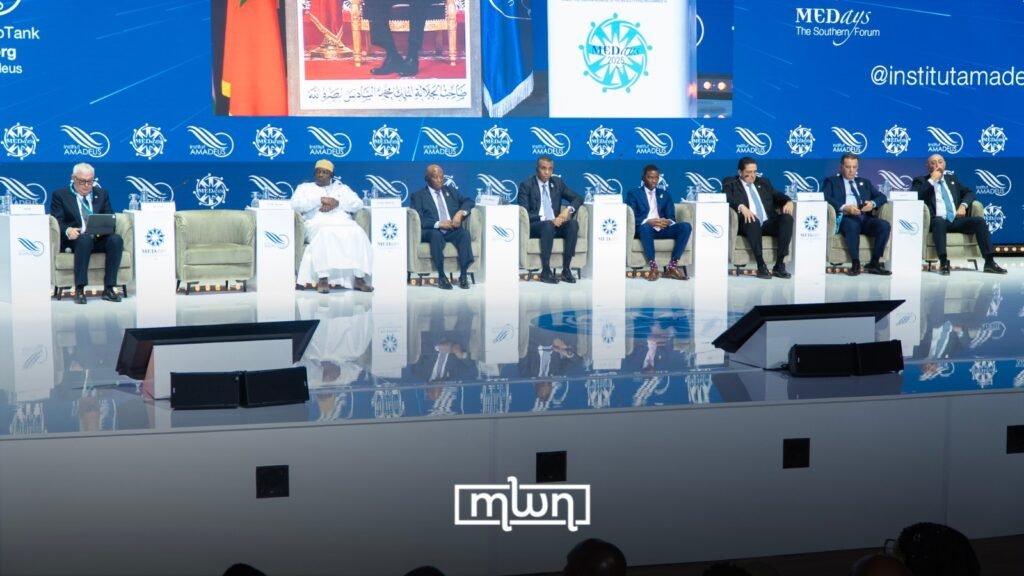
Tangier — The MEDays Forum awarded its 2025 Grand Prix to the presidents of Gambia and Liberia on Tuesday, recognizing their diplomatic support for Morocco’s territorial claims and their roles in regional stability.
Gambian President Adama Barrow and Liberian President Joseph Nyuma Boakai received the prizes during the opening ceremony of the forum’s 17th edition in Tangier.
The Amadeus Institute, which organizes the annual gathering, also presented a special award to Somalia’s Prime Minister Hamza Abdi Barre.
The awards come as Morocco gains momentum in securing international backing for its position on Western Sahara. Both Gambia and Liberia opened consulates in Dakhla, a city in the disputed territory, signaling their recognition of Moroccan sovereignty over the region.
The MEDays Forum honored Barrow for “his enlightened leadership, his essential contribution to regional stability, and his unwavering commitment to the strategic partnership between Gambia and Morocco.”
Gambia opened one of the first consulates in Dakhla, establishing what organizers called “clear and constant support for the Moroccanness of the Sahara.”
Boakai received recognition for “the strength of his action in service of Liberia’s renaissance, his diplomatic engagement, and his attachment to the values of African cooperation.”
The forum cited Liberia’s consulate opening in Dakhla as evidence of “clear, lasting, and decisive support” for Morocco’s territorial integrity.
Somalia received its award for the country’s resilience and its vote supporting UN Security Council Resolution 2797, which the forum described as recognizing Morocco’s Autonomy Plan as “the only serious and credible basis for definitive settlement of the artificial regional dispute around the Moroccan Sahara.”
Prime Minister Barre accepted the prize on behalf of Somalia, with the forum commending the country’s “renewed leadership and growing role in consolidating peace and governance in East Africa.”
The awards reflect Morocco’s diplomatic strategy of building support among African nations for its claims over Western Sahara, a territory it has controlled since Spain withdrew in 1975.
The Polisario Front, backed by Algeria, disputes Morocco’s sovereignty and seeks undermining the country’s territorial integrity.
More than 30 African countries now maintain consulates in either Laayoune or Dakhla, the two main cities in Western Sahara.
Morocco views these diplomatic missions as recognition of its authority over the territory.
The October UN Security Council resolution marked a shift in international diplomacy on the issue.
The text describes Morocco’s 2007 autonomy plan — which would grant the territory self-governance while maintaining Moroccan sovereignty — as the most realistic path forward.
The country has invested heavily in infrastructure and development projects in the territory, building ports, roads, universities, and hospitals in its southern provinces.
The MEDays forum, which runs through November 29, brings together over 7,000 participants from more than 120 countries.
This year’s theme explores “Fractures and Polarization: Reinventing the Global Equation,” where world leaders gathered to discuss shifting global power dynamics and the role of the Global South in international affairs.
Morocco positions itself as a bridge between Africa, Europe, and the Atlantic world. The country rejoined the African Union in 2017 after a 33-year absence and has since strengthened ties across the continent through trade agreements, infrastructure projects, and diplomatic initiatives.
The MEDays Forum has become a key platform for Morocco to demonstrate its influence in African affairs and to build support for its positions on regional issues.
The gathering brings together heads of state, prime ministers, and business leaders to discuss economic development, security, and cooperation among developing nations.