


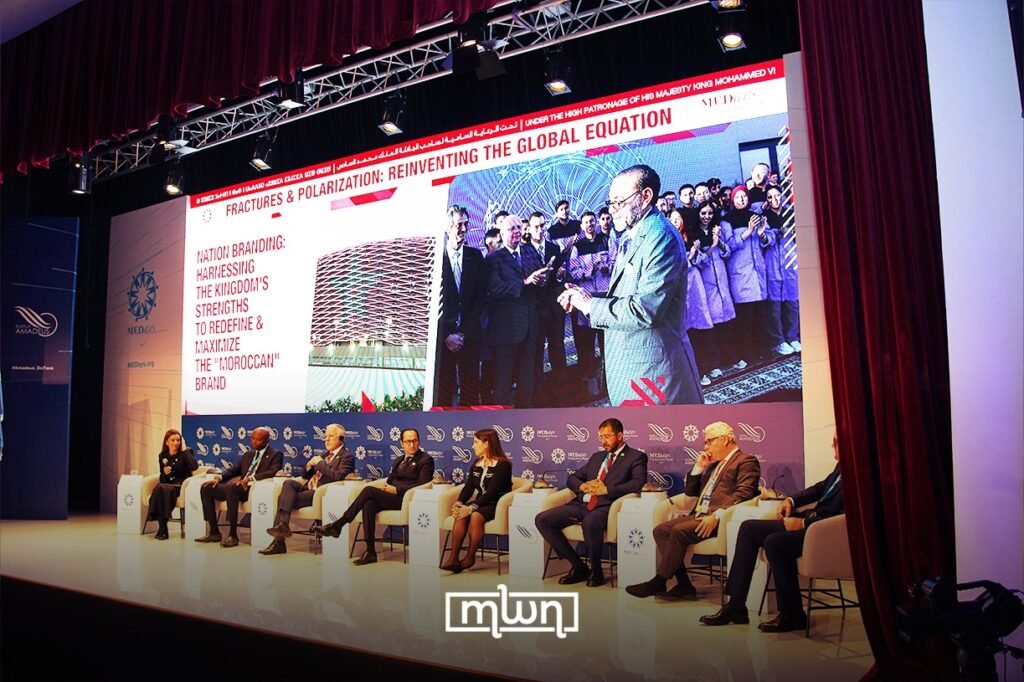
Tangier – The MEDays 2025 Summit in Tangier continued on Friday with a session titled “Nation Branding: Harnessing the Kingdom’s Strengths to Redefine & Maximize the ‘Moroccan’ Brand,” which examined how Morocco can build a stronger global image.
Speakers noted that Morocco is at a decisive moment: the country’s influence rests on three main strengths: its strategic location, its economy in transition, and a cultural identity that connects with audiences worldwide.
The challenge ahead is to bring these elements together under a long-term brand strategy that unifies Morocco’s economic, cultural, and diplomatic assets.

Morocco’s geostrategic position: a stable gateway in an uncertain world
Morocco’s location between Europe, Africa, and the Atlantic gives it a strong advantage as global supply chains shift. With modern infrastructure like the Tanger Med port, the country is already linked to major markets and serves as a bridge connecting Africa to the wider world.
Speakers stressed how Morocco’s foreign policy supports this role. The Kingdom balances ties with traditional partners while building new relations across Africa, the Gulf, and Asia. This mix of diplomacy, stability, and large projects has made Morocco attractive to investors looking for a secure entry point into African markets.
At the same time, global instability, economic shocks, political rivalries, and weakened international systems mean Morocco must focus on consistency and credibility. The challenge is to turn its geographic advantage into a lasting influence.
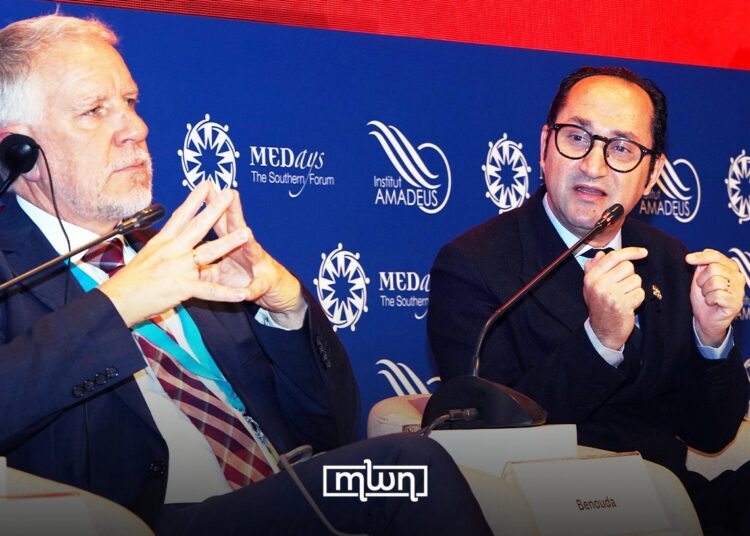
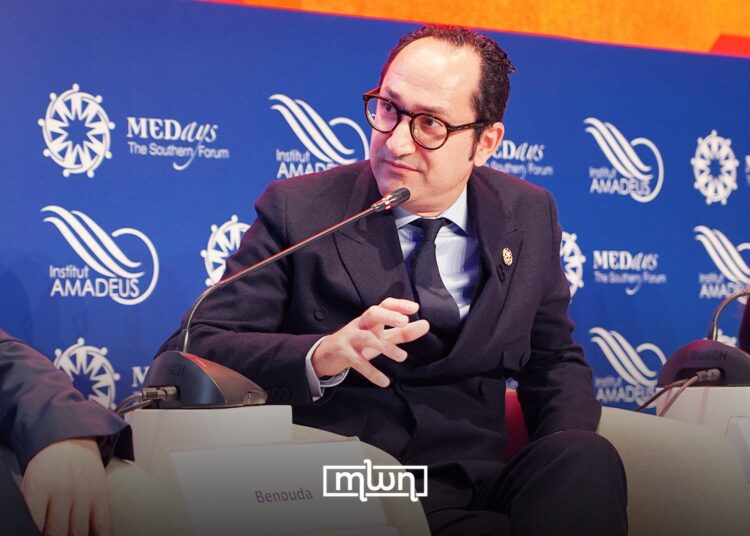
Mohamed Benouda: technology and Morocco’s sovereignty
Mohamed Benouda, President of ABA Technology, said Morocco can strengthen its national brand by building a strong technological capacity. The country has invested in areas like artificial intelligence, industrial automation, and the Internet of Things, creating local expertise that now competes abroad.
He explained how ABA Technology grew from producing sensors and connected devices in Morocco to offering solutions in Turkey, Serbia, Croatia, and other countries. This growth, he noted, was driven by Moroccan engineering talent and the country’s expanding industrial base.
For Benouda, Morocco’s brand must show technological sovereignty, proving it can design, produce, and export advanced systems instead of depending only on foreign technology.
He added that combining traditional industries with digital intelligence is the next step in Morocco’s industrial strategy.
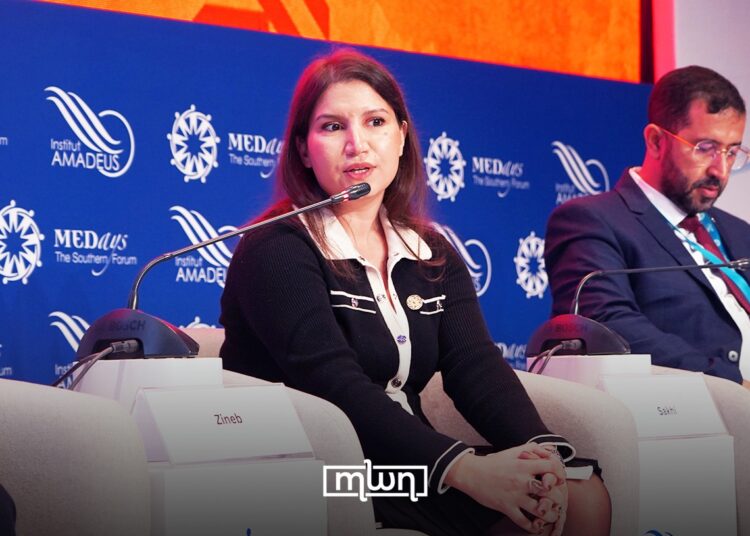
Hatim Zineb: diaspora investors need clear rules
Hatim Zineb, President of Morocco Entrepreneurs, spoke about the role of Moroccans living abroad. She said the diaspora has capital, skills, and networks, but their involvement depends on a stable and transparent business environment at home.
She pointed to reforms such as digitalized services and the new investment charter as progress, but noted that problems remain.
Many entrepreneurs abroad face inconsistent procedures, limited market access, and differences between official promises and real practice.
Zineb argued that Morocco’s brand must include the investor experience. Diaspora Moroccans want to contribute, but they need clear processes, equal treatment across regions, and access to public contracts. Improving this experience, she said, would turn diaspora loyalty into real economic growth.
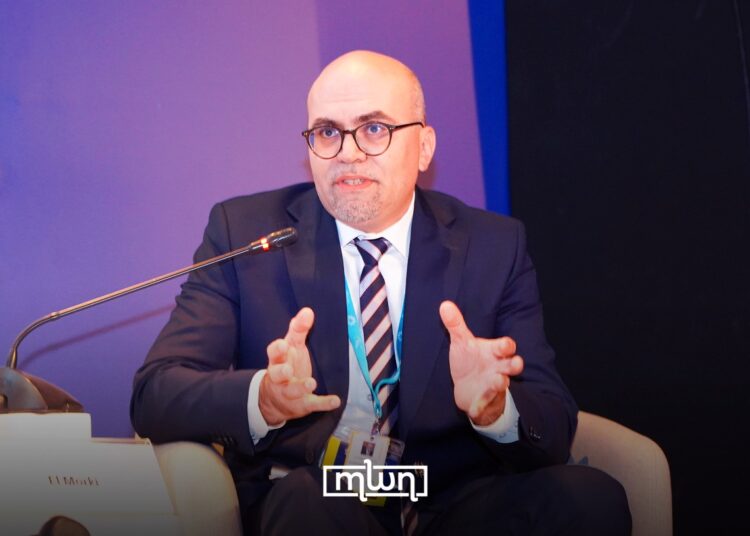
Karim El Mokri: Morocco in a changing global economy
Economist Karim El Mokri from the Economic, Social and Environmental Council placed Morocco’s branding challenge in the wider global context.
He described a world facing overlapping crises, rising protectionism, and tough competition for investment.
He said Morocco’s strengths, its location, diplomacy, and major infrastructure, must be backed by real results. In a time when countries compete for the same investors and industries, consistency is key.
El Mokri noted that shifting supply chains give Morocco a chance to attract new foreign investment, as companies look for reliable and affordable production bases.
But he warned that digitalization and artificial intelligence can quickly shape reputations: one good or bad experience spreads fast and influences global perception.
For him, Morocco must go beyond being seen only as Africa’s gateway. It should present itself as a partner that builds solutions in areas like food security, technology, renewable energy, and digital governance.
The panel concluded that Morocco’s brand must show both ambition and reality. The country has strong diplomacy, a modernizing economy, and a cultural heritage that reaches far beyond its borders.
But its future image depends on coordination between institutions, regions, entrepreneurs, artists, and the diaspora.