


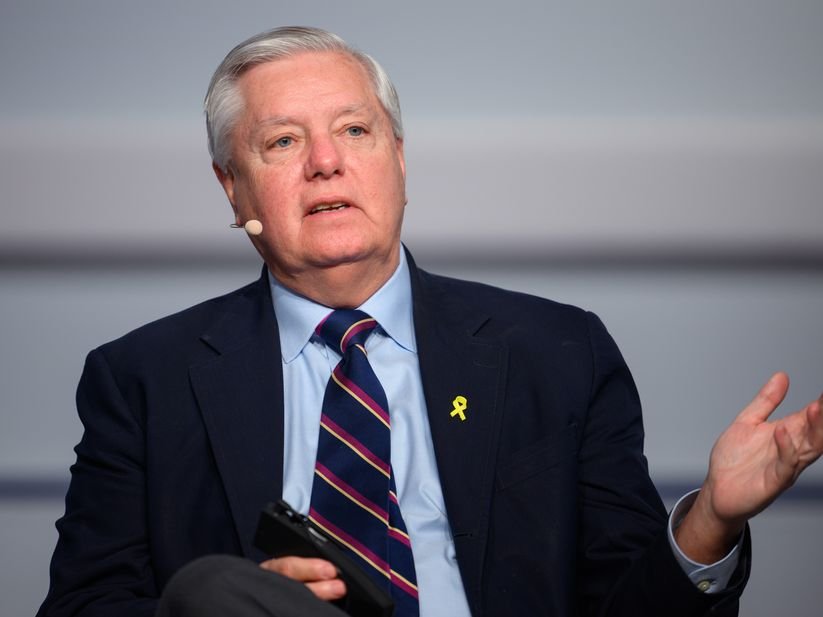
Rabat – US Senator Lindsey Graham sparked intense debate after posting on X, urging the US to take decisive military action against Iran while questioning the role of its Gulf allies.
“The American Embassy is being evacuated in Riyadh because of sustained attacks by Iran against the Kingdom of Saudi Arabia,” Graham said in his post.
He criticized Saudi Arabia for not fully participating in what he described as a fight of “mutual interest,” adding, “Question – why should America do a defense agreement with a country like the Kingdom of Saudi Arabia that is unwilling to join a fight of mutual interest?”
The Republican senator accused the kingdom of failing to leverage its military capabilities.
“Meanwhile, Saudi Arabia seems to be issuing statements and doing things in the background that are marginally helpful, but unwilling to participate in military operations to end the reign of terror coming out of Iran. Hopefully Gulf Cooperation Council countries will get more involved as this fight is in their backyard,” he wrote.
Graham framed the situation as a matter of urgency, warning that “If you are not willing to use your military now, when are you willing to use it? Hopefully this changes soon. If not, consequences will follow.”
Lindsey Graham, a senior Republican from South Carolina, has long been associated with aggressive foreign policy positions.
He has consistently advocated for US military mobility and strikes abroad, from the Middle East to other global hotspots, earning a reputation as a warmonger among critics.
His hawkish stance aligns with a significant faction of the Republican Party and elements of the US administration that favor hardline measures against Iran without an off-ramp.
Critics argue that Graham’s warmongering rhetoric dangerously oversimplifies a complex regional crisis and risks inflaming tensions in an already volatile Middle East.
By positioning the US as the primary actor responsible for confronting Iran, Graham’s comments minimize the potential of diplomacy and regional coordination.
“The warmonger is showing signs of frustration. The US can’t protect its own embassy in the Saudi capital despite so many US bases and the massive armada stationed in the region,” one critic, Kanwal Sibal, former India Foreign Secretary wrote on X.
Analysts caution that his insistence on immediate military action could further destabilize the region and draw the US deeper into war.
Observers note that Graham’s post also reflects a wider pattern within the Republican Party, where calls for assertive military responses are often framed as a defense of American lives and interests abroad.
“Americans are dying and the U.S. is spending billions to dislodge the terrorist Iranian regime that threatens the region,” Graham says.
Yet, many foreign policy experts argue that such framing ignores the long-term consequences of unilateral action and the need for coordinated international approaches.
Some have warned that Graham’s rhetoric risks creating a false dichotomy: either immediate US military intervention or unchecked regional chaos.
They argue that effective solutions require diplomacy, regional engagement, and careful consideration of consequences, rather than calls for unilateral action that could lead to further instability.
Graham’s comments once again place him at the center of debate over US interventionist policy in the Gulf.
While some Republican lawmakers echo his calls for a more aggressive stance against Iran, others advocate for a more cautious approach, taking into consideration the potential costs of deeper military engagement.