


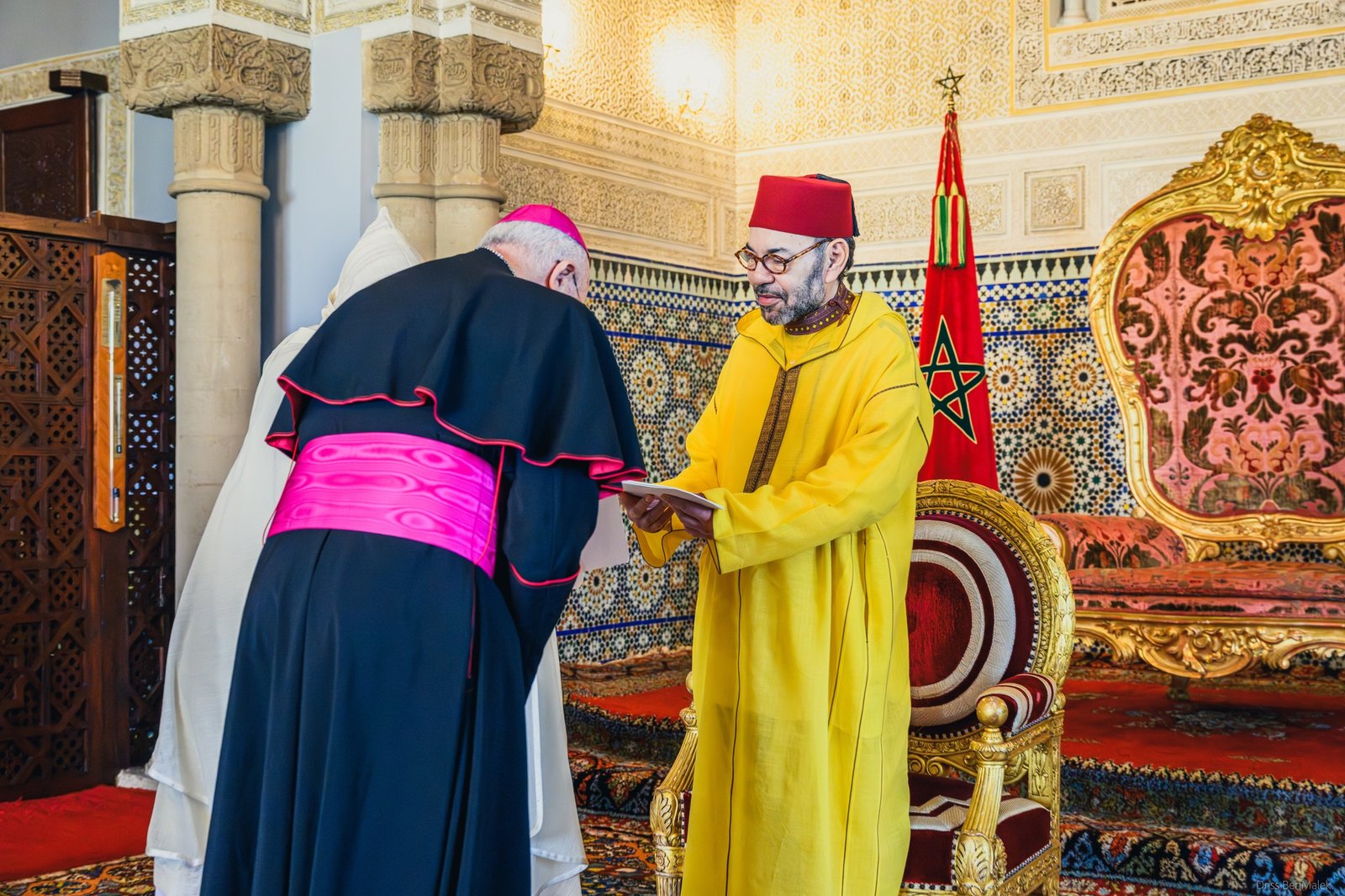
Marrakech – King Mohammed VI received 21 foreign ambassadors at the Royal Palace in Rabat on Thursday, as the diplomats presented their credentials as extraordinary and plenipotentiary ambassadors to Morocco. Foreign Minister Nasser Bourita attended the ceremony.
The ambassadors represented a broad geographic spread across four continents. From Europe, the incoming ambassadors were Alfred Xuereb (Vatican), Berit Basse (Denmark), Dirk-Jan Nieuwenhuis (Netherlands), Gilles Heyvaert (Belgium), and Valentin Zellweger (Switzerland).
Africa sent the largest contingent, with Eliphas Chinyonga (Zambia), Lamine Ouattara (Côte d’Ivoire), Branly Martial Oupolo (Gabon), Jessica Muthoni Gakinya (Kenya), Charity Gbedawo (Ghana), Nardos Ayalew Belay (Ethiopia), Momodu Koroma (Sierra Leone), Vincent Thom Nundwe (Malawi), and Joseph F. Johnson (Liberia) all presenting their credentials.
The Middle East and North Africa region was represented by Ahmed Nihad Abdel-Latif of Egypt.
From Asia and the Pacific, Sanjay Rana (India), Nakata Masahiro (Japan), and Damien Patrick Donovan (Australia) joined the diplomatic corps in Rabat.
Latin America was represented by Arnaldo Tomás Ferrari (Argentina), Marco Tulio Gustavo Chicas Sosa (Guatemala), and Isbeth L. Queil Murcia (Panama).
Under Morocco’s 2011 constitution, the King holds direct authority over foreign policy and diplomacy. No foreign ambassador can begin official duties in Morocco without first presenting credentials directly to the King – a constitutional requirement that makes Thursday’s ceremony a legal prerequisite, not a formality.
The constitution also states explicitly that ambassadors and representatives of international organizations are accredited to the monarch, who also signs and ratifies treaties.
The King serves as the country’s supreme representative in foreign diplomacy and retains complete control over matters pertaining to foreign policy. This concentration of diplomatic authority means that until credentials are received at the Royal Palace, an ambassador holds no recognized standing in Rabat, regardless of their home country’s appointment.
