


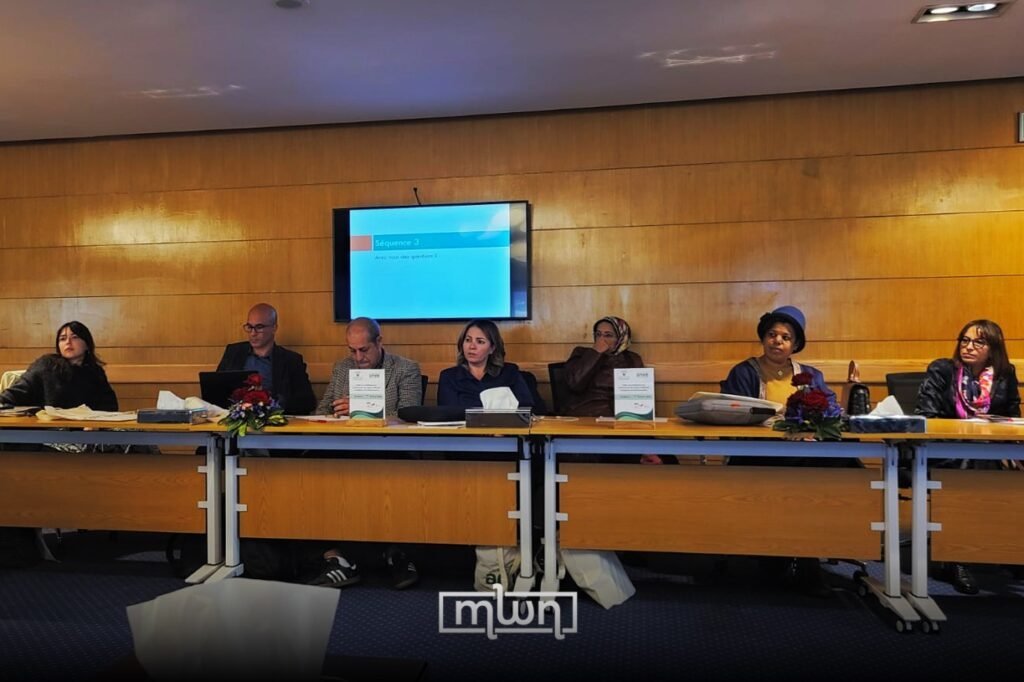
Casablanca – Mövenpick hotel hosted the workshop “Raising Journalists’ Awareness on Energy Efficiency and Decarbonation” today in Casablanca.
The event was organized by the Ministry of Energy Transition and Sustainable Development and the Moroccan Agency for Energy Efficiency (AMEE), with the support of the German cooperation GIZ. It brought together Moroccan journalists to discuss key concepts related to energy efficiency and decarbonation.
The workshop focused on strengthening their understanding of energy and environmental issues, highlighting the role of the media in ensuring accurate and pedagogical coverage of these topics.
Led by Valéry Laramée de Tannenberg, a journalist specialized in environmental, climate and energy reporting, the workshop combined presentations, case studies, and practical exercises to help the media understand energy and decarbonation topics and report them clearly and accurately to the public.
Speaking to Morocco World News (MWN), he said: “The role of a journalist is multiple. First, he must respect the fundamentals of the job of a journalist, that is to say, find the right sources, verify them, counterbalance them with other comparable studies to see if the study or the subject he is dealing with is valid.”
Read also: Morocco Engages with Leaders on Global Energy Governance in 2026 IEA Ministerial Meeting in Paris
The presentation covered Morocco’s energy situation, including greenhouse gas emissions, national strategies, and development plans. The sessions also explained energy efficiency, decarbonation principles, and verification of information.
The role of journalists in conveying information was at the center of the workshop. They act as a bridge between experts and laypeople, which requires specific expertise to do effectively.
“As far as the articles that deal with energy or climate issues are concerned, it requires a certain expertise, a certain technical and scientific culture, and that, there is only the journalist who can acquire it,” he added to MWN.
This workshop was an opportunity for journalists to better understand what their role entails. They were reminded that their responsibility is more than just reporting; it also includes checking sources, authors, units of measurement, and context.
“[The journalist] must do pedagogy, that is to say, he must put himself at the level of his readers, of his listeners, of his spectators, to be sure to be understood,” explained Laramée de Tannenberg.
Beyond theoretical information, practical exercises were also part of the workshop. One of the exercises was a text written by climate and energy experts that the journalists had to rewrite in a way that makes sense to the reader.
Covering energy and climate issues requires constant attention and dedication. As Laramée de Tannenberg told MWN, “before, the job of a journalist was 24 hours a day, the job of a journalist of energy and climate is 36 hours a day.”