


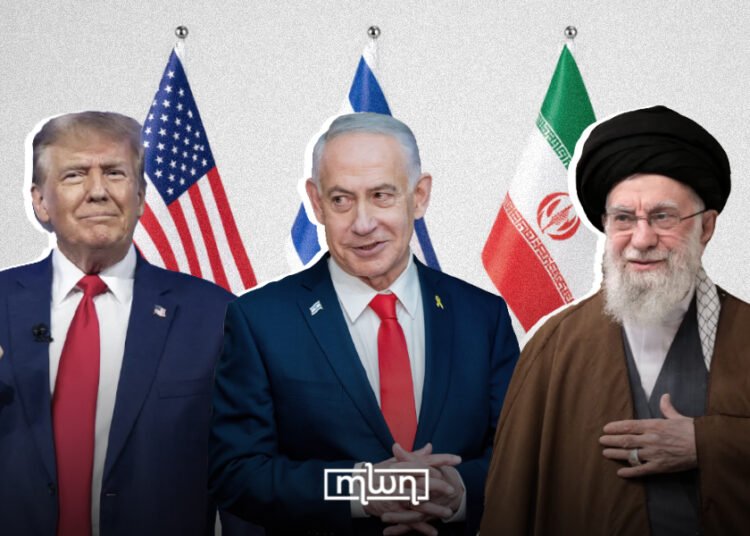
Rabat – Iran’s foreign minister has projected confidence and continuity after the death of Supreme Leader Ali Khamenei who was killed in US-Israel strikes, saying a new leader could be appointed within “one or two days.”
In remarks to Al Jazeera, Foreign Minister Abbas Araghchi described the moment as less than a rupture and more of a constitutional transition already under way.
“There is a procedure set in our constitution. We have now started that procedure,” Araghchi said.
He explained that a temporary leadership council has taken charge, composed of the president, the head of the judiciary, and a jurist from the Guardian Council. This body will oversee state affairs until the Assembly of Experts elects a new supreme leader.
Araghchi suggested the decision may come swiftly. “Maybe in one or two days they will elect a new leader for the country,” he said, insisting that “everything is in order” and aligned with Iran’s legal framework.
Moreover, Araghchi also told Al Jazeera that he has remained in direct contact with his counterparts across the region, as tensions continue to rise since the US and Israeli strikes on Iran.
He acknowledged that several regional governments are unsettled by the escalation, with some expressing anger and others seeking clarity. He argued, however, that responsibility does not lie with Tehran.
“This is a war imposed on us by the US and Israel,” he said, adding that regional states should direct their frustration toward Washington and Tel Aviv rather than pressure Iran to halt its response.
According to Araghchi, any diplomatic effort to end the confrontation must focus on what he described as the side that initiated the attacks.
A test of the system
The killing of Khamenei marks one of the gravest moments for the Islamic Republic since 1979.
President Masoud Pezeshkian described the attack as “a great crime” and declared seven days of public holidays, as well as a 40-day mourning period.
In Tehran, large crowds gathered in central districts after news of the strike spread. Public ceremonies are expected despite continued military pressure and security concerns.
Now, the issue centers on whether Iran’s constitutional system can deliver a smooth transfer of authority under fire.
Diplomacy or escalation
Araghchi also directed sharp criticism at Washington. “We have always been open to diplomacy, unlike America, which attacked us for the second time during negotiations,” he said.
The minister described the killing of Khamenei as “absolutely unprecedented” and a grave breach of international law.
In remarks to Al Jazeera, he said the assassination of a sitting head of state by foreign forces would deepen what he called “a war of aggression by the Americans against us” and make the conflict “more dangerous and more complicated.”
Araghchi also pointed to Khamenei’s religious stature beyond Iran’s borders, noting that he served as a senior clerical authority for millions of Muslims across the region.
His comments came after US President Donald Trump announced the start of “major combat operations” alongside Israel. Trump said the objective is to dismantle Iran’s missile infrastructure, weaken its naval capacity, and prevent it from acquiring a nuclear weapon.
Israeli Prime Minister Benjamin Netanyahu described the strikes as “necessary” to remove what he called an “existential threat.”
Iran responded with missile and drone attacks toward Israel and US-linked facilities in the Gulf, including sites in Qatar, Bahrain, Kuwait, and the United Arab Emirates.
Bahrain evacuated residents near the US naval base. Explosions were reported in Israel, and debris from intercepted missiles fell over parts of Doha.