


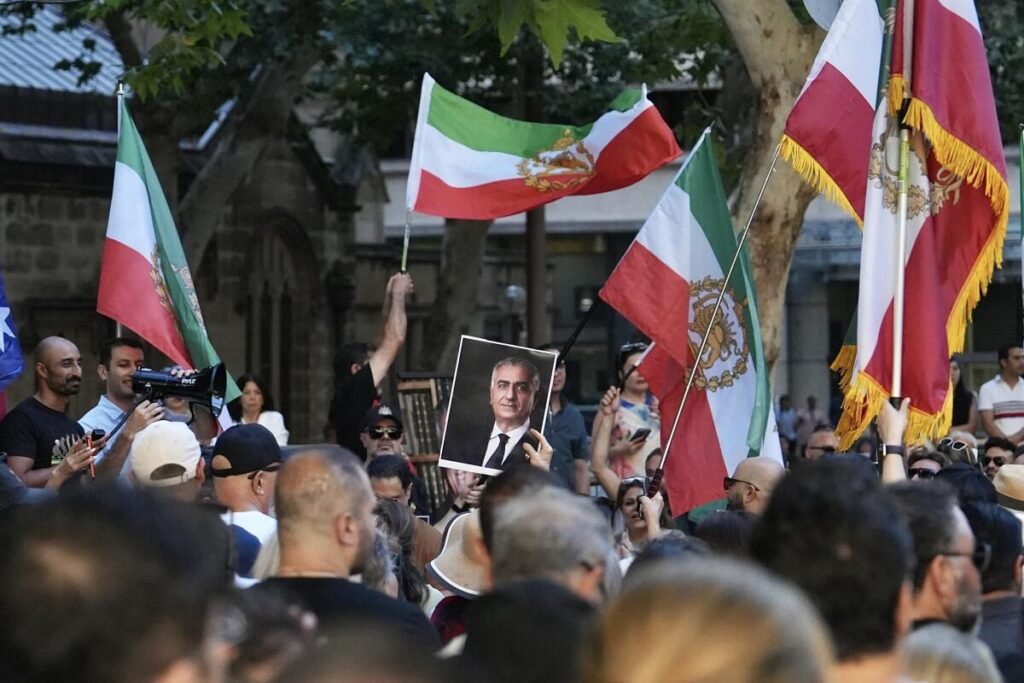
Marrakech – Iranian authorities have killed approximately 2,000 people during nationwide protests, marking the deadliest government crackdown in the country’s recent history, according to multiple sources reporting on Tuesday.
An Iranian official confirmed the death toll to Reuters, blaming “terrorists” for civilian and security personnel deaths. The US-based Human Rights Activists News Agency reported 1,847 protesters and 135 government-affiliated personnel among the dead, with nine children killed and over 16,700 people arrested across two weeks of demonstrations.
The protests erupted in late December as merchants in Tehran’s Grand Bazaar demanded economic relief. Within days, demonstrators abandoned economic grievances and began chanting for the complete overthrow of Iran’s Islamic government, with some supporting exiled Crown Prince Reza Pahlavi.
Anti-regime slogans replaced calls for economic reform as crowds demanded the fall of the theocracy under Supreme Leader Ayatollah Ali Khamenei.
Iran’s rial currency has collapsed to over 1.4 million to one dollar, while annual inflation reaches 40%. Food prices have spiked after the government ended subsidized exchange rates for most products except medicine and wheat.
US President Donald Trump responded Monday by encouraging protesters on Truth Social, writing, “Iranian Patriots, KEEP PROTESTING – TAKE OVER YOUR INSTITUTIONS.” Trump announced he had cancelled meetings with Iranian officials and threatened 25% tariffs on countries doing business with Iran.
“I have cancelled all meetings with Iranian Officials until the senseless killing of protesters STOPS. HELP IS ON ITS WAY,” Trump posted, suggesting he could use military force to defend peaceful protesters.
Iranian Foreign Minister Abbas Araghchi defended the government’s internet blackout, telling Al Jazeera, “The internet was cut only after we confronted terrorist operations and realized orders were coming from outside the country.”
German Chancellor Friedrich Merz predicted Iran’s regime was in its “final weeks,” stating, “When a regime can only maintain power through violence, then it is effectively at its end.”
European Commission President Ursula von der Leyen condemned the “horrifying” casualties and announced the EU would “swiftly” propose new sanctions. UN High Commissioner for Human Rights Volker Turk warned the “cycle of horrific violence cannot continue.”
Witnesses in Tehran described heavy security presence with anti-riot police carrying shotguns and tear gas launchers. Revolutionary Guards and Basij militia forces patrolled major intersections. Several banks and government offices were burned during the unrest.
Iran has maintained a nationwide internet blackout since Thursday, though mobile phone calls abroad resumed Tuesday. Security forces reportedly conducted apartment raids searching for Starlink terminals in northern Tehran.
The demonstrations have spread to over 220 locations across Iran’s 31 provinces.
Tehran faces unprecedented isolation as its “Axis of Resistance” alliance has been largely decimated in recent months. Israel has inflicted crushing losses on Hamas in Gaza and considerably depleted Hezbollah’s once formidable military arsenal in Lebanon.
Syrian dictator Bashar Assad was overthrown in December 2024, eliminating Iran’s key regional ally. The regime still reels from a 12-day war with Israel that saw the United States bomb Iran’s nuclear facilities last June.
The current uprising represents the largest challenge to Iran’s ruling theocratic establishment since the 2022 protests following Mahsa Amini’s death in police custody.