


Marrakech – International relations are seldom a simple morality play of good allies versus evil enemies. As former US diplomat Henry Kissinger famously observed, “America has no permanent friends or enemies, only interests.” This realist maxim shows that nations ultimately pursue their own interests, which can shift over time. Viewing the world in binary terms of ally or adversary is an outdated approach that can blind policymakers to changing realities.
In today’s complex global arena, rigid friend-or-foe thinking is more a liability than an asset. Political scientist Ali Mammadov echoes this point in a recent Atlantic Council analysis on Turkey’s strategic ambiguity. The absence of a clear ideological Cold War-style divide now “makes it harder to draw a black-and-white picture of friends and foes,” he argues, suggesting that this state of generalized uncertainty calls for more nuance and flexibility in diplomacy. Geopolitics in the 21st century is a spectrum of grays – a realm of competitors who cooperate and partners who occasionally clash.
Frenemies and fluid alliances
In this fluid environment, the concept of the “frenemy” has become commonplace. States often find themselves cooperating on some issues while competing on others. Rather than fixed camps of friends and enemies, we see overlapping networks of alignment that defy simple labels. As Mammadov points out, middle powers today deliberately pursue “strategic ambiguity and geopolitical balance, engaging closely with multiple powers” instead of tying themselves to a single bloc. Examples of such balancing abound in global affairs.
Turkey remains a NATO member allied with the West, yet maintains cordial ties with Russia and Iran, even mediating between rivals when it suits Ankara’s interests. With conflict on its doorstep, Turkey “could not afford rigid alignments,” Mammadov posits. Instead, Ankara keeps communication open with all sides out of necessity. India buys military hardware from Russia while deepening strategic partnerships with the United States. New Delhi’s foreign policy exemplifies interest-driven pragmatism over ideology – engaging both East and West to serve India’s security and economic needs. And there is Gulf states’ hedging: Saudi Arabia coordinates oil output with Russia (through OPEC+ cooperation) even as it relies on US security guarantees. Meanwhile, Riyadh has reopened dialogue with Iran to ease regional tensions. In the same vein, Qatar and the UAE host US bases but also maintain trade and diplomatic channels with Tehran.
Morocco itself has navigated the Ukraine-Russia crisis with a calculated neutrality that few countries have managed to sustain. Rabat abstained from the UN General Assembly vote condemning Russia’s invasion, yet it never endorsed Moscow’s territorial aggression – a position that quietly mirrored its own Western Sahara sensitivities. This was not indecision; it was strategic calibration. Morocco maintains robust defense and intelligence ties with Washington and Paris while preserving decades-old diplomatic channels with Moscow, particularly on energy and agricultural imports. In the broader East-West tug of war, Rabat has refused to be conscripted into any single bloc’s orbit. The kingdom treats geopolitical alignment not as ideology but as arithmetic – weighing interests, hedging risks, and ensuring that no single partnership becomes a dependency.
Such cases illustrate that today’s world is multipolar and interest-driven. Alignments are situational. Yesterday’s rival might be tomorrow’s partner against a bigger threat, and vice versa. Wise statecraft recognizes these shades of gray. What may appear to be an inconsistency, a contradiction – or even, to some, a form of hypocrisy – is often a pragmatic response to regional volatility. It also challenges the obsolete reductionist dualism of “are you with us or against us.” In short, nations have learned to be flexible; they have forged partnerships issue by issue, rather than adhering to rigid, inflexible camps.
The Morocco-Iran dilemma
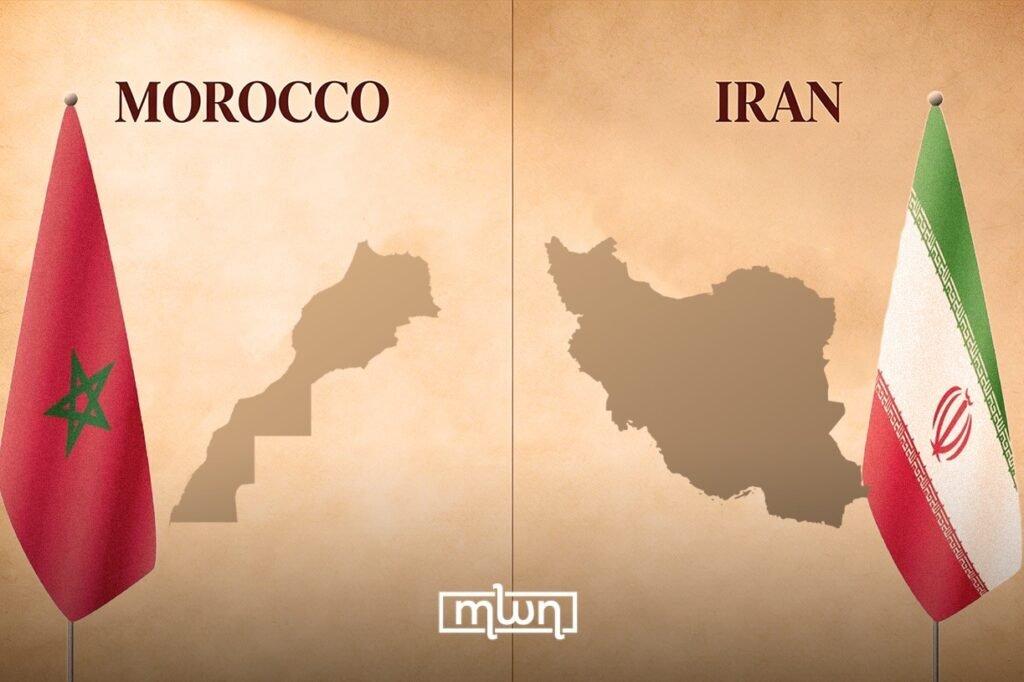
These principles are highly relevant for Morocco’s foreign policy thinking. Morocco severed diplomatic relations with Iran in 2018, accusing Tehran (and its Lebanese ally Hezbollah) of arming and training the Polisario Front separatists who challenge Morocco’s sovereignty over Western Sahara. From Rabat’s perspective, Iran positioned itself as a direct adversary by threatening Morocco’s territorial integrity. Given this hostility, Moroccan diplomacy in recent years has firmly aligned with Iran’s regional rivals – particularly the United States and Israel – who support Morocco’s stance on the Western Sahara conflict. Indeed, as part of the 2020 Abraham Accords, Morocco normalized relations with Israel and received US recognition of Moroccan sovereignty over Western Sahara in return. Not surprisingly, Morocco’s foreign ministry routinely denounces Iran for “creating terrorist entities” and interfering in Arab affairs.
Yet, even with such genuine grievances, a purely black-and-white view of Iran as “enemy” can be shortsighted. Morocco now faces a nuanced dilemma: how to oppose Iran’s hostile actions toward Moroccan interests without blindly cheering every blow dealt to Iran on the world stage. This dilemma has come into sharp relief in the context of the current US-Israeli war against Iran. Rabat has pointedly avoided condemning the extensive American and Israeli airstrikes on Iran. Instead, Moroccan officials have issued statements condemning Iran’s “atrocious” retaliatory attacks on Gulf Arab states – carefully expressing solidarity with fellow Arab governments, while maintaining selective silence about the strikes on Iranian soil.
This calibrated stance reflects Morocco’s tricky balancing act. On one hand, Iran is perceived as a foe backing Morocco’s separatist enemies, so Rabat has little sympathy for Tehran. On the other hand, Morocco understands that unconditionally applauding Iran’s downfall could carry hidden costs. The very fact that Rabat and Algiers have both refrained from loudly endorsing or condemning the Iran war – described by media as a “selective silence” – shows that the conflict is being evaluated through the prism of each country’s national interests, particularly the Western Sahara dispute. This is a classic example of interest-driven nuance: Morocco opposes Iran in one context, but must still calculate how Iran’s fate affects Morocco’s broader strategic environment.
The Iran war’s unintended consequences for Morocco
A full-scale war against Iran, while punishing an adversary of Morocco, also presents serious geopolitical risks for Rabat. Irrespective of Iran’s misdeeds, Moroccan analysts must consider the second-order effects of Iran’s weakening or collapse on Morocco’s national interests. Several of these repercussions could be highly detrimental.
Iran’s regime – however hostile to Morocco – has functioned as a counterweight in the Middle East power equation. Its mere existence forces other powers to restrain themselves, preserving a degree of balance. If Iran were completely taken out of the picture, the regional dominance of an unchecked US-Israel axis would dramatically increase. Some observers note that Israel in particular seeks to “remove its last serious strategic rival in the Levant” and reset the regional balance of power in its favor. A Middle East where one bloc holds overwhelming supremacy may not serve Morocco’s interests in the long run.
For instance, Morocco currently benefits from Washington’s support on Western Sahara, but a globally preoccupied or over-empowered United States might also make unpredictable moves, and a hegemonic Israel could go on to pursue far more destabilizing policies for the broader Muslim world. In essence, a multipolar regional order can sometimes offer Morocco more room to maneuver. The elimination of Iran as a player would rewrite the regional script in unforeseen ways. It is a basic tenet of realpolitik that when one power is eliminated, others fill the vacuum – potentially in ways that create new threats. Thus, even from Rabat’s perspective, Tehran’s adversarial role has to be weighed against the stability it provides by keeping regional rivalries in check.
Read also: Should Moroccans Celebrate the Fall of Iran’s Theocratic Regime, Venezuela’s Maduro?
Perhaps the most immediate concern for Morocco is the prospect of an oil price and supply shock. Iran sits astride the Strait of Hormuz, the chokepoint through which a large share of the world’s oil exports flow. A conflict that closes the Strait – even temporarily – would choke off Gulf petroleum shipments with dire global repercussions. In 2024, roughly 20% of global oil consumption (about 20 million barrels per day) transited through the Strait of Hormuz. There are very few alternative routes if this artery is blocked; most Gulf oil has no other path to market. The closure of Hormuz in a war scenario would send energy prices skyrocketing worldwide.
For oil-importing countries like Morocco, that means soaring fuel costs, supply shortages, and economic pain. Moroccan officials are well aware of this vulnerability – they have already seen signs of it. As the conflict with Iran escalated, energy prices began climbing, threatening Morocco with higher import bills and rising inflation. The government in Rabat has candidly acknowledged its worry that war-induced volatility in the Middle East could undermine Morocco’s post-pandemic economic growth.
Unlike hydrocarbon-rich Algeria, which views surging oil and gas prices as an economic “blessing”, Morocco stands to lose from an energy shock. Expensive energy would strain Morocco’s budget, widen its trade deficit, and hurt ordinary Moroccans at the gas pump and in electricity bills. Additionally, turmoil in the Middle East can spook investors and tourists – two pillars of Morocco’s economy. With Morocco hoping to attract 22 million tourists in 2026, its tour operators fear that images of regional war will deter Western visitors, leading to cancellations and lost revenue. But not only that: a concrete and immediate consequence is the disruption of key air routes, particularly through hubs such as Dubai and Doha – vital gateways linking Morocco to Asia. Their closure or instability means Morocco has already begun to lose a share of long-haul tourism. In short, a war on Iran could batter Morocco’s economy even though the fight is thousands of miles away.
One nation’s crisis can be another’s opportunity – and in this case Morocco’s arch-rival, Algeria, stands poised to gain from an Iran war. As a major energy exporter, Algeria benefits immensely from oil and gas price spikes. Every dollar increase in oil prices fills Algerian state coffers, enabling Algiers to fund its military and diplomatic ambitions. More importantly, a prolonged Gulf energy disruption would make Europe more dependent on Algerian energy.
Since Russia’s war on Ukraine in 2022, Europe has pledged to end its reliance on Russian fossil fuels, turning instead to alternatives – and Algeria has eagerly filled part of that gap. The European Union has finalized a phased, mandatory embargo on all Russian gas imports – both LNG and pipeline – to be fully implemented by late 2027. This policy, under the REPowerEU strategy, aims to permanently sever energy ties with Moscow, with bans on specific contracts starting in early 2026, targeting full independence from Russian energy by winter 2027-2028.
Crucially, this policy is being reaffirmed even in the context of rising energy prices triggered by the current Iran war, with EU leaders rejecting any return to Russian energy. Resuming imports would mean “indirectly financing Russia’s brutal, illegal war,” Energy Commissioner Dan Jørgensen said recently, warning that Europe had been “blackmailed” through energy dependence in the past. He was unequivocal: “In the future, we will not import as much as one molecule from Russia.” In other words, even under acute geopolitical pressure – from Ukraine to Iran – the EU is deliberately choosing structural decoupling over short-term relief, locking in a long-term reorientation of its energy map that reshapes demand toward alternative suppliers, including North Africa.
As of early March, Vladimir Putin has threatened to immediately halt natural gas supplies to Europe ahead of planned 2027 restrictions, citing better profit opportunities in other markets and suggesting Russia will not wait to be cut off.
A Carnegie Endowment analysis indicates that the Ukraine crisis gave Algiers “a golden opportunity to establish itself as one of Europe’s most prominent energy partners.” As the analysis puts it, Algiers “filled the void left by natural gas” previously supplied by Russia and “leveraged this economic boon into political influence.” In a scenario where Gulf oil is cut off due to war, Europe would double down on importing from Algeria to meet its needs. That would hand Algiers a huge strategic card. European countries desperate to keep the lights on might become more willing to curry favor with Algeria – even if that means softening their stance on Western Sahara in Algeria’s favor.
For instance, Algeria could demand that its oil and gas clients in Europe toe a pro-Polisario line diplomatically, or at least distance themselves from Morocco’s position. Energy leverage can translate into political leverage, as Algeria has already demonstrated by tightening ties with Italy and Germany through long-term gas deals. In effect, the expanding Iran war could enrich and embolden Algeria, allowing it to mount greater pressure against Morocco on the diplomatic front. What looks on the surface like a fight between Iran, the US, and Israel could thus tilt the balance in the Morocco-Algeria rivalry, indirectly undermining Morocco’s core interests.
Additionally, as the world’s largest phosphate exporter through its OCP Group, Morocco faces its own constraints from the Hormuz closure. According to a March NDSU report, OCP depends on roughly 3.7 million metric tons of Gulf sulfur annually. Sulfuric acid is required for all phosphate fertilizer production, including DAP and MAP. The closure cuts off the sulfur feedstock that Morocco needs to manufacture its own phosphate products, potentially constraining its DAP and MAP output at a time when global demand is surging.
Lastly, Morocco must consider the broader instability that a sprawling Middle East war might unleash. A weakened or chaotic Iran could spark extremist violence, refugee flows, or sectarian strife that spills beyond Iran’s borders. While Morocco is far from Iran, it is not immune to the ripple effects of major regional turmoil. The conflict has already exposed a gap between Morocco’s government position and public sentiment. Domestically, many Moroccans view Iran through the lens of Islamic solidarity rather than the Western Sahara dispute. Images of bombs falling on a fellow Muslim-majority nation and reports of the killing of Supreme Leader Ali Khamenei, along with other high-ranking officials of the Islamic Republic have provoked public sympathy for Iranian “resistance” and anger at the US and Israel.
Moroccan civil society, including Islamist and leftist groups, have attempted to protest Rabat’s tacit support for the war, framing the US-Israeli attacks on Iran as aggression against the Muslim umma (community). For ordinary Moroccans, the Shia-Sunni fault line matters far less than the optics of resistance. Iran’s decades-long defiance of Israel – which much of the Moroccan street still regards as a colonial occupier of Palestinian land – earns Tehran a visceral, almost reflexive sympathy that no sectarian theology can override. Many see in Iran what they believe Arab governments have failed to deliver for decades: a state willing to confront Israel openly, absorb the cost, and refuse to capitulate – a posture the Arab world once promised but long abandoned.
Authorities, wary of street unrest, dispersed unauthorized protests against the war in cities like Rabat and Tetouan, reflecting concern that the conflict could ignite domestic turmoil. Beyond Morocco, a protracted war raises the frightening prospect of a regional conflagration – a “nightmare scenario” where Iran’s collapse triggers conflicts involving Turkey, Israel, the Gulf states, and non-state militias. Such an outcome would be disastrous for regional stability and economic development. Morocco, as part of the broader Middle East/North Africa context, would inevitably feel the aftershocks – whether in disrupted trade, pressured diaspora communities, or new security threats. All of these factors counsel caution. Even if one opposes Iran’s policies, an outright war with unforeseeable endgames is hardly a straightforward “win” for Morocco.
A call for nuanced analysis
Given the above complexities, it becomes clear that Moroccans – policymakers, analysts, and citizens alike – should approach international conflicts with prudence and nuance.
The 2022 Ukraine-Russia war cemented drones as the defining weapon of modern warfare – cheap, remote, and devastatingly precise. Yet beyond the battlefield, a more insidious variant has emerged in political discourse: the so-called biological drone. These are individuals who, whether by ideological capture, financial inducement, or sheer naivety, serve a foreign agenda aimed at dismantling their own nation from within. Like their mechanical counterparts, they are piloted from afar, expendable, and unaware of the full mission. The analogy is striking, but it carries a necessary caveat: in any free society, citizens may champion whatever cause they wish – dissent is sacred. The line, however, is crossed when advocacy becomes self-sabotage, when one’s convictions amount to slapping one’s own face on someone else’s behalf.
Patriotism and defense of national sovereignty (as in countering Iran’s meddling in Western Sahara), however, can coexist with a sober recognition of Morocco’s long-term strategic interests. Yet what blocks this mature synthesis from taking root is the suffocating tyranny of absolutist thinking that dominates public discourse: support Iran and you are a traitor selling out your country’s territorial integrity; oppose Iran and you are a Zionist puppet dancing on Western strings. This intellectual stranglehold leaves no room for nuance, no space for a citizen who can simultaneously reject Tehran’s interference in the Sahara and condemn the bombing of Iranian civilians. It is a false dichotomy weaponized by both camps – one that reduces complex geopolitics to tribal loyalty tests and turns every opinion into a verdict of treason or collaboration.
Supporting diplomacy over war in certain cases does not equate to endorsing an adversary’s ideology; it is a recognition that the world’s chessboard is complex, and an overly simplistic move can backfire. Moroccan diplomacy is indeed conducted by diplomats with official positions, but independent analysts and thinkers have the latitude to adopt a broader perspective. They can acknowledge, for example, that one can condemn Iran’s hostile actions and simultaneously criticize disproportionate US/Israeli military interventions that threaten regional stability. This is not hypocrisy, but a strategic maturity.
In international affairs, the friend/enemy binary is a false choice. Countries like Morocco would do well to remember that today’s foe might be tomorrow’s negotiating partner on a different issue, and today’s ally might drag one into an unwinnable quagmire. The world has moved beyond the Manichean divisions of the Cold War. We live in an era of “friends to all, enemies to none” foreign policy among many small and medium states, as they seek maximum flexibility. Even superpowers must adjust: as Mammadov noted in his Atlantic Council commentary, expecting unwavering loyalty in a multipolar world is “not only unrealistic; it risks alienating potential partners.” Morocco’s own interests will be best served by such an agile approach that avoids emotional or binary thinking.
A high-level geopolitical outlook urges Moroccans to be careful in their assessments and allegiances. Rather than seeing the international stage as a battle of good vs. evil nations, they should analyze case by case through the lens of national interest. This means appreciating the concept of “frenemies” – understanding that Iran, or any other country, can be an antagonist in one arena and yet play a stabilizing role in another. It means recognizing the wisdom in the old proverb: nations have no permanent friends or permanent enemies, only permanent interests. For Morocco, a clear-eyed pursuit of those interests – peace, territorial integrity, regional stability, and economic prosperity – may sometimes require standing apart from a simplistic “us versus them” mentality. In a world of shifting alliances and unpredictable consequences, such nuanced thinking is not just advisable; it is essential for survival and success on the geopolitical chessboard.
Read also: Geopolitics in Broken Glasses: Forgotten Entities in Ambush