


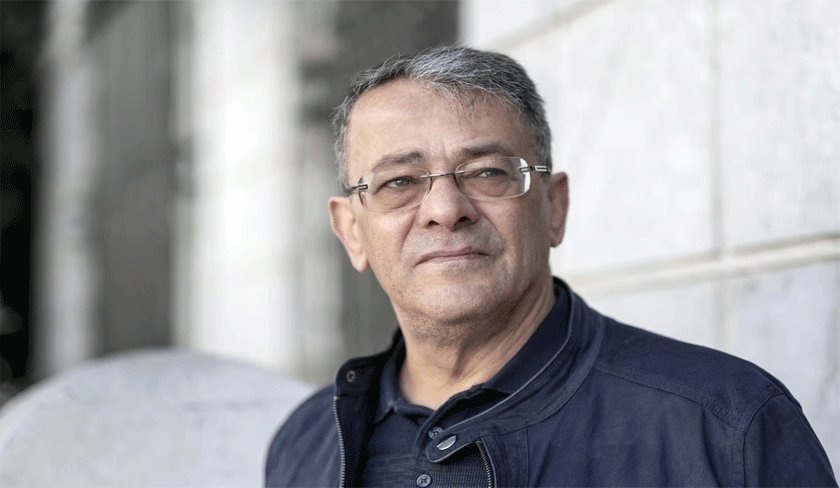
Rabat – The appeal trial for human rights lawyer Ahmed Souab began Thursday after the Tunis Court of First Instance sentenced him to five years in prison last October in what Amnesty International calls a “grossly unfair” seven-minute trial.
Souab, 69, was prosecuted for statements he made regarding a controversial case which targeted 40 political opponents, activists, lawyers, and other public figures. They were accused of “conspiracy against internal and external State security” and terrorism for plotting to overthrow the government of Tunisian President Kais Saied.
A video of Souab standing outside the headquarters of Tunis Bar Association spread quickly on social media, in which the lawyer reportedly said: “It seems that it is not the detainees who have a knife turned on them, but rather, it’s the president of the chamber who has a knife [at his throat].” Souab’s defense committee said that he was referring to pressure exerted on judges.
Judicial authorities charged Souab with allegedly “forming a terrorist organization,” “supporting terrorist acts,” “threatening to commit terrorist acts,” and “spreading fake news.” He was held in detention for more than six months before trial.
A coalition of nearly 20 international legal organizations cosigned a statement on Thursday calling for the immediate release of Souab, calling his arrest and conviction “a grave violation of his right to freedom of expression and to carry out his professional duties without intimidation or reprisal.”
The court held the lawyer’s trial remotely, citing a “real danger” without further explanation. Souab refused to attend his seven-minute trial in October, protesting the lack of fair-trial guarantees, and journalists were also reportedly barred from attending.
Critics argue that remote trial by video is an abuse of power that prevents detainees from being brought before a judge to verify their well-being and the conditions of their detention. Souab’s family said he has a history of heart disease and Amnesty International reports that his health has deteriorated significantly while in El Mornaguia prison.
Bassam Khawaja, deputy Middle East and North Africa director at Human Rights Watch, says Souab’s “abusive prosecution for defending others from abusive prosecution shows the sheer extent of the Tunisian authorities’ crackdown on any dissent.”
Saied was democratically elected in 2019 but consolidated all branches of power in 2021 and began a tirade against political opponents and former officials.
Human Rights Watch reported intensified repression of political opposition in their 2025 report. The report also says that more than 80 people were detained on political grounds as of 2024.
Thousands of protestors gathered in Tunis in November 2025 against Saied’s authoritarianism, particularly the jailing of critics. The marches included chants of “the people want the fall of the regime” and “no fear no terror, the street belongs to the people.”
The president denies being a dictator or using the judiciary against critics, but says he is cleansing Tunisia of “traitors.”
Media freedom in Tunisia has also faced significant attacks since 2021. No major news sources have reported an update on the case against the Tunisan Lawyer but Mosaique FM reports that the Tunis Court of Appeal rejected the request to release Ahmed Souab and postponed the case until February 23.
Read also: Tunisia Erupts in Mass Protests Against President Kais Saied