


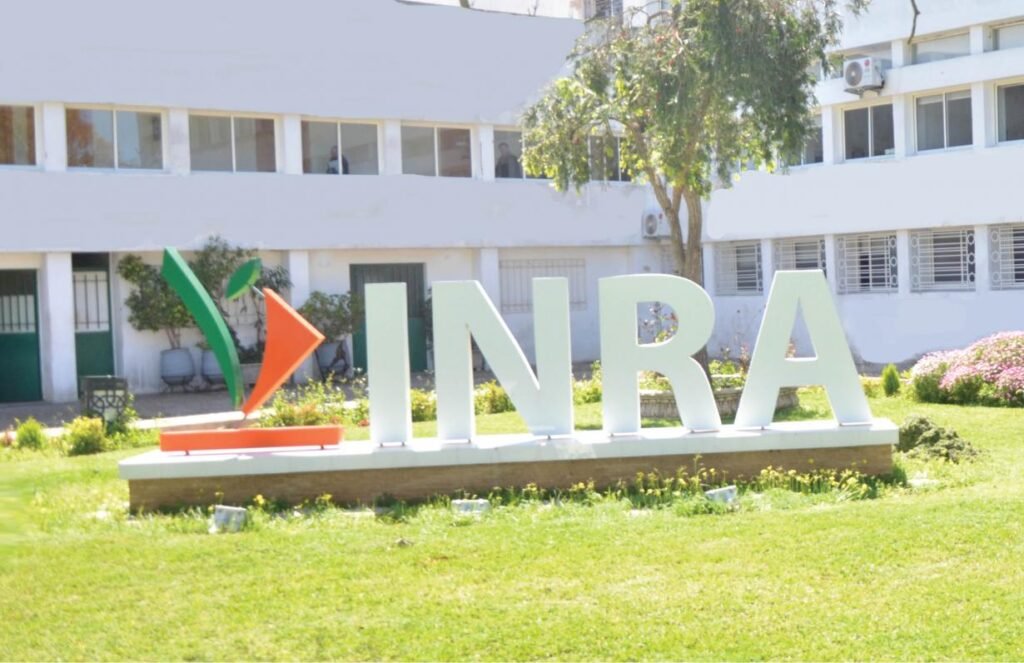
Agadir – The National Institute of Agronomic Research (INRA) hosted on Saturday a panel focused on the optimization of agricultural products and the strengthening of cooperatives’ role in Morocco’s agri-food systems.
The session, held on the sidelines of the 18th edition of the International Agricultural Show in Morocco (SIAM), brought together researchers, institutional representatives, and cooperative actors to discuss the strategic role of cooperatives in advancing food sovereignty.
Discussions focused on the growing pressures facing the agricultural sector, including climate change, water scarcity, volatility in global markets, and structural transformations in food systems.
The meeting stressed the importance of scientific research as a key driver in supporting cooperatives’ shift toward higher-value production models and targeting all the challenges the agricultural sector is facing in Morocco.
INRA’s role in this context is to provide technical tools and innovative solutions to enhance the socio-economic value of agricultural products, including the use of agricultural by-products.
INRA also relies on detailed physico-chemical elements to guide transformation processes, enabling cooperatives to better control production stages in line with international standards and improve competitiveness in both national and international markets.
Achieving this vision, INRA signed a series of strategic agreements with national and international partners, reinforcing its role in advancing sustainable and resilient agriculture.
During SIAM, the institute strengthened its scientific cooperation with the National Institute of Agronomic and Veterinary Research (INIAV) through a memorandum of understanding dedicated to agricultural innovation.
It also concluded a partnership with OCP Nutricrops focusing on the sustainability and resilience of agricultural systems, alongside a declaration of intent involving Moroccan and Portuguese partners aimed at deepening research collaboration.
In parallel, several agreements were signed in the fields of training and agroecology with key stakeholders, including the agricultural consortium, the Directorate for the Development of Production Sectors (DDFP), the Network of Agroecological Initiatives in Morocco, and the Moroccan Confederation of Agriculture and Rural Development.
These initiatives seek to align training programs with sector needs, strengthen local expertise, and improve youth employability. Within this framework, cooperation with the Directorate of Education, Training, and Research also enables the alignment of the Hassan II Agronomic and Veterinary Institute’s programs with the priorities of the ecological transition.