


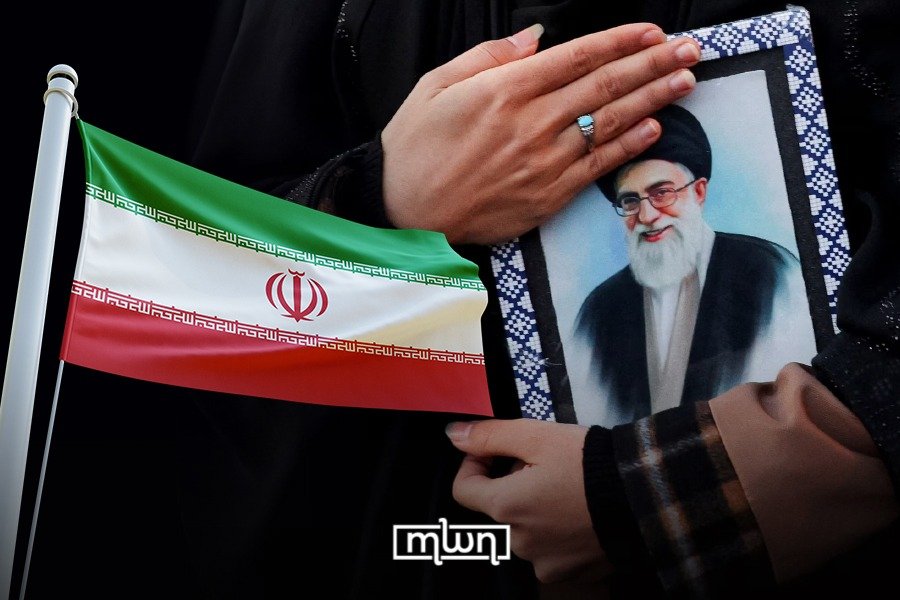
For decades, the international community has largely misconstrued the fundamental nature of the authorities in Tehran. To some, they appear as a benign power wrapped in “resistance” and “spirituality.” To others, particularly in parts of the Muslim world, the regime’s rhetoric — cloaked in Islamic vocabulary — has created a false illusion of moral authority.
However, the reality is starkly different. This theocratic autocracy has engineered one of the world’s most sophisticated networks of armed non-state actors, stretching from the Middle East to Africa, Asia, and Latin America. Its actions have systematically destabilized entire regions. The ultimate tragedy is that the Iranian people themselves — courageous, cultured, and overwhelmingly opposed to this authoritarianism — remain the primary victims of a state that prioritizes ideological expansion over the welfare of its citizens.
The Semantic Trap: Neither a Republic nor Representative of Faith
The regime’s most successful “trick” is its name. By adopting the title of a “republic,” it suggests a mandate from the people; yet the “Supreme Leader” holds a lifetime appointment with unchecked power over the military, judiciary, and media.
Furthermore, concepts such as “resistance” and “Islamic unity” are deployed not as theological principles, but as instruments of statecraft. This strategy has been used to recruit, divide, and influence. While claiming to protect the “oppressed,” the regime’s proxies have caused the displacement and deaths of hundreds of thousands of Muslims across the region.
The ‘”Hollowing Out’” of Sovereign Nations: Lebanon, Iraq, and Palestine
Tehran’s most destructive practice is its “state capture” model, where it builds a “state within a state” to paralyze sovereign nations:
Lebanon: Once the “Paris of the Middle East,” Lebanon has been devastated by decades of Hezbollah’s parallel military and political structure. By serving as Tehran’s forward base, Hezbollah has effectively held the Lebanese state hostage, leading to economic collapse and political paralysis.
Iraq: Following the 2003 invasion, the regime used the IRGC-Quds Force to fund and arm militias that have fragmented Iraqi society, undermined state sovereignty, and turned the country into a battleground for foreign interests.
Palestine: Perhaps the most cynical “trick” is the regime’s exploitation of the Palestinian cause. Tehran has worked tirelessly to keep Palestinian factions divided — funding and arming groups like Hamas and PIJ to ensure they remain at odds with the Palestinian Authority. This “divide and rule” strategy is designed to prevent a peaceful, negotiated resolution with Israel, as a stable Palestinian state would deprive the regime of its most potent propaganda tool.
Targeting the Gulf: Desperation and Direct Aggression
In 2024 and 2025, the mask of “regional brotherliness” slipped further. Despite diplomatic attempts by Gulf states to de-escalate tensions, the regime has launched direct and indirect attacks on civilian infrastructure across the GCC.
Qatar and the UAE: From threats against maritime shipping to the targeting of US military installations and civilian airports in the Gulf, Tehran has demonstrated that it respects neither the neutrality nor the sovereignty of its neighbours. These attacks on nations like Qatar, which often acted as mediators, reflect a regime that views all diplomacy as a weakness to be exploited.
The IRGC: A Transnational Mafia-State Economy
The Islamic Revolutionary Guard Corps (IRGC) is the true engine of the state — a military force that has effectively cannibalised the national economy. Controlling an estimated 50% of the national GDP, the IRGC hollowing out the private sector to fund global illicit trades and narcotics smuggling. This ensures the elite remains wealthy while the Iranian people endure poverty and an ecological “water bankruptcy” caused by systemic corruption.
The Legal Basis for Confronting Destabilization
International law provides a clear framework for addressing these actions. The regime’s conduct violates:
- The UN Charter: Prohibiting support for armed groups that undermine the sovereignty of other nations.
- Customary International Law: The duty of states to prevent threats to international peace.
- The Responsibility to Protect (R2P): The obligation to protect populations from mass harm fueled by external actors.
Morocco’s Position: Strategic, Lawful, and Morally Coherent
Morocco’s 2018 decision to sever ties — following evidence of Hezbollah training and arming the Polisario Front — was not a distant dispute. It was a direct response to a pattern of behavior seen in Lebanon and Iraq. Morocco’s alignment with the United States, Saudi Arabia, the UAE, Kuwait, and Bahrain is grounded in shared assessments of regional threats and a common commitment to stability.
A Call for Intellectual Clarity
The world must stop being “tricked” by the regime’s vocabulary. When a state executes its youth, devastates its neighbors, and deliberately sabotages the prospects of Palestinian peace for its own gain, it has forfeited the right to be called a “republic.”
The Iranian people’s cry for freedom is a cry for the end of this 45-year deception. It is time the world stood in solidarity with the people — and the sovereign states they have sought to destroy — not the autocracy that speaks in their name.
The views expressed in this article are the author’s own and do not necessarily reflect Morocco World News’ editorial views.