


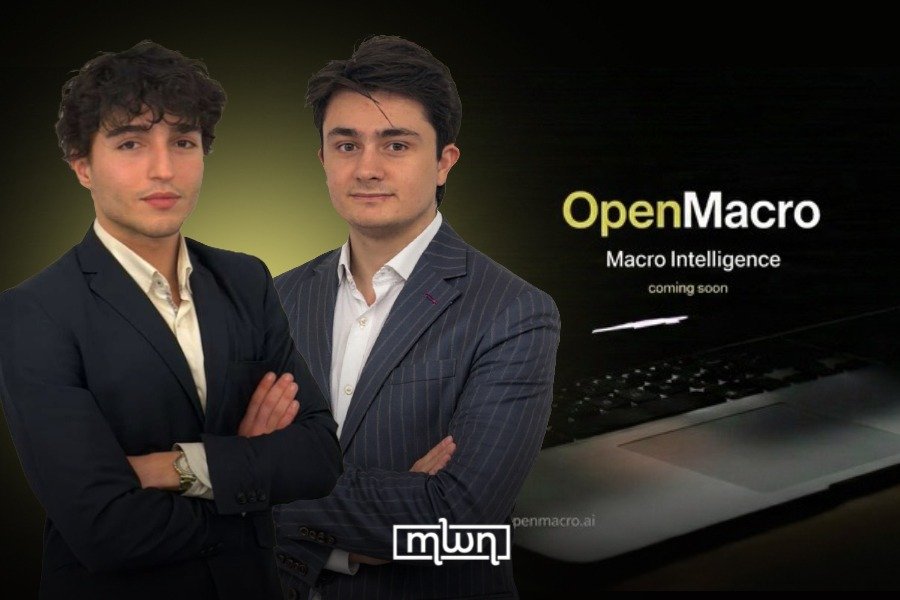
Casablanca – For decades, macroeconomic and quantitative investment research has operated as a closed system. Only the largest financial institutions had the resources to connect macroeconomic variables — labor markets, inflation, liquidity, and monetary policy — to asset behavior using advanced mathematical models.
The cost of proprietary data, the need for PhD-level research teams, and opaque fund structures kept this layer of intelligence firmly out of reach for most investors.
That system is now under pressure. Data is becoming more accessible. Analytical frameworks are no longer limited to the largest balance sheets. And the assumption that institutional capital will always hold an enduring research edge is being openly questioned.
OpenMacro, developed by Astant Global Management (AGM), is built on that shift. It is designed to expose institutional-grade macro intelligence to a far broader investor base, at a moment when the walls around it are already starting to crack.
Behind the platform are two young hedge fund managers who have been working inside that institutional logic from the start: Marcos Agustin, a 21-year-old Spanish-born founder, and Fahd El Ghorfi, a 23-year-old Moroccan founder.
While their age inevitably draws attention, their work has already placed them inside the institutional world they are now trying to open up.
Building institutional credibility early
Astant Global Management was co-founded by Marcos Agustin (CEO) and Fahd El Ghorfi (COO), whose roles inside the firm are clearly defined and complementary.
Their work has drawn attention well beyond campus walls. The founders were featured in Forbes Italia’s Next Leaders series, which framed their rise as an example of Europe’s new generation of entrepreneurs.
Both founders have been “passionately involved in macroeconomics, capital markets, geopolitics, and corporate finance from an early young age,” they told MWN. That long-standing interest shaped how they approached building Astant — not merely as a product, but as a research-driven investment firm.
“Our models, commonly known as ‘Phoenix,’ are based on advanced machine learning and deep learning techniques,” they explained. “We utilize econometric models to predict short and medium-term economic trends, analyzing how these trends impact financial assets at a statistical level.”
The emphasis, throughout their material, is on discipline rather than spectacle. The investment process is described as “entirely data-driven, evidence-based, and methodologically transparent,” with a focus on robustness, diversification, and long-term consistency across market cycles.
Backtesting, they say, is conducted through “rigorous evaluation against historical data to ensure the reliability and accuracy of our models in forecasting future returns.”
For Agustin and El Ghorfi, the objective behind AGM is to provide investors with returns that are independent of broader market movements, aiming to generate alpha across market conditions.
Risk is treated as central, not secondary. The founders repeatedly highlight capital preservation, strict risk management, and what they call the “best use of capital.”
Leverage, they stress, is tightly controlled, diversified across assets and geographies, stress-tested, and monitored in real time.
This institutional mindset— combined with direct exposure to the limits of existing structures — ultimately shaped the logic behind OpenMacro.
OpenMacro and the end of financial gatekeeping
OpenMacro is positioned as infrastructure rather than a traditional investment product. It is built on the premise that macro-quant research remains “a closed ecosystem,” where only large institutions possess the models, data, and research capacity needed to operate with precision. That gap, the founders argue, is narrowing—and will continue to do so.
“The growing accessibility of high-quality time series, model-ready datasets, and pre-built econometric frameworks is allowing smaller firms to reach near-institutional sophistication at a fraction of the cost,” they said.
“By 2030, we expect a radical shift: the traditional institutional research edge will largely disappear.”
OpenMacro is designed for that transition. The platform provides access to quantitative and machine-learning-driven strategies, alongside high-level institutional research, without requiring users to enter fund structures or surrender control of their capital. Its API-first architecture allows strategies to be deployed directly through users’ own brokerage accounts.
The platform differentiates between user types. Retail investors are offered simplified access to curated strategies and automated execution.
More advanced users and institutions can integrate OpenMacro’s tools through APIs, using them to augment or develop their own strategies.
Under the hood, the same research logic applies. Phoenix, AGM’s proprietary system, combines deep learning with statistical techniques to adapt across asset classes — equities, bonds, currencies, and commodities.
“We analyze an enormous number of potential scenarios continuously and adjust parameters in our portfolios accordingly,” the partners explained.
Strengthening the platform’s institutional depth, AGM is pleased to welcome Dr. Benmir as Senior Advisor to Astant Global. A Professor of Economics at IE University, he brings deep expertise in macroeconomics, financial markets, and climate macro risks, as well as advisory experience in the private sector and through engagements with central banks and governments. His appointment will materially strengthen Astant’s institutional macro and climate intelligence capabilities.
AGM is also in advanced discussions with several distinguished advisors across macroeconomics, asset management, and financial regulation, who are expected to join the firm to support its strategic growth trajectory and institutional development. Their anticipated involvement will further strengthen governance, research rigor, and long-term positioning as the firm scales.
Crucially, OpenMacro also challenges the economic structure of traditional hedge funds. Instead of fixed management fees tied to asset size, the platform is built around subscriptions and performance alignment. The goal, as framed by the founders, is to align incentives directly with user outcomes.
OpenMacro is not presented as a rebellion against institutions, but as a reflection of a shift already underway. As access to data and analytical tools spreads, the edge increasingly lies in execution, risk management, and consistency, rather than exclusivity.
Read more: Morocco’s Startup Ecosystem Enters a More Disciplined Phase in 2026