


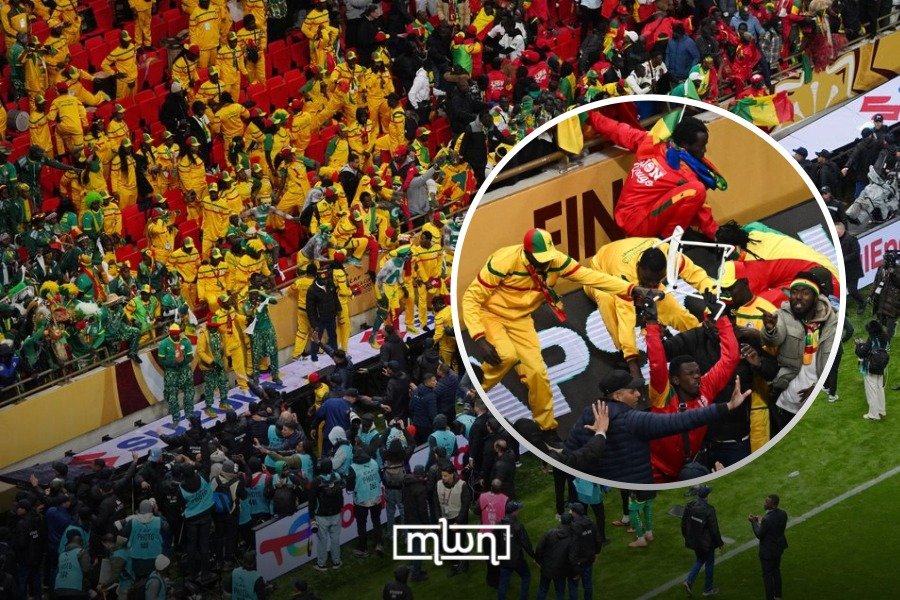
Rabat – The Africa Cup of Nations (AFCON) final in Rabat was bound to be an emotional event. Morocco were the host, the stadium was packed, and the pressure was huge. But the night turned controversial when VAR awarded Morocco a clear late penalty, sparking protests and chaos on the pitch.
For a few minutes, football stopped. Senegal’s players walked off in protest, delaying the game, while tensions rose in the stands. Reports said objects were thrown and some Senegalese fans tried to get onto the pitch, forcing stewards and riot police to form a barrier.
It was an ugly moment that could have fully overshadowed a well-run tournament. What stands out, though, is that the situation escalated — but did not spiral out of control.
A tense moment met by a measured response
Those final AFCON moments were a dangerous atmosphere, emotions were high, security was under pressure, and the risk of wider disorder grew by the minute.
This is where Morocco’s handling mattered. Security forces acted with restraint. Instead of using heavy force, they focused on containment and calming the situation, restoring order and stopping the chaos from spreading.
In finals like this, heavy-handed action often becomes the bigger scandal. In Rabat, the priority was clear: prevent escalation.
FIFA President Gianni Infantino later condemned the “unacceptable scenes” around the final.
He criticized Senegal’s decision to leave the pitch and rejected any form of violence in football. His words showed the seriousness of the events. But the fact that the night did not collapse into lasting disorder also showed the importance of disciplined crowd management and controlled policing.
This composure was not only key to maintaining security in the stadium, but showed a model for how fans should act once the stadium lights go out, which proved successful.
The Hammouchi security model during AFCON
From the start, Moroccan authorities made clear that AFCON 2025 would be more than just a football tournament; it would also be a showcase of security and organization.
Abdellatif Hammouchi, Director General of the DGSN-DGST, personally inspected the Prince Moulay Abdellah Sports Complex before the final to check readiness and protocols.
Morocco’s plan relied on layered coordination, visible security inside and outside stadiums, digital command systems, and surveillance tools to manage crowds before problems escalated. International observers took notice.
A British sports security delegation visited Rabat during the tournament to study Morocco’s crowd-management system. Reports said they watched how resources were deployed and how movement and access were organized during a high-pressure match.
An US FBI delegation also came to Morocco during AFCON to observe stadium security, surveillance, and the links between command centers.
Whether for cooperation or benchmarking, these visits showed that Morocco’s AFCON security setup was seen as a serious case study, not just routine event staffing.
Safety without overshadowing sport
Every big tournament has incidents. The real test is whether those incidents take over the story, or whether organizers keep control so the competition stays in focus.
This matters for Morocco’s reputation as a host of major sporting events. AFCON 2025 was judged not only on football quality, but also on logistics, security, and the ability to handle tense matches with rival fans.
The final, despite its controversy, showed something important: Morocco managed a shock moment under global scrutiny and stopped it from becoming a full security collapse.
In the end, this is what strong event governance looks like: calm enforcement, controlled spaces, and a public response shaped more by restraint than revenge. In a tournament where one chaotic moment could have defined everything, Morocco made sure safety and organization remained the pride of a well-hosted tournament could remain the main story.
