


Periods of geopolitical escalation do more than shift military balances; they quietly reorganize the architecture of the global economy. Wars rarely stop trade entirely, but they redirect it. Capital does not disappear in times of uncertainty — it relocates. As tensions rise in the Middle East, the global system is entering a phase of strategic repositioning, where resilience is increasingly valued over efficiency, and diversification over concentration.
This transformation is measurable. According to the World Trade Organization, global merchandise trade growth is projected to slow sharply to around 0.5 % in 2026, down from 2.4 percent in 2025. Such a deceleration reflects more than cyclical weakness. It signals mounting structural pressure on global supply chains due to geopolitical risk, higher insurance and shipping costs, and the accelerating trend toward supply chain diversification. When trade growth slows to this extent, it indicates not paralysis, but reconfiguration.
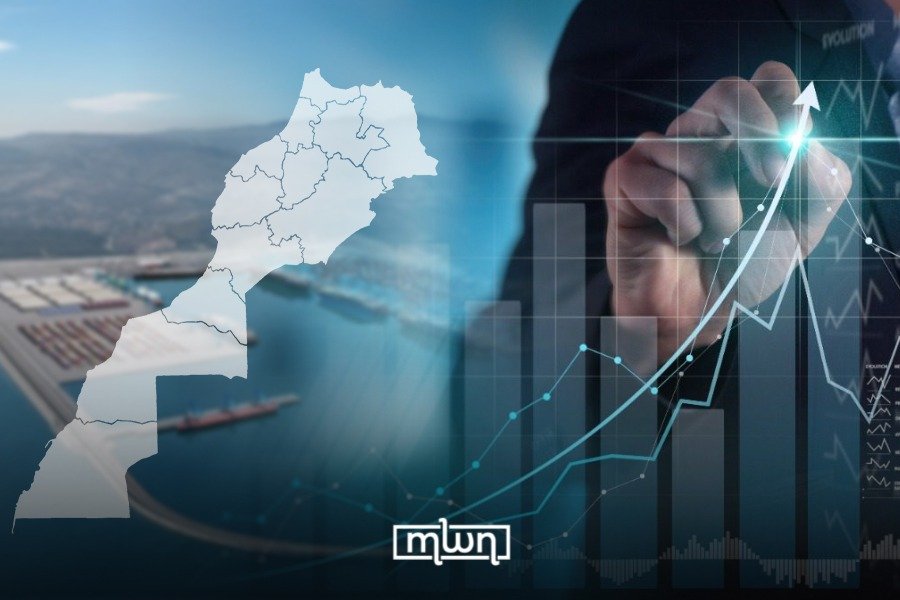
In such moments, geography becomes strategy. Countries that can intelligently govern their location and integrate it into global value chains stand to benefit from systemic realignment. Morocco occupies a uniquely positioned space within this emerging map. It is not merely a mid-sized national economy; it is a strategic intersection between Europe, Africa, and the Arab world, with Atlantic access that is gaining relevance as certain traditional routes face elevated risk.
The Tanger Med Port exemplifies this shift. It is no longer simply a transshipment hub; it has evolved into an integrated industrial and logistics ecosystem connected directly to European and African markets. In a world where corporations seek to shorten supply chains and reduce exposure to volatile corridors, proximity combined with institutional stability becomes a competitive advantage. Morocco offers both.
Africa, meanwhile, is no longer peripheral to global economic planning. With the African Continental Free Trade Area connecting more than 1.4 billion people, the continent is gradually building the framework for regional value chains and deeper economic integration. If implemented effectively, AfCFTA could transform West and North Africa into a dynamic production and consumption zone. In that context, Morocco is well positioned to function not only as a gateway, but as a production anchor linking European demand, Gulf capital, and African growth.
The geopolitical recalibration in the Middle East adds an additional layer to this opportunity. Capital from the Gulf, particularly sovereign wealth funds pursuing long-term strategic diversification, is increasingly attentive to geographic risk distribution. Expanding investments into Morocco and West Africa offers not only financial returns, but strategic depth. Rather than concentrating assets within a limited set of markets, Gulf investors can leverage Morocco as a platform economy, one that connects Atlantic trade routes, European proximity, and African expansion simultaneously.
Yet, opportunity alone is insufficient. The countries that ultimately benefit from economic repositioning are those that move from reactive to strategic policy alignment. For Morocco, this means deepening industrial capacity beyond logistics and assembly. Raising the domestic value-added component of exports is essential if the country is to secure a durable role in the new global structure. Industrial upgrading particularly in renewable energy technologies, advanced manufacturing, agro-processing, and digital services would ensure that Morocco participates in value creation rather than merely facilitating trade flows.
At the same time, Africa integration must move beyond formal agreements. Financial connectivity, regional banking expansion, transport corridors linking ports to inland markets, and joint industrial projects across West Africa are critical to converting geography into sustained economic influence. Without this deeper integration, gateway status risks remaining symbolic rather than structural.
Human capital development also becomes decisive. Supply chains of the future will not be built on infrastructure alone, but on skills. Technical education, vocational training aligned with industrial strategy, and digital competencies must advance in parallel with physical investment. Countries that attract capital without strengthening local capabilities remain vulnerable to external volatility, as value-added migrates with multinational firms.
The broader lesson is clear: the global economy is not collapsing — it is redistributing. When trade growth slows to 0.5 %, as projected by the WTO, incremental gains in emerging regional corridors become disproportionately valuable. The Atlantic–African axis, anchored by Morocco, could represent one such corridor if supported by coherent policy and strategic investment alignment.
In the 21st century, economic influence is no longer defined solely by market size, but by positioning within flows of goods, capital, talent, and technology. Morocco’s relative institutional stability, Atlantic access, industrial base, and connectivity to both Europe and Africa create a foundation upon which long-term advantage can be constructed.
Ultimately, economic repositioning rewards agility, not scale. Countries that understand how to govern geography, integrate regions, and upgrade domestic capacity can convert systemic uncertainty into structural opportunity. In a world redistributing risk and recalibrating trade routes, Morocco and by extension parts of Africa may find that their greatest asset is not insulation from disruption, but intelligent participation in the system that emerges after it.
The views expressed in this article are the author’s own and do not necessarily reflect Morocco World News’ editorial views.
